Slovakia · ArchaeologySlovensko · Archeológia

Great Moravia in the GroundVeľká Morava v zemi

The ninth century is the first period with both written sources and abundant archaeology, and the two do not fit together. Frankish annals name princes and strongholds; the ground yields ramparts, churches and graves. Matching one to the other has occupied Slovak and Czech scholarship for a century.Deviate storočie je prvým obdobím, ktoré má aj písomné pramene, aj bohatú archeológiu — a nezhodujú sa. Franské anály menujú kniežatá a hradiská, zem vydáva valy, kostoly a hroby. Spájať jedno s druhým zamestnáva slovenskú a českú vedu už storočie.

What the sources actually sayČo pramene naozaj hovoria

The written record for Great Moravia is thin and almost entirely foreign: Frankish annals, papal letters, and the Old Church Slavonic lives of Constantine and Methodius. They give rulers — Mojmír, Pribina, Rastislav, Svätopluk — and a handful of place names, among them Nitrava, Dowina, and an unnamed old fortress of Rastislav that a chronicler in 869 could not or would not locate.Písomné pramene k Veľkej Morave sú chudobné a takmer výlučne cudzie: franské anály, pápežské listy a staroslovienske životy Konštantína a Metoda. Dávajú panovníkov — Mojmíra, Pribinu, Rastislava, Svätopluka — a hŕstku miestnych mien, medzi nimi Nitravu, Dowinu a nepomenovanú „starú pevnosť Rastislavovu", ktorú kronikár v roku 869 nevedel alebo nechcel umiestniť.

What they do not give is a map. No source says where Svätopluk's principal seat stood, how far the realm reached, or which of the fortified places archaeologists dig corresponds to any of the names. That gap is the whole problem, and everything else in this chapter follows from it.Čo nedávajú, je mapa. Ani jeden prameň nehovorí, kde stálo Svätoplukovo hlavné sídlo, kam až ríša siahala, ani ktoré z opevnených miest, čo archeológovia kopú, zodpovedá niektorému z tých mien. Táto medzera je celý problém a všetko ostatné v tejto kapitole z nej vyplýva.

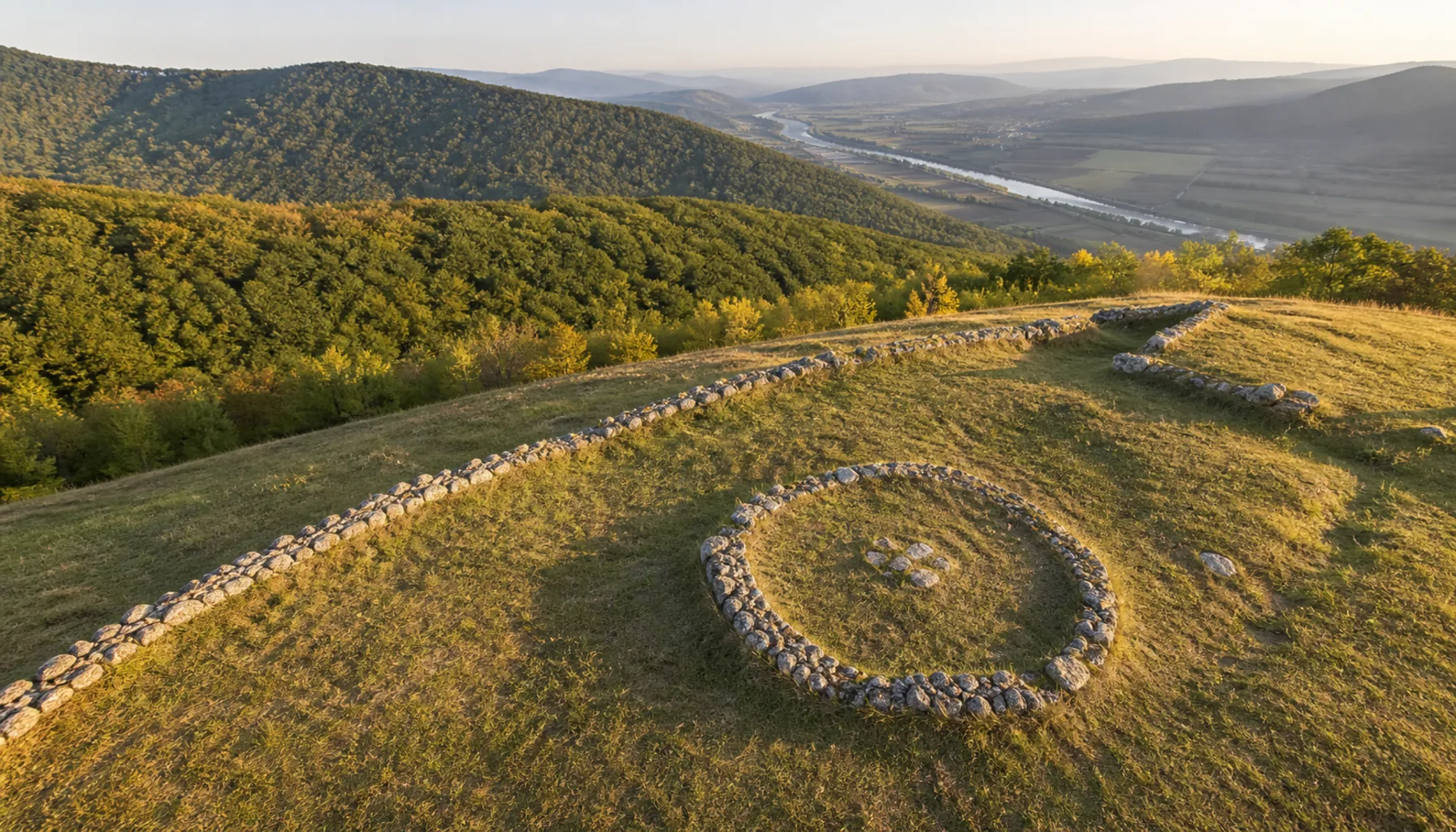
The marked-out ground plan of the ninth-century rotunda at Ducové-Kostolec above the Váh
The marked-out ground plan of the ninth-century rotunda at Ducové-Kostolec above the VáhVyznačený pôdorys rotundy z deviateho storočia na Ducovom-Kostolci nad Váhom

The hillfortsHradiská

Bojná, in the Považský Inovec above the village of the same name, is the find of the last thirty years. The hillfort complex there produced gilded plaques from a portable altar carrying short Latin inscriptions — the earliest Christian objects of their kind from this region, and arguably the earliest writing associated with the Slavs of central Europe. Their exact date and where they were made are still argued over; a Carolingian workshop is one of the possibilities.Bojná v Považskom Inovci nad rovnomennou obcou je nálezom posledných troch desaťročí. Tamojší komplex hradísk vydal pozlátené plakety z prenosného oltára s krátkymi latinskými nápismi — najstaršie kresťanské predmety svojho druhu z tohto regiónu a pravdepodobne najstaršie písmo spojené so Slovanmi strednej Európy. O ich presnom datovaní a mieste vzniku sa stále vedie spor; jednou z možností je karolínska dielňa.

Nitra is the other pole. The ninth-century settlement was not one fort but a cluster — the castle hill, Martinský vrch, Lupka and several open settlements and cemeteries spread across what is now the city. Excavation beneath the cathedral complex has produced a church of the ninth century. Whether it is the one Archbishop Adalram consecrated for Pribina around 828 is a different question, and one digging alone cannot settle.Druhým pólom je Nitra. Osídlenie deviateho storočia netvorilo jedno hradisko, ale zhluk — hradný kopec, Martinský vrch, Lupka a niekoľko otvorených sídlisk a pohrebísk rozložených po dnešnom meste. Výskum pod katedrálnym komplexom odkryl kostol z deviateho storočia. Či je to ten, ktorý okolo roku 828 vysvätil pre Pribinu arcibiskup Adalrám, je iná otázka a samotné kopanie ju nerozhodne.

Bratislava's castle hill carried a large three-aisled basilica of the same century, excavated on the summit and among the biggest Great Moravian churches known. Devín held a fortified centre and a church whose foundations are marked out on the ground; its traditional identification with the Dowina of the annals is exactly that — traditional. Pobedim, Majcichov, Mužla-Čenkov and a dozen more fill in the pattern.Na bratislavskom hradnom kopci stála veľká trojloďová bazilika toho istého storočia, odkrytá na temene a patriaca k najväčším známym veľkomoravským kostolom. Devín mal opevnené centrum a kostol, ktorého základy sú vyznačené v teréne; jeho tradičné stotožnenie s Dowinou z análov je presne to — tradičné. Pobedim, Majcichov, Mužla-Čenkov a ďalšia desiatka lokalít dopĺňajú obraz.

Courts, churches and gravesDvorce, kostoly a hroby

Ducové, above the Váh near Piešťany, is the clearest thing of its kind in the country. On the spur called Kostolec stood a fortified manor of the ninth century — a palisaded enclosure with a rotunda and a cemetery inside it, the seat of somebody who mattered locally. The ground plan is laid out in stone on the hilltop, and the view down the valley explains the choice of site better than any board could.Ducové nad Váhom pri Piešťanoch je najzreteľnejšou vecou svojho druhu v krajine. Na ostrohu zvanom Kostolec stál veľmožský dvorec deviateho storočia — palisádou ohradený areál s rotundou a pohrebiskom vo vnútri, sídlo niekoho, kto tu miestne niečo znamenal. Pôdorys je na vrchu vyznačený v kameni a pohľad do doliny vysvetlí voľbu miesta lepšie než akákoľvek tabuľa.

One building of the period may still be standing. The little church of St Margaret at Kopčany, near the Morava opposite the great site of Mikulčice, has been claimed as the only surviving structure of Great Moravia; the dating is contested, and others put it in the tenth or eleventh century. It is a small, plain, whitewashed church in a field, and the argument over it is out of all proportion to its size.Jedna stavba z tohto obdobia možno ešte stojí. Kostolík svätej Margity v Kopčanoch pri Morave, oproti veľkému hradisku Mikulčice, sa označuje za jedinú zachovanú stavbu Veľkej Moravy; datovanie je sporné a iní ju kladú do desiateho či jedenásteho storočia. Je to malý, prostý, obielený kostolík v poli a spor o ňom je v úplnom nepomere k jeho veľkosti.

Cemeteries carry most of the information. Graves of the period hold gilded buttons, silver and gold earrings of types named after Moravian sites, spurs, axes and swords, and they show a society with real hierarchy and real long-distance contacts. They also show Christianity arriving unevenly: burial rite, grave goods and position beside a church all change at different speeds in different places.Najviac informácií nesú pohrebiská. Hroby tohto obdobia obsahujú pozlátené gombíky, strieborné a zlaté náušnice typov pomenovaných podľa moravských lokalít, ostrohy, sekery a meče a ukazujú spoločnosť so skutočnou hierarchiou a skutočnými diaľkovými kontaktmi. Ukazujú aj to, že kresťanstvo prichádzalo nerovnomerne: pohrebný rítus, výbava hrobu aj poloha pri kostole sa na rôznych miestach menia rôznou rýchlosťou.

The argument about the centresSpor o centrá

The largest and richest ninth-century sites excavated anywhere are not in Slovakia but across the Morava in the Czech Republic — Mikulčice, Staré Město and Pohansko, with churches by the dozen and enormous cemeteries. Slovak scholarship has generally answered that Nitra was a centre of equal standing whose ground lies under a living city and can therefore never be dug the same way. Both statements are true, which is why the argument does not resolve.Najväčšie a najbohatšie preskúmané lokality deviateho storočia nie sú na Slovensku, ale za Moravou v Česku — Mikulčice, Staré Město a Pohansko, s desiatkami kostolov a obrovskými pohrebiskami. Slovenská veda na to spravidla odpovedá, že Nitra bola centrom rovnakej váhy, ktorého pôda leží pod živým mestom, a preto sa nikdy nedá kopať rovnakým spôsobom. Oboje je pravda — a práve preto sa spor nekončí.

Alongside that runs a further and more radical dispute. A minority of historians has argued that Great Moravia lay much further south, on the Morava river in today's Serbia, and that the northern sites belong to something else. Most specialists reject it and the archaeology of the middle Danube fits the traditional location better; but that such a case could be made at all shows how little the written sources actually pin down.Popri tom prebieha ešte ďalší, radikálnejší spor. Menšina historikov tvrdila, že Veľká Morava ležala oveľa južnejšie, pri rieke Morave v dnešnom Srbsku, a že severné lokality patria niečomu inému. Väčšina odborníkov to odmieta a archeológia stredného Podunajska sa s tradičným umiestnením zhoduje lepšie; to, že sa taká téza vôbec dala vysloviť, však ukazuje, ako málo písomné pramene v skutočnosti určujú.

The safe position, and the one these pages take, is that the sites are real and the labels are provisional. A ninth-century rampart at Bojná is a ninth-century rampart at Bojná. Calling it Svätopluk's is telling a story — a good story, but not what the excavation found.Bezpečné stanovisko — a tieto stránky ho zastávajú — znie, že lokality sú skutočné a nálepky dočasné. Val z deviateho storočia v Bojnej je val z deviateho storočia v Bojnej. Nazvať ho Svätoplukovým znamená rozprávať príbeh — dobrý príbeh, ale nie to, čo výskum našiel.

← Hillforts & Archaeology← Hradiská a archeológia

Nitrianska Blatnica →Nitrianska Blatnica →

Kostoľany pod Tribečom →Kostoľany pod Tribečom →

WatchPozrite si

Sixteen videos for Great Moravia in the Ground.Šestnásť videí — Veľká Morava v zemi.