Slovakia · ArchaeologySlovensko · Archeológia
For four hundred years the Danube was the northern edge of an empire, and the empire built in stone. Two of its forts survive on Slovak ground, one inscription names a place here for the first time in history, and since 2021 the frontier is World Heritage.Štyristo rokov bol Dunaj severným okrajom ríše a ríša stavala z kameňa. Na slovenskej pôde sa zachovali dve jej pevnosti, jeden nápis tu po prvý raz v dejinách pomenoval konkrétne miesto a od roku 2021 je táto hranica svetovým dedičstvom.
The Roman province of Pannonia ended at the Danube. Everything north of the water was Barbaricum, and from the first century AD the southern bank carried a chain of forts, watchtowers and roads — Vindobona and Carnuntum upstream in today's Austria, Brigetio and Aquincum downstream in Hungary — with legions in the big camps and auxiliary units in the small ones.Rímska provincia Panónia sa končila pri Dunaji. Všetko severne od vody bolo barbarikum a od prvého storočia n. l. niesol južný breh reťaz táborov, strážnych veží a ciest — Vindobona a Carnuntum proti prúdu v dnešnom Rakúsku, Brigetio a Aquincum po prúde v Maďarsku — s légiami vo veľkých táboroch a pomocnými jednotkami v malých.
The people on the northern bank along the Slovak stretch were the Quadi, a Germanic grouping, and the relationship covered the whole range from trade to war. Roman coins, bronze vessels, glass and weapons reached deep inland; Roman troops crossed the river repeatedly; and in the second century the two sides fought a long, exhausting frontier war.Na severnom brehu žili v slovenskom úseku Kvádi, germánske zoskupenie, a vzťah pokrýval celú škálu od obchodu po vojnu. Rímske mince, bronzové nádoby, sklo a zbrane sa dostávali hlboko do vnútrozemia; rímske vojsko rieku opakovane prekročilo; a v druhom storočí zviedli obe strany dlhú, vyčerpávajúcu pohraničnú vojnu.
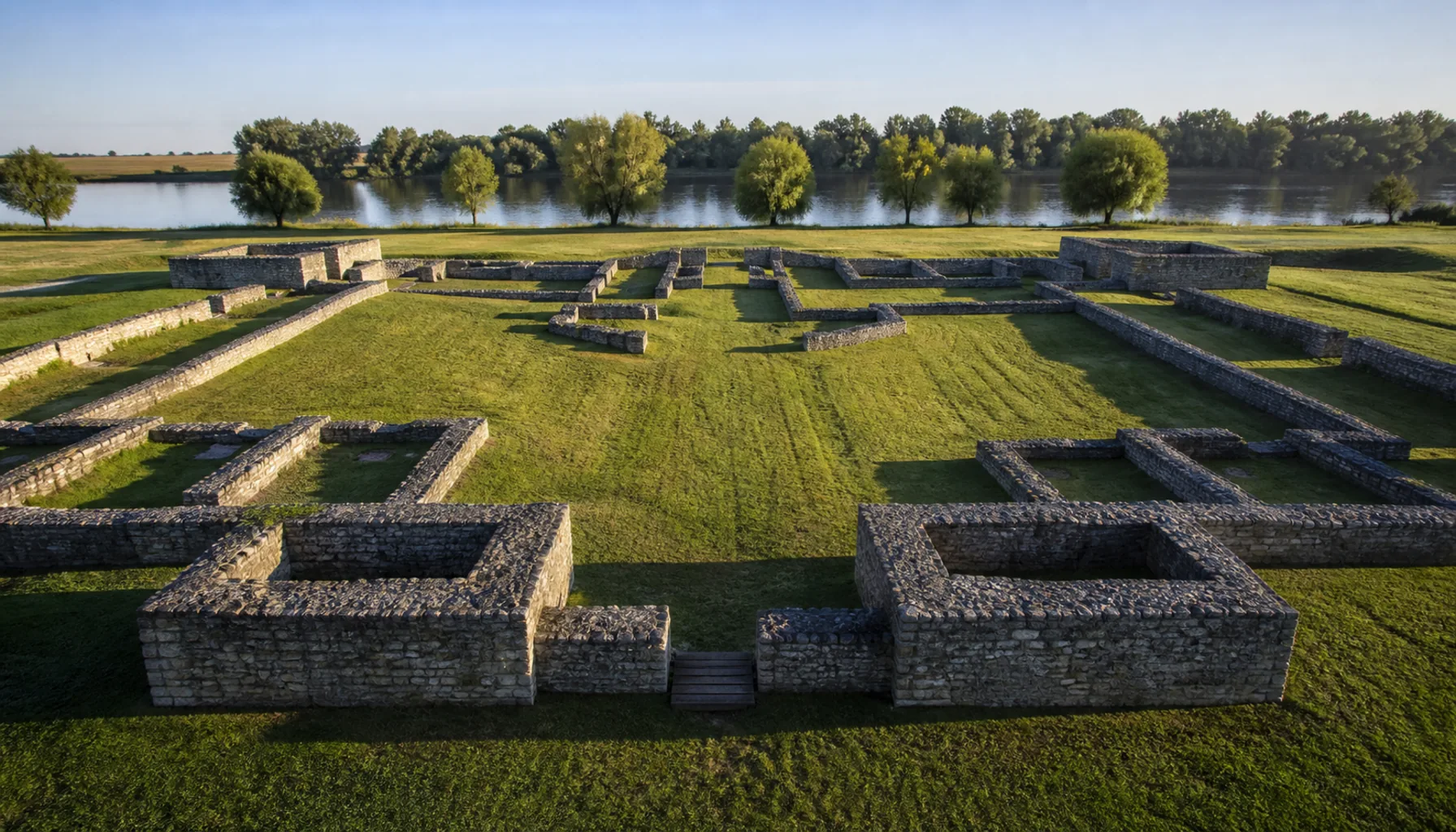
Gerulata stood at what is now Rusovce, a borough on the southern edge of Bratislava. It was an auxiliary fort, held from the first to the fourth century, part of the line between Carnuntum and Brigetio, with a civilian settlement and cemeteries around it. What is presented today is the excavated masonry of its late phase, run as a branch of the Bratislava City Museum, together with the tombstones and altars found in the ground nearby.Gerulata stála v dnešných Rusovciach, mestskej časti na južnom okraji Bratislavy. Bol to tábor pomocných jednotiek, obsadený od prvého do štvrtého storočia, súčasť línie medzi Carnuntom a Brigetiom, s civilným sídliskom a pohrebiskami v okolí. Dnes je sprístupnené odkryté murivo neskorej fázy ako pobočka Múzea mesta Bratislavy, spolu s náhrobkami a oltármi nájdenými v okolitej pôde.
Kelemantia is the more surprising of the two, because it is on the wrong side of the river. The fort at Iža, opposite Komárno, was built in stone on the northern bank in the second century as a bridgehead for Brigetio — a Roman garrison planted in barbarian territory. It was destroyed during the frontier war and rebuilt, then abandoned in the fourth century. Its conserved foundations lie in flat riverside fields, open, unfenced and usually empty.Prekvapivejšia z tých dvoch je Kelemantia, lebo leží na nesprávnom brehu. Pevnosť pri Iži oproti Komárnu postavili z kameňa na severnom brehu v druhom storočí ako predmostie Brigetia — rímsku posádku vysadenú na barbarskom území. Počas pohraničnej vojny ju zničili a znovu postavili, v štvrtom storočí opustili. Jej zakonzervované základy ležia v rovných poliach pri rieke, voľne prístupné, neohradené a väčšinou prázdne.
Both are components of Frontiers of the Roman Empire — the Danube Limes (Western Segment), inscribed on the World Heritage list in 2021 together with sites in Austria and Germany. Hungary withdrew its own section of the nomination shortly before the decision, which is why the listed frontier stops at the Slovak stretch instead of running on down the river.Obe sú súčasťou zápisu Hranice Rímskej ríše — Dunajský limes (západný segment), zapísaného do zoznamu svetového dedičstva v roku 2021 spolu s lokalitami v Rakúsku a Nemecku. Maďarsko svoju časť nominácie krátko pred rozhodnutím stiahlo, a preto sa zapísaná hranica končí na slovenskom úseku a nepokračuje ďalej po rieke.
Around 179 or 180, soldiers of a Roman detachment wintering far north of the Danube had a victory inscription cut into the rock beneath what is now Trenčín Castle. It records eight hundred and fifty-five men of the Second Legion, the officer who ordered it, and the name of the place: Laugaricio. It is the northernmost Roman inscription in central Europe north of the Danube, and is usually given as the first written record of any settlement on the territory of today's Slovakia.Okolo roku 179 alebo 180 dali vojaci rímskeho oddielu, ktorý prezimoval ďaleko severne od Dunaja, vytesať do skaly pod dnešným Trenčianskym hradom víťazný nápis. Uvádza osemstopäťdesiatpäť mužov druhej légie, dôstojníka, ktorý ho dal zhotoviť, a meno miesta: Laugaricio. Je to najsevernejší rímsky nápis v strednej Európe severne od Dunaja a zvyčajne sa uvádza ako prvá písomná zmienka o akomkoľvek sídle na území dnešného Slovenska.
The inscription is on the castle rock itself and cannot be walked up to; it is looked at through a window in the hotel built against the cliff below the castle. That is a prosaic way to meet the oldest written sentence about this country, but the rock is where it was cut and moving it was never an option.Nápis je priamo na hradnej skale a nedá sa k nemu prísť; pozerá sa naň cez okno v hoteli postavenom pri brale pod hradom. Je to dosť prozaický spôsob, ako sa stretnúť s najstaršou písanou vetou o tejto krajine, ale skala je tam, kde ju vytesali, a premiestniť ju nikdy neprichádzalo do úvahy.
Stone buildings put up by Romans stand well inside barbarian territory: a structure with a bath at Stupava, a masonry building at Bratislava-Dúbravka, a small complex at Cífer-Pác in the Trnava country. Who they were built for — a Roman outpost, an allied chieftain, a trading station — is argued about, and each site tends to be read differently by different scholars.Kamenné budovy postavené Rimanmi stoja hlboko v barbarskom území: stavba s kúpeľom v Stupave, murovaná budova v Bratislave-Dúbravke, malý areál v Cíferi-Páci na Trnavsku. Pre koho vznikli — rímska výspa, spojenecký náčelník, obchodná stanica — je predmetom sporu a každú lokalitu čítajú rôzni bádatelia inak.
The richest Roman material from Slovakia comes from no fort at all but from Germanic graves. At Krakovany-Stráže near Piešťany, burials of the third century contained Roman silver vessels of a quality that would not be out of place in Italy — the grave goods of a local elite that bought, or was given, the very best the empire made.Najbohatší rímsky materiál zo Slovenska nepochádza zo žiadneho tábora, ale z germánskych hrobov. V Krakovanoch-Strážach pri Piešťanoch obsahovali hroby z tretieho storočia rímske strieborné nádoby takej kvality, že by neprekvapili ani v Itálii — výbava miestnej elity, ktorá si kupovala alebo dostávala to najlepšie, čo ríša vyrábala.
Sixteen videos for The Roman Frontier.Šestnásť videí — Rímska hranica.