Turany · Turiec and the Malá FatraTurany · Turiec a Malá Fatra
Culture in TuranyKultúra v Turanoch
A market town by royal charter from 1397, a single-factory village for most of the twentieth century, and a town again since 2016 - what Turany has to show is the culture of timber, the river and the ridge behind it.Mestečko s výsadami od roku 1397, po väčšinu 20. storočia dedina okolo jednej fabriky a od roku 2016 opäť mesto - kultúra Turian je kultúrou dreva, rieky a hrebeňa nad nimi.
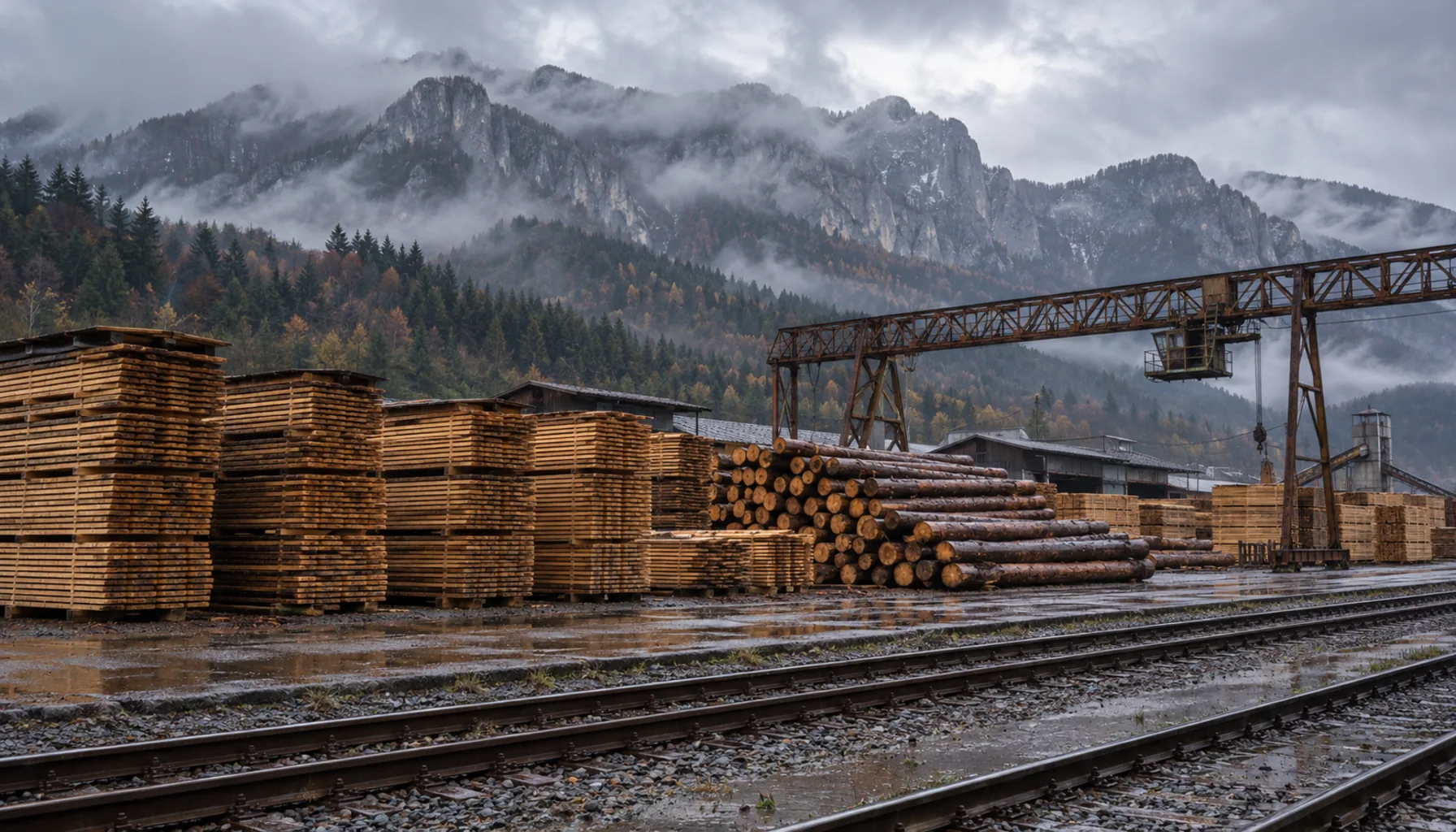
Stacks of sawn timber in the yard beside the railway at Turany, with the rock ridge of the Malá Fatra behind — the trade that made the town.Stohy reziva na sklade pri železnici v Turanoch, v pozadí skalnatý hrebeň Malej Fatry — remeslo, ktoré mesto vytvorilo.
The year in TuranyRok v Turanoch
The oldest thing in the town's calendar is the market. Sigismund of Luxembourg gave Turany the rights of a market town under the law of Krupina in 1397, and in 1563 Ferdinand I added three annual fairs and a weekly market to them - the fair days were the year, and everything else fitted around them. That status quietly lapsed when Austria-Hungary ended, and the fairs went with it; the town got its title back only on 1 January 2016. The year Turany keeps now is a working town's year, not a heritage one.Najstaršou súčasťou kalendára tohto mesta je trh. Žigmund Luxemburský udelil Turanom v roku 1397 práva mestečka podľa krupinského práva a Ferdinand I. k nim v roku 1563 pridal tri výročné jarmoky a týždenný trh - jarmočné dni boli rokom a všetko ostatné sa im prispôsobovalo. S koncom Rakúsko-Uhorska toto postavenie ticho zaniklo a jarmoky s ním; titul mesta získali Turany späť až 1. januára 2016. Rok, ktorý si mesto drží dnes, je rokom pracujúceho mesta, nie pamiatkového.
That means the parish feasts, the programme of the cultural centre, the school year, and the commemorations of the autumn of 1944, when the Turiec was insurgent country and the fighting came up this stretch of the Váh. The other half of the calendar is the mountain: the marked paths north into the Krivánska Malá Fatra are busy from late spring to October, and the town is the quiet eastern way onto a ridge most walkers climb from Vrátna on the far side. We name no individual events here - a town of this size fixes its dates year by year, and its own noticeboard is the source to trust.Znamená to farské sviatky, program kultúrneho domu, školský rok a spomienky na jeseň 1944, keď bol Turiec povstaleckým územím a boje prišli po tomto úseku Váhu. Druhú polovicu kalendára určuje hora: značkované chodníky na sever do Krivánskej Malej Fatry sú plné od neskorej jari do októbra a mesto je tichým východným prístupom na hrebeň, na ktorý väčšina turistov stúpa z Vrátnej na druhej strane. Konkrétne podujatia tu nemenujeme - mesto tejto veľkosti si termíny určuje rok po roku a spoľahlivým zdrojom je jeho vlastná úradná tabuľa.
Where culture livesKde žije kultúra
Most of what Turany has indoors was built by the factory. When the state timber works, Drevina, became the town's employer after the war, blocks of flats and cultural buildings went up around it, on the pattern repeated in every Slovak town arranged around a single plant. What runs in them today is what you would expect: a cultural centre with a hall and a programme, a library, amateur singing and folk groups, and a school of art for children. We name none of them individually, because premises and programmes change faster than a page like this does.Väčšinu toho, čo majú Turany pod strechou, postavila fabrika. Keď sa po vojne stal zamestnávateľom mesta štátny drevársky podnik Drevina, vyrástli okolo neho bytovky a kultúrne budovy - podľa vzoru, ktorý sa opakoval v každom slovenskom meste usporiadanom okolo jedného závodu. Dnes v nich funguje to, čo sa dá čakať: kultúrne stredisko so sálou a programom, knižnica, ochotnícke spevácke a folklórne skupiny a základná umelecká škola pre deti. Jednotlivo ich nemenujeme, lebo priestory a programy sa menia rýchlejšie než takáto stránka.
For anything larger the town looks fifteen kilometres down the basin to Martin, and does so without embarrassment: the National Cemetery, Matica slovenská, the Slovak National Library and the Museum of the Slovak Village are all a short bus ride away and are covered elsewhere on this site. Turany is a working town in the orbit of a cultural one, which in the Turiec is a normal arrangement rather than a shortfall.Za väčším sa mesto pozerá pätnásť kilometrov nadol kotlinou do Martina a nehanbí sa za to: Národný cintorín, Matica slovenská, Slovenská národná knižnica aj Múzeum slovenskej dediny sú na krátku cestu autobusom a venujeme sa im inde na tejto stránke. Turany sú pracujúcim mestom na obežnej dráhe kultúrneho - v Turci je to bežné usporiadanie, nie nedostatok.
The buildings that carry itBudovy, ktoré ju nesú
The town is a long main street with a parish church on it. An old parish chronicle claims a small church stood here around 1300, which would put it before any of the documents - the town's own record points to a charter of 1 July 1319, while standard reference works give 1361. Behind the newer houses stand log outbuildings from the Turiec's wooden building tradition. They survive in fragments rather than as a preserved ensemble, and that is worth knowing before you go looking for one.Mesto tvorí dlhá hlavná ulica a farský kostol na nej. Stará farská kronika tvrdí, že okolo roku 1300 tu stál malý kostolík, čo by bolo skôr ako ktorákoľvek listina - vlastný záznam mesta odkazuje na listinu z 1. júla 1319, kým príručky uvádzajú rok 1361. Za novšími domami stoja zrubové hospodárske stavby turčianskej drevenej stavebnej tradície. Zachovali sa v zlomkoch, nie ako zachovaný celok, a je dobré to vedieť skôr, než ho tu začnete hľadať.
What the buildings say about who built the town is mostly said by what is missing. Turany was a mestečko on the Sklabiňa estate, held from the sixteenth century to the nineteenth by the Révay family, who ran the county from that castle as well - so there is no town hall of a free royal city here and no burgher square. There is instead the basin's other peculiarity: Turiec was unusually thick with petty nobility, whole villages of minor gentry. Sklabiňa itself was burnt out in the reprisals of 1944 and has been a ruin ever since.To, kto mesto postavil, prezrádzajú budovy najmä tým, čo tu chýba. Turany boli mestečkom na sklabinskom panstve, ktoré od 16. do 19. storočia držali Révaiovci - tí istí, čo z hradu spravovali stolicu - takže tu nenájdete radnicu slobodného kráľovského mesta ani meštianske námestie. Nájdete namiesto toho druhú zvláštnosť kotliny: Turiec bol nezvyčajne hustý na drobnú šľachtu, celé dediny zemanov. Samotná Sklabiňa vyhorela pri represáliách v roku 1944 a odvtedy je zrúcaninou.
Timber, rafts and the worksDrevo, plte a fabrika
The trade is the inheritance. By 1784 there were 254 houses and 1 450 people here, living by herding, by cutting timber and above all by rafting: a plť was a raft of logs lashed together and steered down the Váh by two or three men, who sold the cargo and the raft at the end of the run and walked home. It was skilled, badly paid and dangerous, and for two centuries it was how the forests of the Malá Fatra reached the rest of the kingdom.Dedičstvom je remeslo. V roku 1784 tu bolo 254 domov a 1 450 ľudí, ktorí žili z pastierstva, z ťažby dreva a predovšetkým z pltníctva: plť bolo plavidlo zviazané z klád, ktoré dvaja či traja muži riadili dolu Váhom, na konci plavby predali náklad aj plť a domov sa vrátili pešo. Bola to zručná, mizerne platená a nebezpečná práca a dve storočia to bol spôsob, akým sa lesy Malej Fatry dostávali do zvyšku krajiny.
The railway ended it. The first train ran through Turany on 8 December 1871, timber could suddenly leave by the wagonload, and cutting it where it grew became worth more than floating it away; a sawmill was working on leased riverside land by the late 1880s, a credit union followed in 1903, and in 1919 the cellulose works at Ružomberok opened a woodworking plant here that fixed the town's trade for the rest of the century. Sawmills and joineries beside the railway still work Malá Fatra and Veľká Fatra timber. In Turany that is not industrial history - it is the living culture of the place.Skoncovala s tým železnica. Prvý vlak prešiel Turanmi 8. decembra 1871, drevo mohlo zrazu odchádzať po vagónoch a píliť ho na mieste sa oplatilo viac než ho splavovať; na prenajatom pozemku pri rieke pracovala píla koncom osemdesiatych rokov 19. storočia, v roku 1903 pribudla úverová pokladnica a v roku 1919 tu ružomberská celulózka otvorila drevársky závod, ktorý určil remeslo mesta na zvyšok storočia. Píly a stolárske dielne pri železnici dodnes spracúvajú drevo z Malej a Veľkej Fatry. V Turanoch to nie sú dejiny priemyslu - je to živá kultúra miesta.