Kysucké Nové Mesto · KysuceKysucké Nové Mesto · Kysuce
Culture in Kysucké Nové MestoKultúra v Kysuckom Novom Meste
A bearing town with a thirteenth-century church at its middle: what culture Kysucké Nové Mesto keeps, it keeps around a square that burned down more than once and a works that rebuilt the place in a generation.Mesto ložísk s kostolom z 13. storočia uprostred: kultúru si Kysucké Nové Mesto drží okolo námestia, ktoré viackrát zhorelo, a okolo závodu, ktorý mesto za jednu generáciu prestaval.
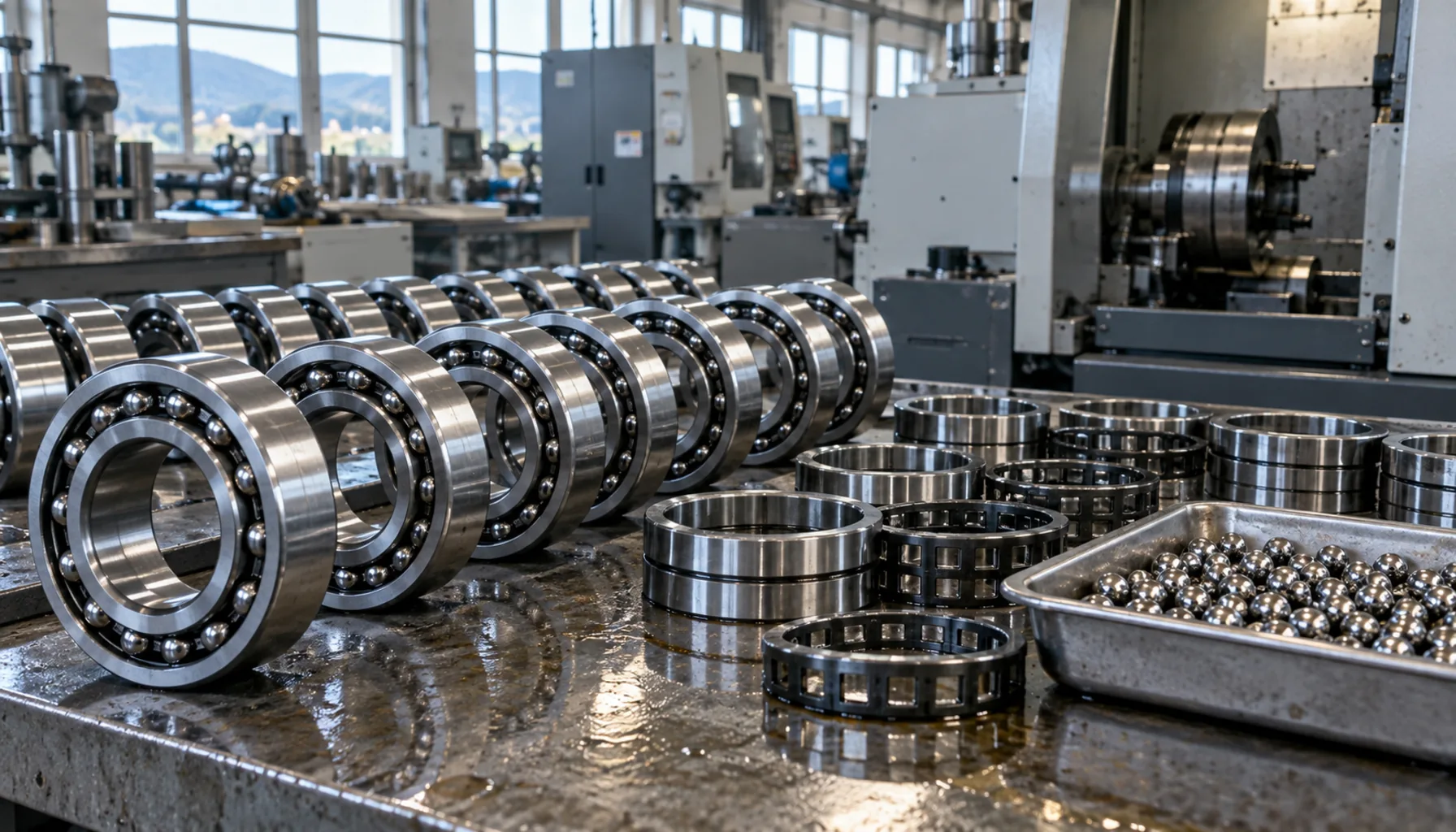
Finished steel rolling bearings on the bench at Kysucké Nové Mesto, the trade the whole town has lived on since the socialist era.Hotové oceľové valivé ložiská na stole v Kysuckom Novom Meste — remeslo, z ktorého žije celé mesto už od socialistických čias.
The year in Kysucké Nové MestoRok v Kysuckom Novom Meste
The town has held markets since it was given the privileges of a market town in 1325, and for six centuries the calendar was the market calendar: the days when people came down from the clearings above the valley to sell wool, cheese and timber and to buy iron, salt and cloth. Since 1950 the year has been set by something else entirely, the shift changes at the bearing works, which still decide the traffic on the valley road twice a day.Trhy sa tu konajú odvtedy, čo mesto v roku 1325 dostalo výsady trhového mestečka, a šesť storočí bol kalendár kalendárom trhov: dni, keď ľudia z kopaníc nad dolinou zišli dolu predať vlnu, syr a drevo a kúpiť železo, soľ a súkno. Od roku 1950 určuje rok niečo celkom iné, striedanie zmien v ložiskárni, ktoré dodnes dvakrát denne rozhoduje o premávke na ceste v doline.
The public calendar today is what a district town of this size keeps: church feasts, the school year, the town's commemorations and seasonal markets on the square. We print no festival names and no dates, because in a town this size the programme is agreed a season at a time between the town office and the cultural centre and published on the town's own noticeboard; last year's dates are worse than none. Out of doors it is simpler. Marked trails climb both sides of the valley straight from the streets, and the river path leads down towards Žilina.Verejný kalendár je dnes taký, aký si okresné mesto tejto veľkosti drží: cirkevné sviatky, školský rok, mestské spomienkové dni a sezónne trhy na námestí. Názvy podujatí ani termíny tu neuvádzame, lebo v meste tejto veľkosti sa program dohaduje zo sezóny na sezónu medzi mestským úradom a kultúrnym strediskom a zverejňuje sa na mestskej tabuli; vlaňajšie termíny sú horšie než žiadne. Vonku je to jednoduchšie. Značkované chodníky stúpajú na obe strany doliny priamo z ulíc a cesta popri rieke vedie dolu k Žiline.
Where culture livesKde žije kultúra
Nothing here is on a national scale and the town does not pretend otherwise. It has a cultural centre with a hall and a programme, a library, choirs and folk groups and a school of art for children. We name none of them individually: premises and programmes change faster than a page like this does.Nič tu nie je celoštátneho významu a mesto sa netvári inak. Má kultúrne stredisko so sálou a programom, knižnicu, spevácke a folklórne skupiny a základnú umeleckú školu pre deti. Menovite tu neuvádzame ani jedno z nich: priestory a programy sa menia rýchlejšie než takáto stránka.
The one museum worth crossing the valley for is just downstream at Radoľa, where a small Renaissance manor house holds a branch of the Kysuce Museum with the archaeology of the valley and a period interior. It is a short run by train or bicycle, and between it and the town's own church you have most of what survives of the valley's pre-industrial history in a single afternoon.Jediné múzeum, pre ktoré sa oplatí prejsť dolinu, je kúsok po prúde v Radoli, kde malý renesančný kaštieľ ukrýva pracovisko Kysuckého múzea s archeológiou doliny a dobovým interiérom. Je to krátka cesta vlakom alebo na bicykli a spolu s mestským kostolom máte za jedno popoludnie väčšinu toho, čo sa z predpriemyselnej histórie doliny zachovalo.
The buildings that carry itBudovy, ktoré ju nesú
The parish church of St James the Elder, built at the end of the thirteenth century, is the one building that has watched all of it: the toll recorded here in 1321, the market privileges of 1325, the German name Congesbergh the settlers left behind, and the Latin Nova Civitas of 1358 from which the Slovak name comes. Whatever Germans came were absorbed, and an estate register of 1658 contains no German names at all.Farský kostol svätého Jakuba Staršieho z konca 13. storočia je jediná budova, ktorá to všetko videla: mýto doložené tu v roku 1321, trhové výsady z roku 1325, nemecké meno Congesbergh, ktoré tu po osadníkoch zostalo, aj latinské Nova Civitas z roku 1358, z ktorého pochádza slovenský názov. Nemci, ktorí sem prišli, sa rozplynuli a panský súpis z roku 1658 už neobsahuje ani jedno nemecké meno.
Everything else is younger than it looks, because the town kept burning. Fires went through in 1813, 1821 and 1823, and in August 1904 one left just thirty houses standing. A town that has to rebuild from thirty houses does not build monuments; it builds houses, which is most of why the centre reads as it does, a modest historic core around the church and the square with no pretence of a wealthy borough.Všetko ostatné je mladšie, než sa zdá, lebo mesto opakovane horelo. Požiare ním prešli v rokoch 1813, 1821 a 1823 a v auguste 1904 po jednom z nich zostalo stáť tridsať domov. Mesto, ktoré sa musí postaviť z tridsiatich domov, nestavia pamätníky, ale domy, a to je hlavný dôvod, prečo centrum vyzerá tak, ako vyzerá: skromné historické jadro okolo kostola a námestia, bez predstierania bohatého meštianskeho mesta.
A town of one worksMesto jedného závodu
In 1950 a precision engineering works was built on the flat ground beside the river, and it changed the town more thoroughly than anything in the previous seven hundred years. It made ball bearings, employed thousands from the town and the villages above it, and brought with it the housing estates, schools, offices and sports grounds a socialist works was expected to provide. A large share of what now counts as the town's cultural infrastructure, the halls and clubs and pitches, dates from those decades and was built by the factory or for it.V roku 1950 vyrástol na rovine pri rieke závod na presné strojárstvo a zmenil mesto dôkladnejšie než čokoľvek za predchádzajúcich sedemsto rokov. Vyrábal guľkové ložiská, zamestnával tisíce ľudí z mesta aj z dedín nad ním a priniesol so sebou sídliská, školy, úrady a športoviská, ktoré sa od socialistického závodu očakávali. Veľká časť toho, čo dnes tvorí kultúrnu infraštruktúru mesta, teda sály, kluby a ihriská, pochádza z tých desaťročí a postavila ju fabrika alebo vznikla pre ňu.
The works was privatised after 1989, taken into a German group and, unusually for a Slovak plant of its vintage, went on growing; it trades today as Schaeffler Kysuce and supplies bearings to carmakers worldwide. That is a good position and a narrow one, and the town knows it. It is worth saying plainly what a visitor should expect here: nobody travels to Kysucké Nové Mesto for monuments, and the town does not pretend otherwise. What it offers is a working valley with the walking starting at the end of the street.Po roku 1989 bol závod sprivatizovaný, prešiel do nemeckej skupiny a na slovenský podnik tohto veku nezvyčajne ďalej rástol; dnes obchoduje ako Schaeffler Kysuce a dodáva ložiská automobilkám po celom svete. Je to dobrá pozícia a zároveň úzka a mesto to vie. A treba povedať priamo, čo tu môže návštevník čakať: do Kysuckého Nového Mesta sa za pamiatkami necestuje a mesto to nezakrýva. Ponúka pracujúcu dolinu, v ktorej sa turistika začína na konci ulice.