Krásno nad Kysucou · KysuceKrásno nad Kysucou · Kysuce
Culture in Krásno nad KysucouKultúra v Krásne nad Kysucou
A timber town that only became a town in 2001, with a small museum of the valley's crafts in its cultural centre and almost everything older than itself up the side valley behind it.Drevárske mesto, ktoré sa mestom stalo až v roku 2001, s malým múzeom remesiel doliny v kultúrnom dome a s takmer všetkým starším, než je samo, v bočnej doline za chrbtom.
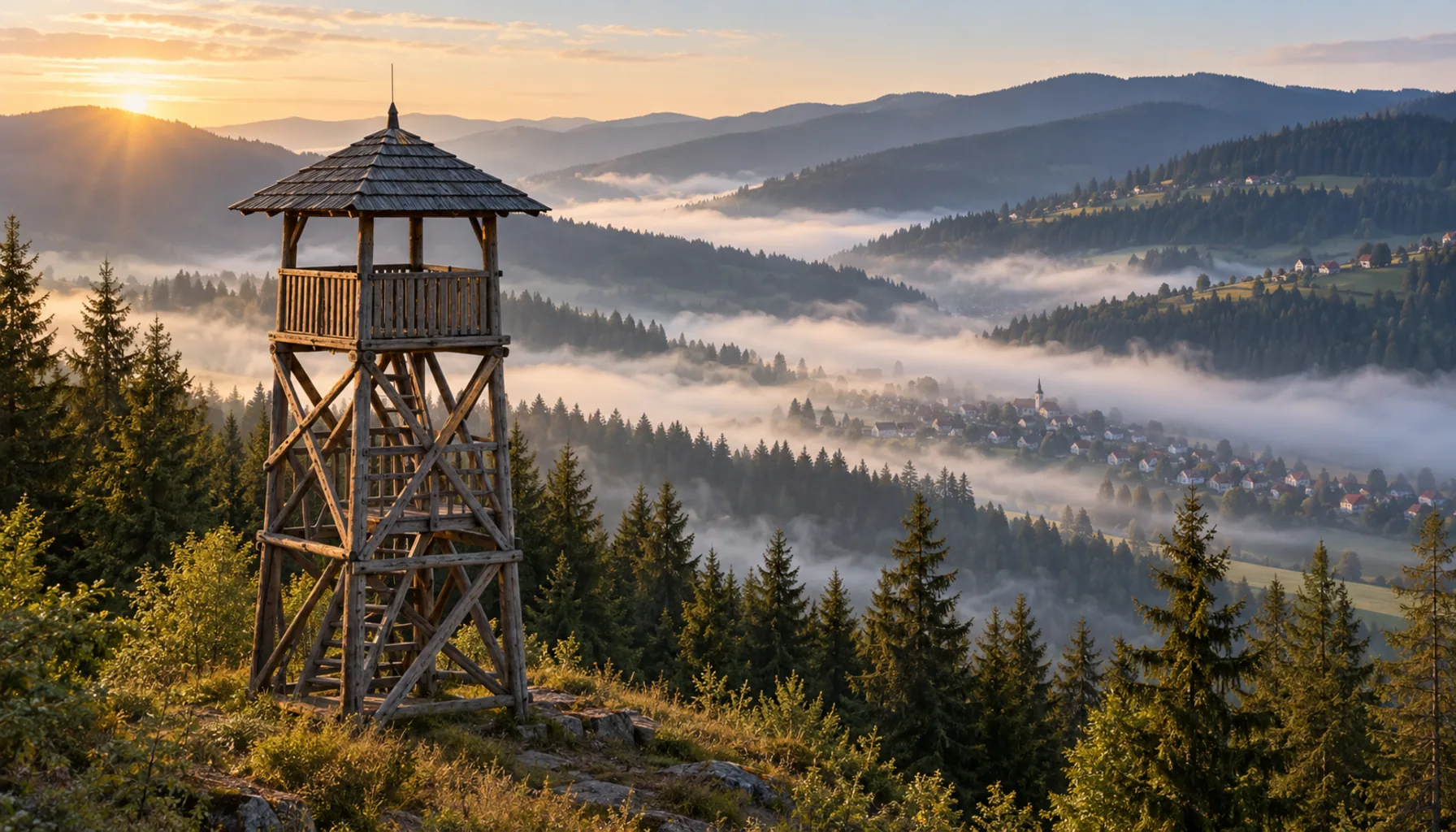
The wooden lookout tower above Krásno nad Kysucou, over the standard Kysuce view: parallel ridges, spruce on the tops and hamlets on the shoulders.Drevená rozhľadňa nad Krásnom nad Kysucou, s typickým kysuckým výhľadom: súbežné hrebene, smrečiny na vrcholoch a osady na svahoch.
The year in Krásno nad KysucouRok v Krásne nad Kysucou
Markets have been held here since 1795, four years before the village managed to get a resident priest, and the shape of a Kysuce year has not changed much since: church feasts, the school year, seasonal markets and the town's own commemorations. We name no festival and print no dates. In a town this size the programme is agreed a season at a time and published by the town office, and a page carrying last year's listings would send you to something that no longer runs.Trhy sa tu konajú od roku 1795, teda štyri roky predtým, než sa dedine podarilo získať stáleho kňaza, a tvar kysuckého roka sa odvtedy veľmi nezmenil: cirkevné sviatky, školský rok, sezónne trhy a mestské spomienkové dni. Nemenujeme tu žiadny festival ani dátum. V meste tejto veľkosti sa program dohaduje zo sezóny na sezónu a zverejňuje ho mestský úrad; stránka s vlaňajšími termínmi by vás poslala na podujatie, ktoré sa už nekoná.
What does keep a fixed season is the valley behind the town. The steam trains on the preserved forest railway at Vychylovka and the open-air museum beside them run to a summer timetable; the astronomical clock with carved figures on the square at Stará Bystrica works all year. The reservoir above them is a drinking-water source, so nobody swims in it, but the roads around it carry cyclists from spring to autumn. Krásno is where you change buses for all of it, which is a real function even if it is not a glamorous one.Pevnú sezónu má skôr dolina za mestom. Parné vlaky na zachovanej lesnej železnici vo Vychylovke a skanzen vedľa nej jazdia podľa letného cestovného poriadku; orloj s vyrezávanými figúrami na námestí v Starej Bystrici ide po celý rok. Vodná nádrž nad nimi je zdrojom pitnej vody, takže sa v nej nekúpe, ale cesty okolo nej vozia cyklistov od jari do jesene. V Krásne sa na to všetko prestupuje, a to je skutočná funkcia, aj keď nie oslnivá.
Where culture livesKde žije kultúra
The town's own collection is a site of the Kysuce Museum, housed in the cultural centre: the crafts of the valley, the timber trade and the emigration that took men from these hillsides to Pennsylvania. It is the kind of small museum that explains a landscape rather than displaying treasures, and an hour in it before driving up the Bystrica valley is an hour well spent.Vlastná zbierka mesta je pracoviskom Kysuckého múzea a sídli v kultúrnom dome: remeslá doliny, obchod s drevom a vysťahovalectvo, ktoré odviedlo mužov z týchto strání do Pennsylvánie. Je to typ malého múzea, ktoré vysvetľuje krajinu, a nie vystavuje poklady, a hodina v ňom pred cestou hore Bystrickou dolinou je hodina dobre využitá.
Beyond it Krásno has what a place raised from village status in 2001 has: the cultural centre with its hall and programme, a library, church choirs and folk groups, and schooling for children who want to play or sing. We name none of them individually, because premises and programmes change faster than a page like this does. The bigger institutions of the valley are the two up the road at Nová Bystrica-Vychylovka, the open-air museum and the railway, and the town has learned to point at them.Inak má Krásno to, čo mesto povýšené z obce až v roku 2001 mať môže: kultúrny dom so sálou a programom, knižnicu, kostolné spevokoly a folklórne skupiny a základné umelecké vzdelávanie pre deti. Menovite tu neuvádzame ani jedno z nich, lebo priestory a programy sa menia rýchlejšie než takáto stránka. Väčšie inštitúcie doliny sú tie dve hore cestou v Novej Bystrici-Vychylovke, skanzen a železnica, a mesto sa naučilo na ne ukazovať.
The buildings that carry itBudovy, ktoré ju nesú
There is no castle here and never was. The oldest institution is the parsonage, built in 1794 by Father Arkádius Nadhoránsky before the village had a permanent priest to put in it; the first market followed in 1795 and the priest only in 1799. Building the house first and then waiting for someone to accept it is exactly how a poor place acquires an institution, and the order of those three dates says more about Krásno than any monument would.Hrad tu nikdy nestál. Najstaršou inštitúciou je fara, ktorú dal v roku 1794 postaviť páter Arkádius Nadhoránsky ešte predtým, než mala dedina stáleho kňaza; prvý jarmok nasledoval v roku 1795 a kňaz prišiel až v roku 1799. Postaviť dom a potom čakať, kým ho niekto prijme, je presne spôsob, akým chudobné miesto získava inštitúciu, a poradie tých troch dátumov hovorí o Krásne viac než akýkoľvek pomník.
The rest of the fabric is industrial and modern. The station of 1871 on the Košice-Bohumín line is what let logs leave in quantity; the municipal sawmill of 1895, employing about fifty people, is the foundation of everything the town has done for a living since. Because town status came only in 2001, the centre is new and the older houses stand in the outlying quarters and on the hillsides above them. A wooden lookout tower on the hill above the town, under an hour on foot, gives the view that explains the plan: parallel ridges, spruce on the tops, hamlets on the shoulders and the valley floor thin and busy.Zvyšok zástavby je priemyselný a nový. Stanica z roku 1871 na košicko-bohumínskej trati je to, čo umožnilo vyvážať drevo vo veľkom; obecná píla z roku 1895 s približne päťdesiatimi robotníkmi je základom všetkého, čím sa mesto odvtedy živí. Keďže štatút mesta prišiel až v roku 2001, centrum je moderné a staršie domy stoja v okrajových častiach a na stráňach nad nimi. Drevená rozhľadňa na kopci nad mestom, necelú hodinu pešo, ponúka pohľad, ktorý celý pôdorys vysvetľuje: rovnobežné hrebene, smrek na vrcholoch, kopanice na pleciach a úzke, rušné dno doliny.
The valley behind the townDolina za mestom
The narrow-gauge forest railway up the Bystrica valley was built to bring logs down from the watershed, and to climb to the Beskyd saddle at 935 metres without tunnels it used switchbacks: the train runs up a dead-end leg, stops, changes direction and climbs the next, a zigzag staircase up the hillside. Lorries and forest roads made it uneconomic and logging traffic ended around 1970. About eleven kilometres over the saddle were saved and are worked by steam between Vychylovka and Tanečník; the line is a national cultural monument and one of very few switchback railways left anywhere. It survived for an unromantic reason, that it closed late enough for people to still be willing to do the work themselves.Úzkokoľajná lesná železnica v Bystrickej doline vozila drevo z rozvodia a na výstup k Beskydskému sedlu vo výške 935 metrov použila namiesto tunelov úvrate: vlak vyjde slepým ramenom, zastaví, zmení smer a stúpa ďalším, ako kľukaté schodisko po svahu. Nákladné autá a lesné cesty ju urobili nerentabilnou a zvoz dreva sa skončil okolo roku 1970. Zachránilo sa asi jedenásť kilometrov cez sedlo, po ktorých dnes jazdí para medzi Vychylovkou a Tanečníkom; trať je národnou kultúrnou pamiatkou a jednou z mála úvraťových železníc na svete. Prežila z nepoetického dôvodu: zanikla dosť neskoro na to, aby sa ešte našli ľudia ochotní urobiť tú prácu sami.
The other thing the valley carries is a loss. The Nová Bystrica reservoir was built between 1983 and 1989, and two upland villages had to go for it: Riečnica, abolished as a settlement in 1985, and Harvelka. Their people were moved out, their houses came down and the water covers the fields where they stood. The museum in the cultural centre is one of the few places that keeps that in view, and it is worth saying plainly that it was a loss to real families and not only an engineering decision.Druhá vec, ktorú dolina nesie, je strata. Vodná nádrž Nová Bystrica sa stavala v rokoch 1983 až 1989 a museli jej ustúpiť dve horné dediny: Riečnica, zrušená ako sídlo v roku 1985, a Harvelka. Ľudí odsťahovali, domy zbúrali a voda dnes prikrýva polia, na ktorých stáli. Múzeum v kultúrnom dome je jedno z mála miest, kde to zostáva na očiach, a treba povedať priamo, že to bola strata pre konkrétne rodiny, nielen inžinierske rozhodnutie.