The Worst Water on the VáhNajhoršia voda na Váhu
Before roads and railways, the Váh itself was the freight route. Timber cut in Orava and Liptov was bound into rafts and floated down the river to the lowlands, steered by raftsmen — pltníci — who knew every rock in the channel by name. It was skilled, badly paid, seasonal work, and the men who did it were the closest thing this valley had to a profession of its own.Kým neboli cesty a železnice, nákladnou trasou bol samotný Váh. Drevo vyťažené na Orave a v Liptove viazali do pltí a splavovali dolu riekou do nížin; riadili ich pltníci, ktorí poznali každý kameň v koryte po mene. Bola to zručná, zle platená a sezónna práca a muži, ktorí ju robili, boli tomu najbližšie, čo mala táto dolina ako vlastné remeslo.
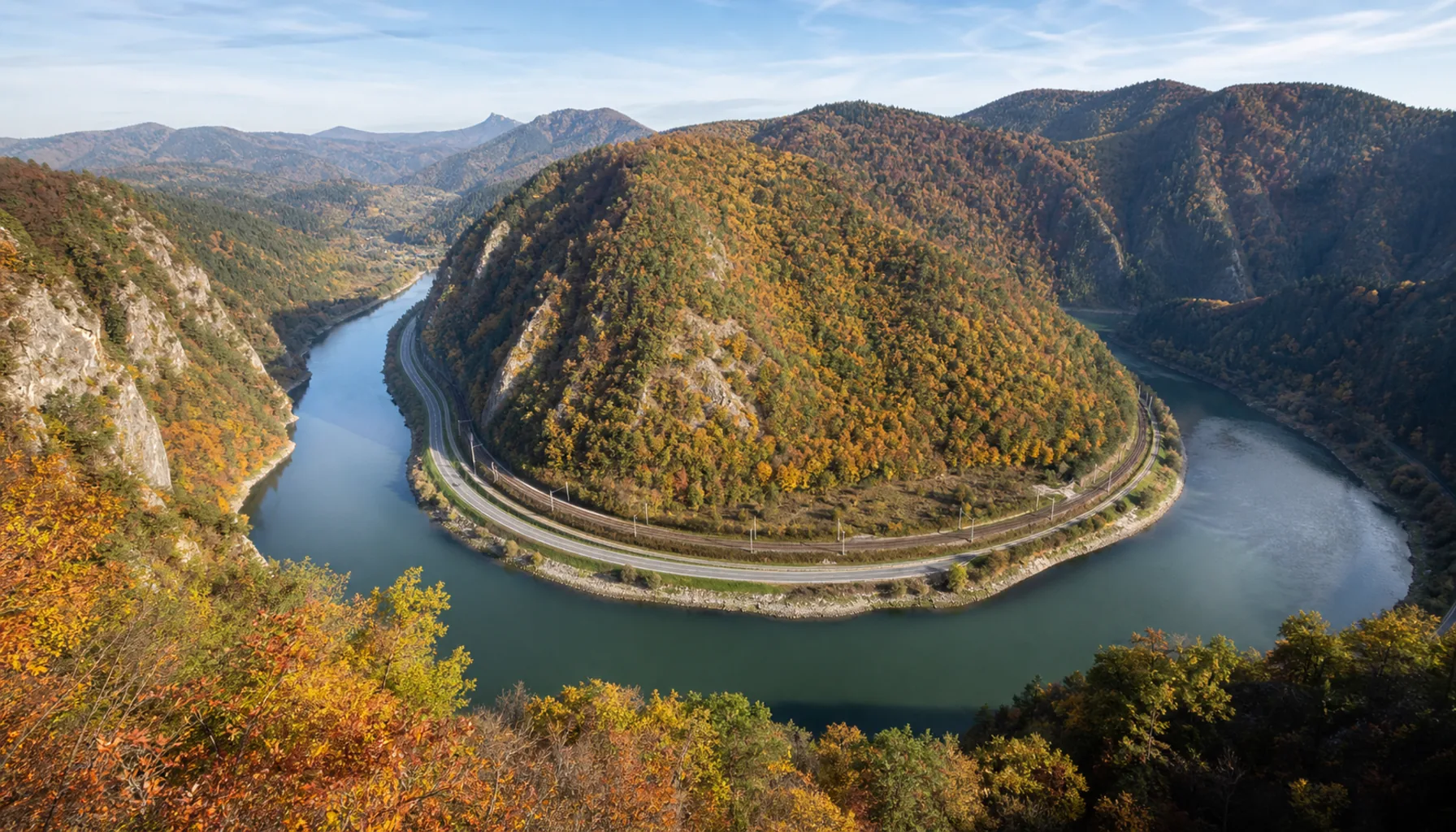
The Strečno gorge was the stretch they talked about. Fast water, rock walls, a narrow channel and a bend that had to be taken exactly right — and above it, on both sides, castles whose business was to charge you for the privilege of passing. Rafting for timber died out with the railway and the regulation of the river; today rafts run on the Váh only in the warm season, for visitors, which is a much gentler version of the same trip.O strečnianskej tiesňave hovorili najviac. Rýchla voda, skalné steny, úzke koryto a zákruta, ktorú bolo treba trafiť presne — a nad tým všetkým z oboch strán hrady, ktorých biznisom bolo vypýtať si za to, že smiete prejsť. Splavovanie dreva zaniklo so železnicou a s reguláciou rieky; dnes plte na Váhu premávajú len v teplej sezóne, pre návštevníkov, a je to podstatne miernejšia verzia tej istej cesty.
A road on one bank, a river in the middle, and a castle on each side of it — nobody passed here for free.Cesta na jednom brehu, rieka v strede a hrad na každej strane — tadiaľto neprešiel nikto zadarmo.