Castle, Court and County ArchiveHrad, súd a stoličný archív
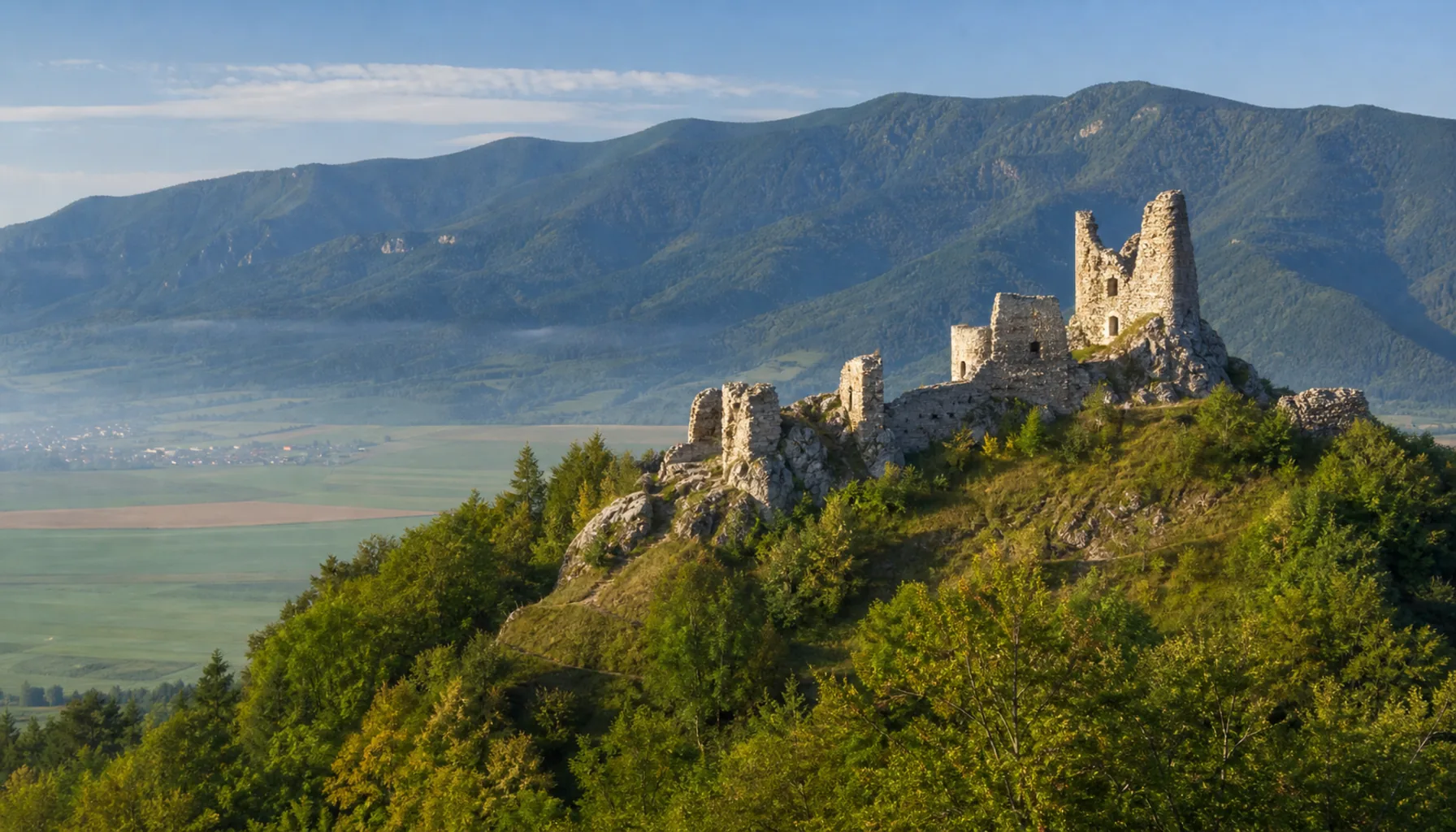
Sklabiňa was built in the thirteenth century as a royal castle, commanding the eastern edge of the Turiec basin where the valley meets the slopes of the Veľká Fatra. What makes it unusual is what it became. In the later Middle Ages it grew into the administrative seat of the county — the place where the assembly of the nobility met, where the county’s records and seal were kept, and where the machinery of local government physically lived.Sklabiňa vznikla v trinástom storočí ako kráľovský hrad, ktorý ovládal východný okraj Turčianskej kotliny, kde údolie prechádza do svahov Veľkej Fatry. Nezvyčajným ju robí to, čím sa stala. V neskoršom stredoveku z nej vyrástlo správne sídlo stolice — miesto, kde zasadalo zhromaždenie šľachty, kde sa uchovávali stoličné písomnosti a pečať a kde fyzicky sídlil aparát miestnej správy.
From the early sixteenth century the castle and the office went together: the Révay family held Sklabiňa and, with it, the hereditary lieutenancy of Turiec, a position they kept for generations. It is a distinctly Slovak-highland version of power — not a frontier fortress collecting glory in battle, but a working county seat with a courtroom, a strongroom and a family that ran the district. Later the Révays added a Renaissance manor block inside the walls, so that the castle could be lived in as well as administered from.Od začiatku šestnásteho storočia patrili hrad a úrad k sebe: rod Révaiovcov držal Sklabiňu a s ňou aj dedičné županstvo Turca, ktoré si udržal po generácie. Je to výrazne hornouhorská podoba moci — nie pohraničná pevnosť zbierajúca slávu v boji, ale fungujúce stoličné sídlo so súdnou sieňou, s trezorovou miestnosťou a s rodinou, ktorá spravovala okres. Neskôr Révaiovci pristavali vnútri hradieb renesančný kaštieľ, aby sa na hrade dalo nielen úradovať, ale aj bývať.
Turiec never had an Ottoman garrison on its soil — the frontier stopped a long way south of here, on the line of Fiľakovo and the Novohrad hills. But the county paid for that war and sent men to it. Levies were raised, taxes assessed and complaints heard in this courtyard, and the sixteenth-century business of Sklabiňa was to a large extent the administration of a conflict happening two hundred kilometres away.Turiec nikdy nemal na svojom území osmanskú posádku — hranica sa zastavila ďaleko na juh odtiaľto, na línii Fiľakova a novohradských kopcov. Stolica však na tú vojnu platila a posielala do nej mužov. Na tomto nádvorí sa vypisovali stavovské vojská, vyrubovali dane a vypočúvali sťažnosti — a agenda Sklabine v šestnástom storočí bola do veľkej miery správou konfliktu, ktorý prebiehal dvesto kilometrov ďaleko.