Four Things to FindŠtyri veci, ktoré si nájdite
Sklabiňa is a site to walk slowly, because most of what is interesting is a junction between two periods or between ruin and repair.Sklabiňu sa oplatí prejsť pomaly, lebo väčšina zaujímavého sa skrýva na spojoch — medzi dvoma obdobiami alebo medzi zrúcaninou a opravou.
The Renaissance manor inside the wallsRenesančný kaštieľ vnútri hradieb
A comfortable house set down inside a fortress. The window rhythm, the proportions and the flat facade all belong to a different century from the walls around them, and the contrast is the clearest thing on the site.Pohodlný dom vsadený do pevnosti. Rytmus okien, proporcie aj plochá fasáda patria inému storočiu než múry okolo nich a tento kontrast je na celej lokalite najzreteľnejší.
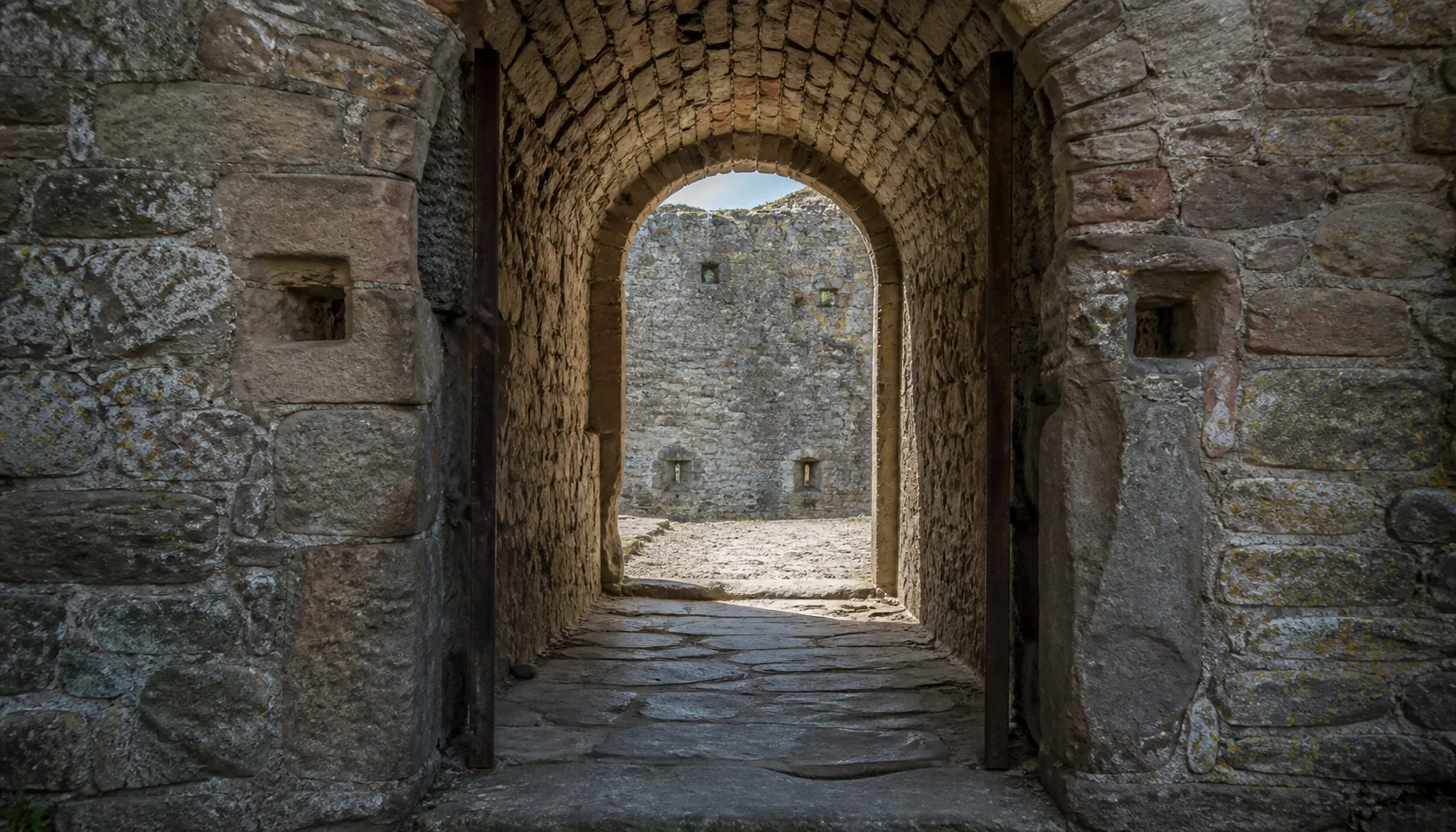
The gate and the entry passageBrána a vstupný priechod
A county seat had traffic: petitioners, tax men, carters, soldiers. Look at how the entry is arranged to control that flow, and where doors and bar-holes still show in the stone.Stoličné sídlo malo premávku: prosebníkov, výbercov daní, furmanov, vojakov. Všímajte si, ako je vstup usporiadaný, aby tento tok riadil, a kde v kameni ešte vidno dvere a otvory na závoru.
The volunteer restorationDobrovoľnícka obnova
Sklabiňa is one of the success stories of the Slovak volunteer castle movement: sustained, patient work that has taken the ruin from collapsing to stable and made parts of it safely walkable again.Sklabiňa je jedným z úspešných príbehov slovenského dobrovoľníckeho hradného hnutia: vytrvalá trpezlivá práca, ktorá zrúcaninu posunula z rúcania do stabilného stavu a časti areálu opäť sprístupnila.
The fire line of 1944Stopa po požiari roku 1944
This castle was not ruined slowly. It was burnt out within living memory, and in places the stone still shows it. It is a very different kind of damage from four centuries of weather, and worth looking for deliberately.Tento hrad nespustol pomaly. Vyhorel v pamäti ešte žijúcich ľudí a na niektorých miestach to kameň stále ukazuje. Je to celkom iný druh poškodenia než štyri storočia počasia a oplatí sa ho cielene hľadať.