Burnt Within Living MemoryVypálený v pamäti žijúcich
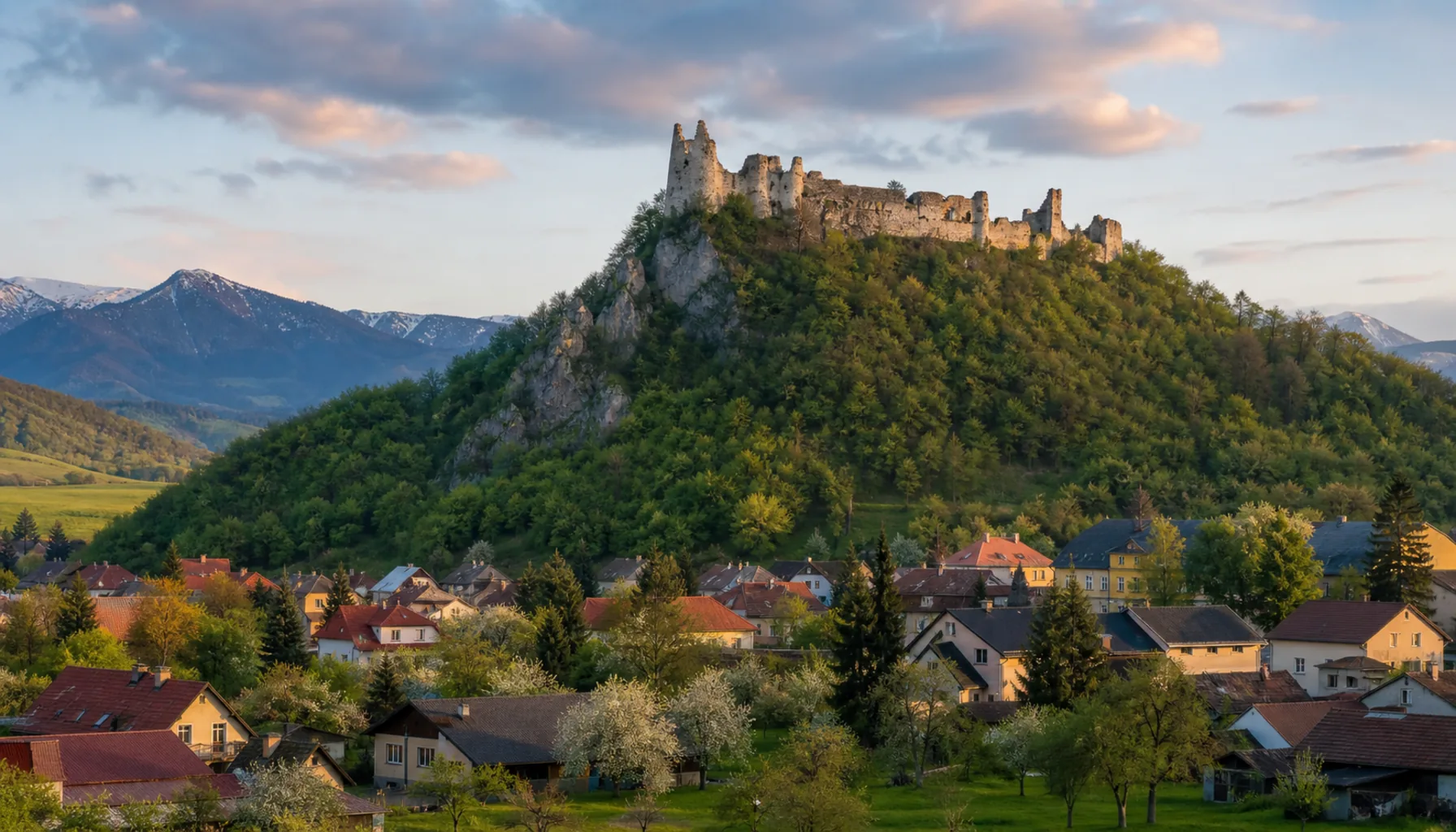
Sklabiňa did not fall to a medieval siege. It came through six centuries with its walls and its manor block standing, and then in the autumn of 1944 it was burnt out during the German suppression of the Slovak National Uprising. Turiec was one of the heartlands of that rising, and the wooded ranges on either side of this basin were partisan country; the reprisals that followed fell on the villages under those hills as well as on the fighters in them.Sklabiňa nepadla v stredovekom obliehaní. Prešla šiestimi storočiami s múrmi i kaštieľom v celku — a potom, na jeseň roku 1944, vyhorela počas nemeckého potláčania Slovenského národného povstania. Turiec bol jedným z jadier tohto povstania a zalesnené pohoria po oboch stranách kotliny boli partizánskym územím; represálie, ktoré nasledovali, dopadli aj na dediny pod tými vrchmi, nielen na bojovníkov v nich.
Six hundred years of walls, ended in a single autumn — and the people who remember it are still alive.Šesťsto rokov múrov sa skončilo za jednu jeseň — a ľudia, ktorí si to pamätajú, ešte žijú.
That is why Sklabiňa reads differently from an older ruin. At Divín or Čabraď you are looking at damage two or three centuries deep, softened by weather and by trees. Here the ruin is modern. The Renaissance manor lost its roof and floors inside a few hours, and everything that has happened to the building since — collapse, vegetation, the slow opening of the walls — has happened in eighty years rather than four hundred.Práve preto sa Sklabiňa číta inak než staršia zrúcanina. Na Divíne či Čabradi hľadíte na poškodenie staré dve či tri storočia, zmäkčené počasím a stromami. Tu je zrúcanina moderná. Renesančný kaštieľ prišiel o strechu a stropy v priebehu niekoľkých hodín a všetko, čo sa s budovou udialo odvtedy — rúcanie, nálety drevín, pomalé otváranie múrov — sa udialo za osemdesiat rokov, nie za štyristo.
The restoration has to be read against that. When the volunteers of the Donjon association began work in the mid-2000s, they were not conserving a picturesque medieval ruin — they were stopping a building that had been intact within living memory from disappearing altogether. Twenty years on, that is largely what they have achieved, and the difference is visible in every capped wall and rebuilt arch on the site.Obnovu treba čítať práve na tomto pozadí. Keď dobrovoľníci združenia Donjon začali v polovici 2000-tych rokov pracovať, nekonzervovali malebnú stredovekú zrúcaninu — zastavovali úplný zánik stavby, ktorá bola v pamäti žijúcich ľudí ešte celá. O dvadsať rokov neskôr sa im to z veľkej časti podarilo a ten rozdiel vidno na každej zakrytej korune múru a na každom domurovanom oblúku.