Veľký Meder · the Žitný ostrovVeľký Meder · Žitný ostrov
Culture in Veľký MederKultúra vo Veľkom Mederi
A market town on the flattest ground in Slovakia, with a charter from Matthias Corvinus, a church rebuilt three times over, and hot water from deep under the island.Trhové mesto na najrovnejšej pôde na Slovensku — s výsadnou listinou od Mateja Korvína, kostolom prestavaným natrikrát a horúcou vodou z hĺbky pod ostrovom.
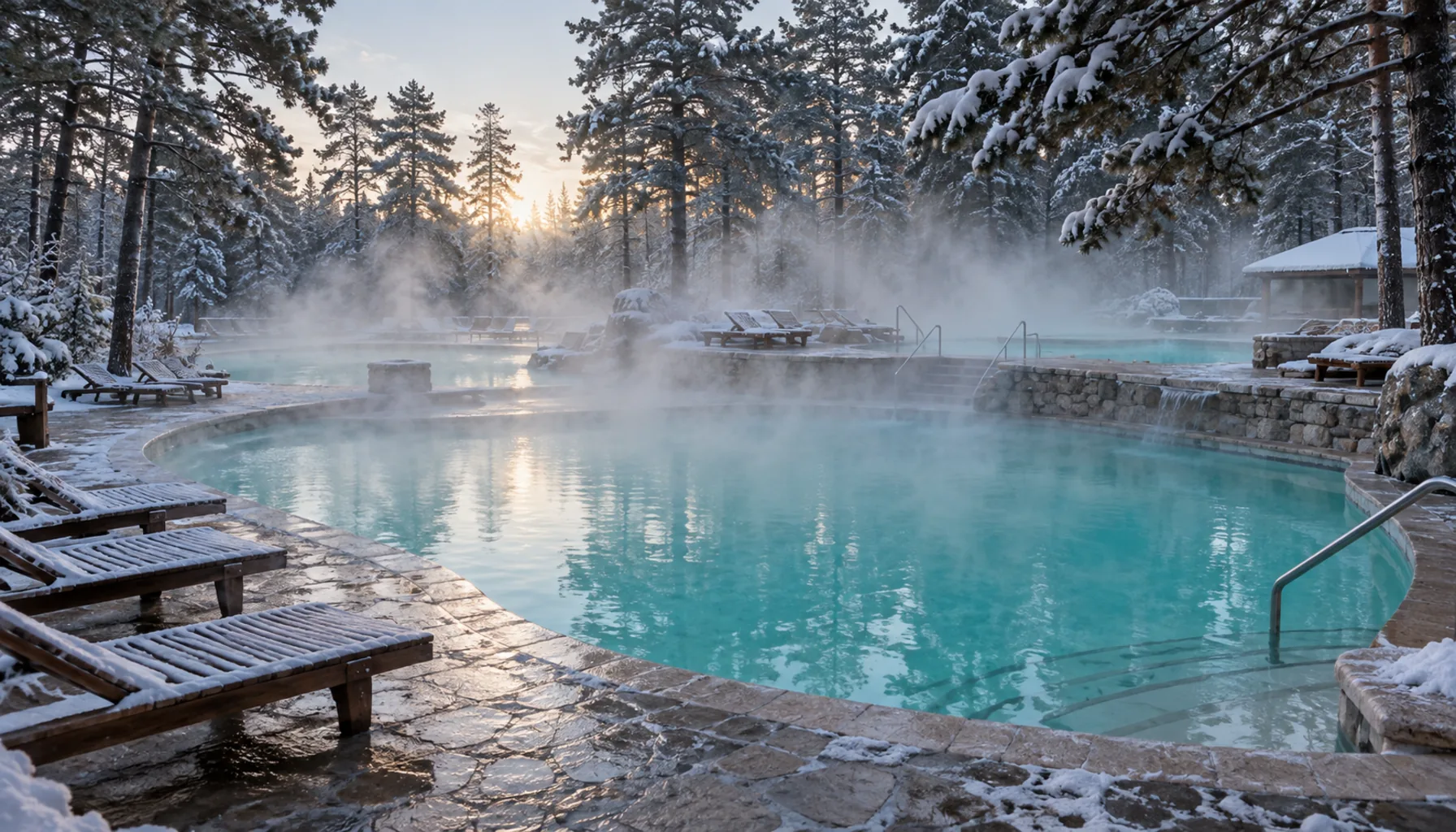
Steam rising off the outdoor thermal basins at Veľký Meder, which are laid out among mature pines rather than on open ground.Para stúpa z vonkajších termálnych bazénov vo Veľkom Mederi, ktoré ležia medzi vzrastlými borovicami, nie na holej pláni.
The year in Veľký MederRok vo Veľkom Mederi
On 15 December 1466 King Matthias Corvinus granted the town three annual fairs, the right to govern itself and what the charters call the right of the sword. Those three fairs were the year for four hundred years, and the market is still the oldest thing in the calendar. What is on now is what a market town of some eight thousand people keeps: markets, a town day, church feasts, school and club events. Hungarian and Slovak are both everyday languages here and the programme runs in both. We name no individual events, because programmes change faster than a page like this does.Pätnásteho decembra 1466 udelil kráľ Matej Korvín mestu tri výročné jarmoky, právo spravovať sa samo a to, čo listiny nazývajú právo meča. Tie tri jarmoky boli po štyristo rokov celým rokom a trh je dodnes najstaršou vecou v mestskom kalendári. Dnes sa tu deje to, čo si drží trhové mesto s ôsmimi tisíckami obyvateľov: trhy, dni mesta, cirkevné sviatky, školské a spolkové podujatia. Maďarčina aj slovenčina sú tu bežnými jazykmi každého dňa a program beží v oboch. Jednotlivé podujatia tu nemenujeme, lebo programy sa menia rýchlejšie než takáto stránka.
The other calendar is the thermal park, and it is the reason most visitors come. Warm mineral water from a deep borehole feeds a large complex of outdoor and indoor pools laid out among mature pines — unusual in itself, because most lowland thermal baths sit on open ground with no shade at all. It runs through the year, the outdoor pools busiest in high summer, so confirm the season before planning a day around it. Around it the season is the town's second economy: hotels, guesthouses, campsites and a good deal of seasonal work.Druhým kalendárom je termálny park a je dôvodom, pre ktorý sem väčšina návštevníkov prichádza. Teplá minerálna voda z hlbokého vrtu napája veľký areál vonkajších a vnútorných bazénov rozložený medzi vzrastlými borovicami — čo je samo osebe nezvyčajné, lebo väčšina nížinných termálnych kúpalísk leží na holej ploche bez tieňa. Funguje po celý rok, vonkajšie bazény sú najplnšie v plnom lete, preto si pred plánovaním dňa overte sezónu a otváracie hodiny. Sezóna okolo neho je druhým hospodárstvom mesta: hotely, penzióny, kempy a veľa sezónnej práce.
Where culture livesKde žije kultúra
The town is a working market town rather than a monument, and it is honest about that: one long main street, a church, a park, and shops that serve the villages around. Its cultural equipment is the ordinary equipment of a Slovak town of this size, described as a category rather than named: a cultural centre with a hall and a programme, a public library, a school of art for children, amateur choirs and folk groups, and the halls of the schools. That is not a small thing in a district of villages: the town is where the surrounding parishes come for a hall.Mesto je skôr fungujúcim trhovým mestom než pamiatkou a priznáva si to: jedna dlhá hlavná ulica, kostol, park a obchody, ktoré slúžia okolitým dedinám. Jeho kultúrna výbava je bežnou výbavou slovenského mesta tejto veľkosti a opisujeme ju ako kategóriu: kultúrny dom so sálou a programom, mestská knižnica, základná umelecká škola, ochotnícke zbory a folklórne skupiny a školské sály. V okrese dedín to nie je málo: mesto je miestom, kam okolité farnosti chodia za sálou.
What repays a longer stay is the country rather than the town. The flat lanes make some of the easiest cycling in Slovakia, the backwaters of the Little Danube are canoeing and fishing water, and the Danube embankment to the south carries the long-distance riverside cycle route. A good deal of what people here do together happens outdoors and on the water, and that is worth saying on a culture page rather than pretending a gallery exists where there is none.Za dlhší pobyt sa tu odmení skôr krajina než mesto. Rovné poľné cesty patria k najpohodlnejšej cyklistike na Slovensku, ramená Malého Dunaja severne od mesta sú vodou na kanoe a rybačku a dunajská hrádza na juhu nesie diaľkovú cyklotrasu popri rieke. Veľká časť toho, čo tu ľudia robia spoločne, sa odohráva vonku a na vode — a to sa oplatí na stránke o kultúre povedať, namiesto predstierania galérie, ktorá tu nie je.
The buildings that carry itBudovy, ktoré ju nesú
There is no castle here and there never was one. The name is first recorded as Marthamagor in 1239 and then as Villa Meger in a charter of King Béla IV in 1268, which names a royal officer of count's rank, Parabuch, as its owner — either side of the Mongol invasion of 1241, after which Béla covered Hungary in stone castles. Not one was built here, because an island of gravel and silt offers neither the stone nor the height a castle needs. Whatever the lords built, they built on the flat, and the shape the town kept instead is the long street.Hrad tu nie je a nikdy nebol. Meno je prvý raz zapísané ako Marthamagor v roku 1239 a potom ako Villa Meger vo veľkej listine kráľa Bela IV. z roku 1268, ktorá ako majiteľa uvádza kráľovského úradníka v hodnosti comesa menom Parabuch — a všetko to leží na oboch stranách mongolského vpádu z roku 1241, po ktorom Belo pokryl Uhorsko kamennými hradmi. Tu nepostavili ani jeden, lebo ostrov zo štrku a nánosov neponúka ani kameň, ani výšku, akú hrad potrebuje. Čokoľvek tunajší páni postavili, postavili na rovine — a tvarom, ktorý si mesto namiesto hradu udržalo, je dlhá ulica.
The parish church is the town's continuous building. It was first built around 1460, in the same confident generation as the charter; it was badly damaged and rebuilt between 1740 and 1755 under the Zichys, who held the town through the seventeenth and eighteenth centuries; and it was rebuilt once more in the eclectic style then in fashion and consecrated on 28 October 1900. The other thing the town kept was paperwork: its privileges were confirmed again in 1534, 1568, 1609, 1631 and 1666, and last in 1847, because a town that lost its charter lost its fairs, its court and its standing at once. Between 1948 and 1990 the town was officially called Čalovo, and older maps and timetables still carry that name.Farský kostol je nepretržitou stavbou mesta. Prvý raz ho postavili okolo roku 1460, v tej istej sebavedomej generácii ako výsadnú listinu; ťažko poškodený bol prestavaný v rokoch 1740 až 1755 za Zičiovcov, ktorí mesto držali v sedemnástom a osemnástom storočí; a ešte raz ho prestavali v eklektickom slohu vtedajšej módy a vysvätili 28. októbra 1900. Druhou vecou, ktorú si mesto udržalo, boli listiny: jeho výsady potvrdili znova v rokoch 1534, 1568, 1609, 1631 a 1666 a naposledy v roku 1847, lebo mesto, ktoré o listinu prišlo, stratilo naraz jarmoky, súd aj postavenie. V rokoch 1948 až 1990 sa mesto úradne volalo Čalovo a staršie mapy a cestovné poriadky to meno nesú dodnes.
The island is a history of waterDejiny ostrova sú dejinami vody
Before the Danube was regulated in the nineteenth century the river moved its arms across this whole plain, and villages on the island were flooded, abandoned and rebuilt. Under Austria-Hungary the river was diked and the marshes drained, which ended those floods and turned the Žitný ostrov into the best farmland in the kingdom; at the end of the century the railway from Bratislava to Komárno gave the town a station. Almost everything modern here follows from those two engineering decisions rather than from anything a lord did.Kým Dunaj v devätnástom storočí neupravili, prehadzoval si ramená po celej tejto rovine a dediny na ostrove sa zaplavovali, opúšťali a stavali nanovo. Za Rakúsko-Uhorska rieku ohradili hrádzami a močiare odvodnili, čím sa záplavy skončili a Žitný ostrov sa stal najlepšou poľnohospodárskou pôdou v krajine; koncom storočia pretiahli po ostrove železnicu z Bratislavy do Komárna a mesto dostalo stanicu. Takmer všetko moderné tu vyplýva z týchto dvoch inžinierskych rozhodnutí, nie z niečoho, čo urobil zemepán.
The water has not been beaten, only managed. In June 1965 the Danube broke through its dyke at the lower end of the island; the town was saved by emergency banks thrown up around it, but a wide stretch of the Žitný ostrov went under. Nine years later, in 1974, a deep borehole struck hot water and a thermal bath opened on it — the town's future turned out to have been lying underneath it all along. The park was rebuilt in 2000 and again in 2003. Water flooded this town, then drained and fed it, and now it fills its pools.Voda nie je porazená, len zvládnutá. V júni 1965 pretrhol Dunaj hrádzu na dolnom konci ostrova; mesto zachránili narýchlo nasypané ochranné hrádze, ale široký pás Žitného ostrova sa ocitol pod vodou. O deväť rokov, v roku 1974, narazil hlboký vrt na horúcu vodu a otvorili na nej termálne kúpalisko — budúcnosť mesta, ako sa ukázalo, ležala celý čas pod ním. Areál prestavali v roku 2000 a znova v roku 2003. Voda toto mesto najprv zaplavovala, potom ho odvodnila a živila a dnes mu plní bazény.