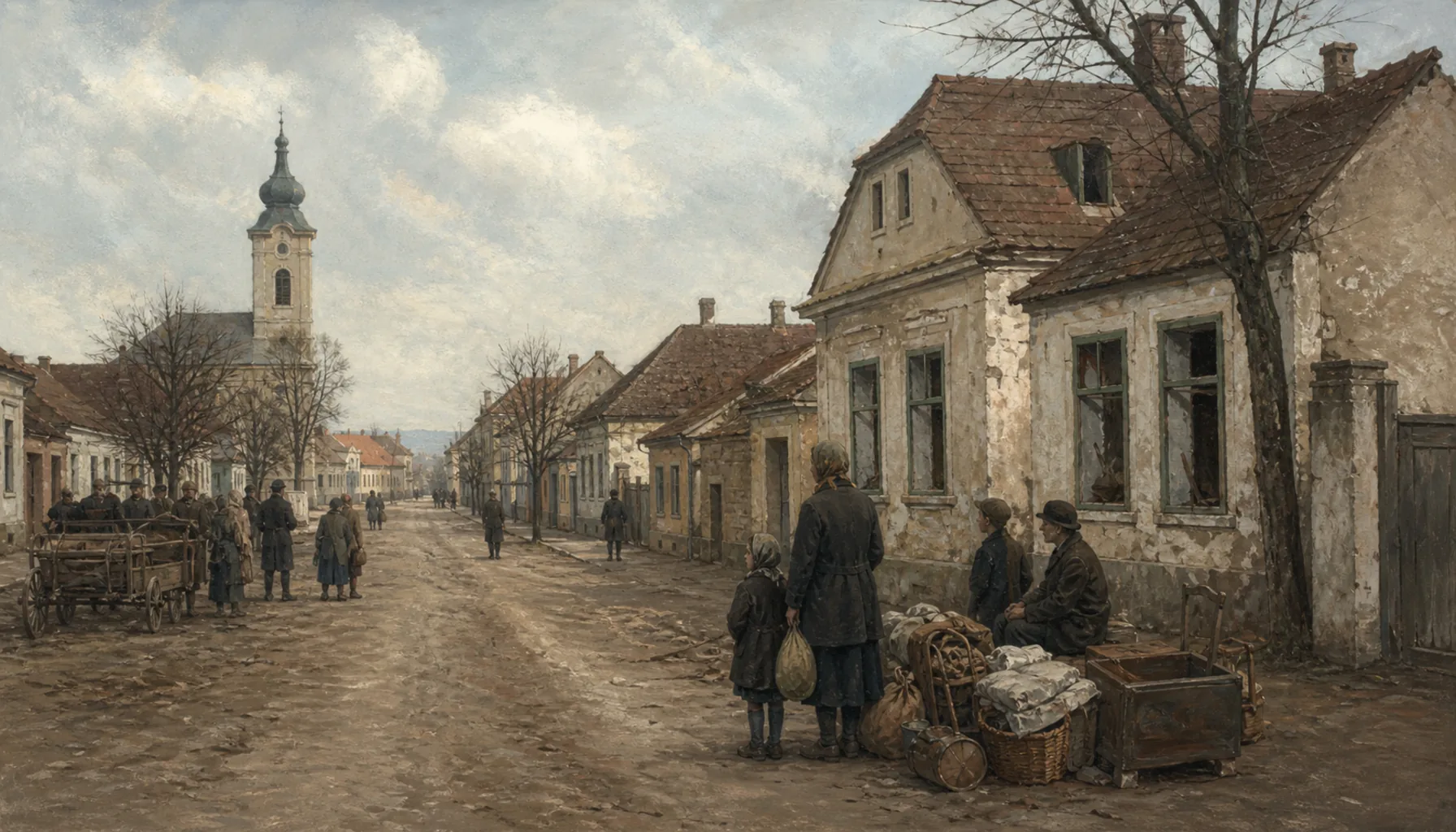
The years right after the war changed who lived here. The German villagers — the descendants of Joseph II's settlers of 1786 — were expelled in 1946 under the decrees that applied to Germans across Czechoslovakia, and the German half of the town ended after a hundred and sixty years. Then, in 1948, the name went too. Diószeg became Sládkovičovo, after Andrej Sládkovič, the Krupina-born poet of Marína and Detvan, who had no connection with the place whatever. It was one of hundreds of such renamings across the south that year — neighbouring Guta became Kolárovo in the same wave.Povojnové roky vymenili obyvateľstvo. Nemeckých dedinčanov — potomkov osadníkov Jozefa II. z roku 1786 — roku 1946 vysídlili podľa dekrétov, ktoré platili pre Nemcov v celom Československu, a nemecká polovica mesta sa po stošesťdesiatich rokoch skončila. A potom, roku 1948, zmizlo aj meno. Z Diószegu sa stalo Sládkovičovo podľa Andreja Sládkoviča, krupinského básnika Maríny a Detvana, ktorý s obcou nemal nič spoločné. Bola to jedna zo stoviek podobných zmien názvov na juhu v tom roku — susedná Guta sa vtedy stala Kolárovom.