Sládkovičovo · the Danubian plainSládkovičovo · Podunajská nížina
A sugar town on flat ground with an industrialist's manor house in the middle of it, thermal water in the woods on its edge, and a name borrowed from a poet who never came here.Cukrovarnícke mesto na rovine, s kaštieľom priemyselníckej rodiny v strede, termálnou vodou v lese na okraji a menom požičaným od básnika, ktorý tu nikdy nebol.
For a hundred and thirty years this town's year had a shape you could set a clock by. The refinery built here in 1867 worked to the campaign — the few weeks in autumn when the beet is lifted and has to be processed at once — and the whole place bent around it: shifts, wages, and a village that emptied into the works and filled again. Market rights had come much earlier, in 1582, and the fairs they allowed were the other fixed point. The refinery closed in 2000, and with it went the one date everybody in town shared.Sto tridsať rokov mal rok v tomto meste tvar, podľa ktorého sa dali riadiť hodiny. Cukrovar postavený v roku 1867 pracoval na kampaň — na tých pár týždňov na jeseň, keď sa repa vyberie a musí sa hneď spracovať — a celé mesto sa okolo toho ohýbalo: zmeny, výplaty a dedina, ktorá sa vyliala do závodu a znova sa naplnila. Trhové právo prišlo oveľa skôr, v roku 1582, a jarmoky, ktoré umožňovalo, boli druhým pevným bodom. Cukrovar sa v roku 2000 zavrel a s ním zmizol jediný dátum, ktorý mali v meste všetci spoločný.
What is left is the calendar of a town of some five thousand people: a town day, markets, church feasts, school and club events, and a summer that moves to Vincov les, the thermal swimming complex in the woods on the edge of town. The water comes from the same hot aquifer as the pools at Galanta and Štúrovo, and it is a summer place — grass, warm basins, shade. Seasons and opening times change, so check before you plan a day around it. Slovak and Hungarian are both everyday languages here, and the town's cultural life runs in both without anybody making a point of it.Zostal kalendár mesta s približne piatimi tisíckami obyvateľov: dni mesta, trhy, cirkevné sviatky, školské a spolkové podujatia a leto, ktoré sa presunie do Vincovho lesa, termálneho kúpaliska v lese na okraji mesta. Voda prichádza z toho istého horúceho kolektora, aký napája bazény v Galante a Štúrove, a je to letné miesto — tráva, teplé vonkajšie bazény, tieň stromov. Sezóny a otváranie sa menia, preto si to pred plánovaním dňa overte. Slovenčina aj maďarčina sú tu bežnými jazykmi každého dňa a kultúrny život mesta beží v oboch bez toho, aby z toho niekto robil tému.
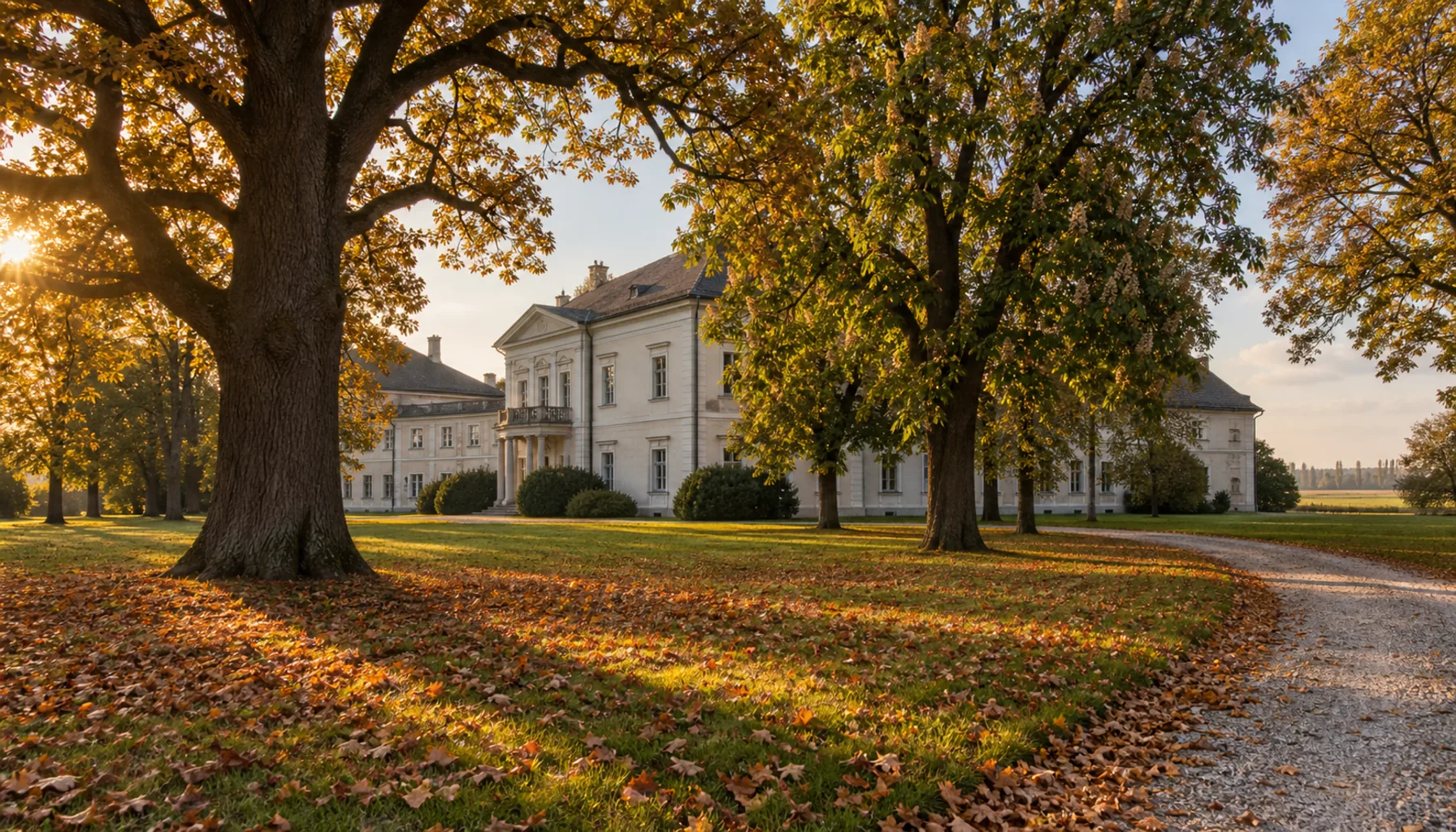
The Kuffner manor house and its park stand in the middle of the town and are the one piece of architecture here with any ambition. It was built by the family that ran the refinery — industrialists who took the village's name into their noble title, Kuffner de Diószegh — and it has been adapted to other uses rather than kept as a museum, so what most visitors actually see is the outside and the mature trees around it. That is worth knowing before you travel for it.Kuffnerovský kaštieľ s parkom stojí v strede mesta a je jedinou tunajšou stavbou s architektonickou ambíciou. Postavila ho rodina, ktorá viedla cukrovar — priemyselníci, ktorí si meno obce vzali do šľachtického prídomku Kuffner de Diószegh — a dnes slúži iným účelom, nie ako múzeum, takže väčšina návštevníkov vidí vonkajšok a vzrastlé stromy okolo. Oplatí sa to vedieť skôr, než sa sem preň vyberiete.
Everything else is the ordinary equipment of a small Slovak town, and we describe it as a category rather than naming names that may be out of date by the time you read them: a cultural centre with a hall and a programme, a public library, a school of art for children, amateur groups, and the halls of the schools. One thing here is unusual for the size of the place — a private university opened in 2005 and keeps a small student population in the town. Galanta, with its two Esterházy houses, is a short run down the road and carries much of the district's programme.Všetko ostatné je bežná výbava malého slovenského mesta a opisujeme ju ako kategóriu, aby sme neuvádzali mená, ktoré môžu byť v čase čítania neplatné: kultúrny dom so sálou a programom, mestská knižnica, základná umelecká škola, ochotnícke súbory a školské sály. Jedna vec je na mesto tejto veľkosti nezvyčajná — v roku 2005 tu vznikla súkromná vysoká škola a drží v meste malú študentskú obec. Galanta s dvoma esterházyovskými kaštieľmi je kúsok po ceste a odohráva sa v nej podstatná časť okresného programu.
There is no relief in this landscape at all — wheat, maize and beet, drainage ditches, poplar windbreaks — so the town has no castle hill and never pretended to one. Its oldest fact is a piece of parchment: Diószeg is first written down in a charter of King Béla IV in 1252, in the decade when the king was resettling a lowland the Mongol armies had ridden across in 1241 and his clerks were writing everything down. Nothing says this village was destroyed, and nothing should be invented. What the charter proves is that people were already here.V tejto krajine niet nijakého prevýšenia — pšenica, kukurica a repa, odvodňovacie kanály, topoľové vetrolamy — takže mesto nemá hradný kopec a nikdy si naň nehralo. Jeho najstarším faktom je kus pergamenu: Diószeg je prvý raz zapísaný v listine kráľa Bela IV. z roku 1252, v desaťročí, keď kráľ znovu osídľoval nížinu, cez ktorú v roku 1241 prešli mongolské vojská, a jeho pisári zapisovali všetko. Nič nehovorí, že táto dedina bola zničená, a nič sa nemá vymýšľať. Listina dokazuje, že ľudia tu už boli.
What you actually see was built by the railway and the refinery. The line from Bratislava towards Pest opened through the village in 1850, one of the first main lines in the monarchy; from that year the harvest could reach a city market in hours instead of days. Seventeen years later the refinery followed, and with it the station buildings, the workers' housing and the manor house. A sugar refinery is the fields' own factory, and it decided what the land grew for the next hundred years — which is why the fields you see from the train are worked in blocks rather than strips, merged into a collective farm in the nineteen-fifties. Town status, first held in 1582, was restored in 1983.To, čo tu naozaj vidno, postavila železnica a cukrovar. Trať z Bratislavy smerom na Pešť tadiaľto otvorili v roku 1850, ako jednu z prvých hlavných tratí v monarchii; odvtedy sa úroda dostala na mestský trh za hodiny namiesto dní a čokoľvek ťažké sa dalo doviezť. O sedemnásť rokov nasledoval cukrovar a s ním staničné budovy, robotnícke domy a kaštieľ. Cukrovar je vlastnou továrňou polí a rozhodol, čo sa tu bude pestovať na sto rokov dopredu — a je aj dôvodom, prečo polia, ktoré vidno z vlaku, obrábajú v blokoch a nie v pásoch: to rozhodnutie padlo v päťdesiatych rokoch, keď ich zlúčili do družstva. Postavenie mesta, prvý raz získané v roku 1582, mu vrátili v roku 1983.
The older name is Diószeg, and it comes from dió, the Hungarian word for walnut — the sources connect it to a walnut wood that once grew here. For most of its history there were two Diószegs side by side: the larger Magyardiószeg and the smaller Németdiószeg, founded when Emperor Joseph II settled German farmers and craftsmen here in 1786. They stayed two separate villages for more than a century and a half and were joined into one municipality only in 1943.Staršie meno je Diószeg a pochádza z maďarského dió, teda orech — pramene ho spájajú s orechovým hájom, ktorý tu kedysi rástol. Väčšinu dejín stáli vedľa seba dva Diószegy: väčší Magyardiószeg a menší Németdiószeg, ktorý vznikol, keď sem cisár Jozef II. v roku 1786 usadil nemeckých roľníkov a remeselníkov. Zostali dvoma samostatnými obcami vyše storočia a pol a do jednej sa spojili až v roku 1943.
The present name was given in 1948, after Andrej Sládkovič, the Krupina-born poet of Marína and Detvan, who had no connection with the place whatever. It is worth saying plainly, and it is not unique — several neighbouring towns carry names arrived at the same way. A borrowed name is an odd thing to live with, and this town lives with it lightly: the poet is not claimed here, the walnut is not forgotten, and both names still get used depending on who is speaking.Dnešné meno dostalo mesto v roku 1948 po Andrejovi Sládkovičovi, krupinskom rodákovi a autorovi Maríny a Detvana, ktorý s týmto miestom nemal nič spoločné. Hovoríme to priamo, aby si návštevník nedomýšľal opak, a nie je to výnimka — viacero susedných miest nesie meno, ku ktorému prišlo rovnako. Požičané meno je zvláštna vec na spolunažívanie a toto mesto s ním žije ľahko: básnika si tu nikto neprivlastňuje, na orech sa nezabudlo a obe mená sa stále používajú podľa toho, kto hovorí.
Sixteen videos for Culture in Sládkovičovo.Šestnásť videí — Kultúra v Sládkovičove.