Sereď · the Váh crossingSereď · prechod cez Váh

Culture in SereďKultúra v Seredi

A working town on a river crossing that somebody has been collecting a toll at for a thousand years, with a classicist manor house standing on the walls of a water castle.Pracovné mesto pri riečnom prechode, na ktorom niekto vyberá mýto už tisíc rokov, s klasicistickým kaštieľom stojacim na múroch vodného hradu.

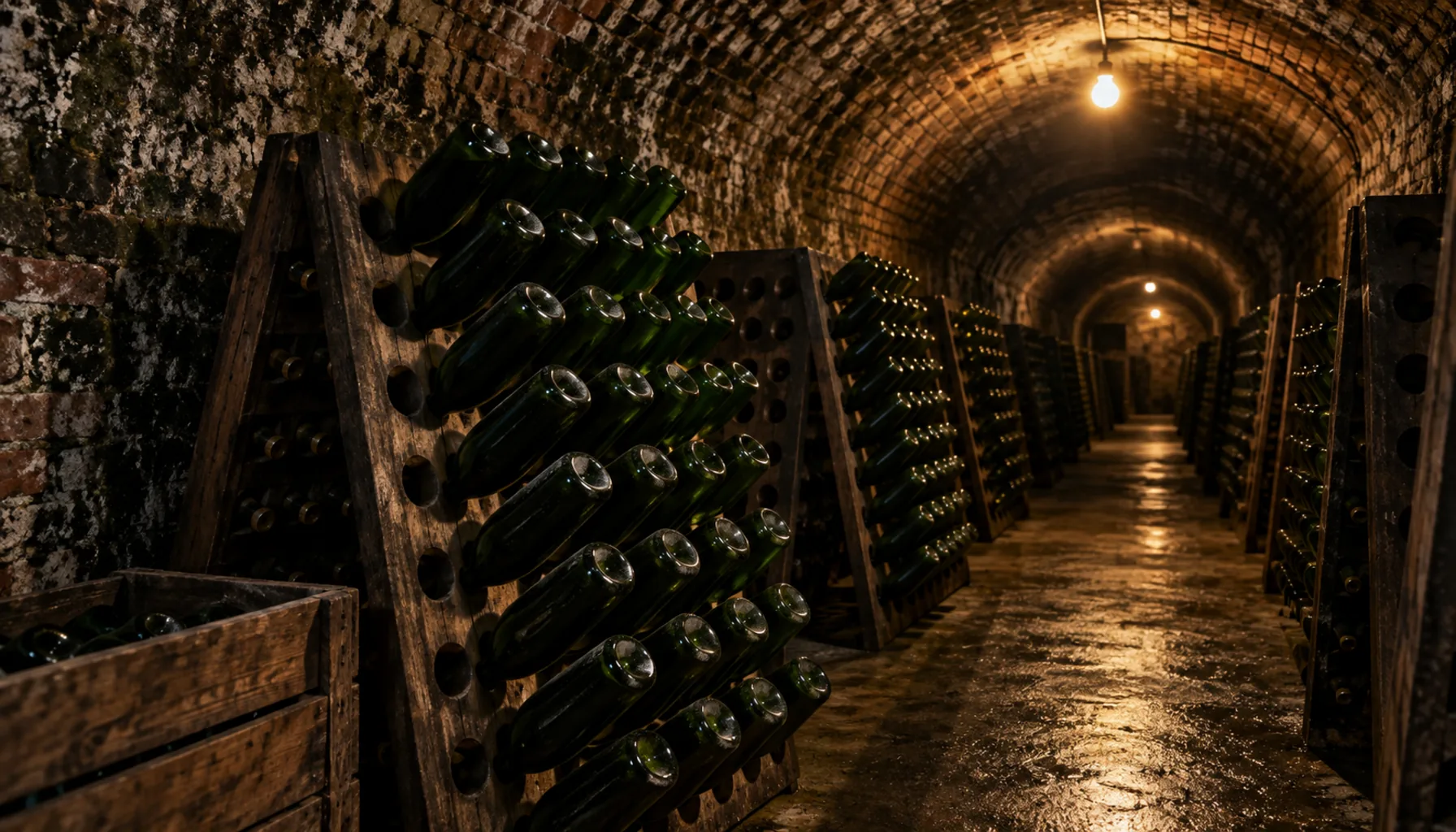
Bottles of sparkling wine resting neck-down in wooden riddling racks in a cellar in Sereď, where Slovakia's oldest sekt has been made since 1950.Fľaše sektu odpočívajú hrdlom nadol v drevených pupitroch v seredskej pivnici, kde sa najstarší slovenský sekt vyrába od roku 1950.

The year in SereďRok v Seredi

Sereď is a working town rather than a sightseeing one and it is honest about that, which also describes its calendar. What is on is what a town of this size and character keeps: markets on the square, a town day, church feasts, school and club events, and a summer that moves out of doors to the Váh embankment and the string of gravel lakes north of the town. The town's own listings are where the dates live.Sereď je skôr pracovné než výletné mesto a priznáva si to — a rovnako vyzerá aj jej kalendár. Deje sa tu to, čo si mesto tejto veľkosti a povahy drží: trhy na námestí, dni mesta, cirkevné sviatky, školské a spolkové podujatia a leto, ktoré sa presunie von k hrádzi Váhu a k reťazi štrkovísk severne od mesta. Dátumy nájdete v mestských oznamoch.

One thing in the town's year is genuinely its own. The making of Hubert, Slovakia's oldest sparkling wine, was moved here from Bratislava in 1950, and it is still made in Sereď. A production of that kind sets a rhythm in a town whether or not it advertises itself: it employs people and it is the thing outsiders have heard of.Jedna vec v mestskom roku je naozaj seredská. Výroba Huberta, najstaršieho slovenského sektu, sa sem v roku 1950 presťahovala z Bratislavy a robí sa v Seredi dodnes. Takáto výroba udáva mestu rytmus, či sa tým chváli alebo nie: dáva prácu a je tým, čo o meste počuli aj cudzí.

Where culture livesKde žije kultúra

The centre of the town's cultural life is the manor house and its landscape park, and the honest thing to say is that its condition and what is open have moved with a long-running restoration. Confirm before you travel for it. Everything else is the ordinary equipment of a Slovak town of this size, and we describe it as a category rather than naming names that may be wrong by the time you read them: a cultural centre with a hall and a programme, a public library, a school of art for children, amateur groups, and the halls of the schools.Ťažiskom kultúrneho života mesta je kaštieľ s krajinárskym parkom a poctivé je povedať, že jeho stav aj to, čo je prístupné, sa menili spolu s dlhoročnou obnovou. Pred cestou si to overte. Všetko ostatné je bežná výbava slovenského mesta tejto veľkosti a opisujeme ju ako kategóriu, aby sme neuvádzali mená, ktoré môžu byť v čase čítania neplatné: kultúrny dom so sálou a programom, mestská knižnica, základná umelecká škola, ochotnícke súbory a školské sály.

The most interesting thing under the manor house is not on display in the usual sense. Excavations carried out between 1981 and 1992 found the walls of a medieval water castle beneath today's building — a castle defended not by a hill but by ditches and river arms — and earlier work found traces of a fortification guarding the ford as far back as the tenth century. The classicist house on those foundations dates from about 1840. When you look at the building you are looking at the top layer of a site in continuous use for a thousand years.Najzaujímavejšie pod kaštieľom nie je vystavené v bežnom zmysle slova. Výskum v rokoch 1981 až 1992 našiel pod dnešnou budovou múry stredovekého vodného hradu — hradu chráneného nie kopcom, ale priekopami a ramenami rieky — a staršie nálezy odhalili stopy opevnenia strážiaceho brod už z desiateho storočia. Klasicistická budova na týchto základoch je z čias okolo roku 1840. Keď sa na ňu pozeráte, vidíte vrchnú vrstvu miesta, ktoré sa nepretržite používa tisíc rokov.

The buildings that carry itBudovy, ktoré ju nesú

Sereď's heritage is not a square of burgher houses, because Sereď was never that kind of town. The name is first written in 1313, spelt Zereth, in a document about church tithes — a fact about a piece of parchment, not about when people arrived. The castle at the ford was usually identified with Sempte, in Slovak Šintava, and gave its name to a lordship holding both banks; that lordship ended up with the Esterházy family, whose name the manor house still carries. The buildings that matter here were built by people who controlled traffic: a fort, a toll, a salt store, a bridge.Seredské dedičstvo nie je námestie meštianskych domov, lebo Sereď takým mestom nikdy nebola. Meno je prvý raz zapísané v roku 1313 v tvare Zereth, v listine o cirkevných desiatkoch — je to fakt o kuse pergamenu, nie o tom, kedy sem ľudia prišli. Hrad pri brode sa zvyčajne stotožňuje so Sempte, po slovensky Šintavou, a dal meno panstvu na oboch brehoch; to napokon pripadlo Esterházyovcom, ktorých meno kaštieľ nesie dodnes. Budovy, na ktorých tu záleží, stavali ľudia ovládajúci dopravu: pevnôstka, mýto, soľný sklad, most.

The second layer is industrial and just as much a part of the town's face. A sugar refinery opened in 1845, and in 1846 the horse-drawn railway from Bratislava through Trnava was extended to Sereď and ended here — the first railway in the Kingdom of Hungary, its wagons pulled by horses along iron rails. In the nineteen-sixties the state built a nickel smelter on the edge of the town, the largest works in the district and one of the dirtiest plants in the country; its flats, schools and shops are much of what you see today. It closed in the early nineteen-nineties, and the industrial park now on its cleaned-up ground does what Sereď has always done: handle other people's goods on their way somewhere else.Druhá vrstva je priemyselná a patrí k tvári mesta rovnako. V roku 1845 tu otvorili cukrovar a v roku 1846 predĺžili konskú železnicu z Bratislavy cez Trnavu do Serede, kde končila — prvá železnica v Uhorsku, s vozňami ťahanými koňmi po železných koľajniciach. V šesťdesiatych rokoch 20. storočia postavil štát na okraji mesta niklovú hutu, najväčší závod v okrese a jednu z najšpinavších prevádzok v krajine; jej byty, školy a obchody sú veľkou časťou toho, čo dnes vidíte. Zavreli ju začiatkom deväťdesiatych rokov a priemyselný park na jej vyčistenej pôde robí to, čo Sereď robila vždy: prekladá cudzí tovar na ceste inam.

The crossing, the salt and the cattleBrod, soľ a dobytok

What made Sereď was a shallow place in the Váh. Slovak accounts say the army of Emperor Henry IV crossed the river here in 1074, and by 1252 there is a record of a bridge and of a place where timber was moved from land to water. The old road from Buda to Prague ran along this bank, and rafts came down the Váh carrying salt from Poland, which is why the town kept a large salt store. Rafting outlasted almost everything else on the river and then stopped abruptly: the dam built upstream at Nosice closed the Váh to timber rafts in 1943.Sereď vznikla vďaka plytkému brodu na Váhu. Slovenské pramene uvádzajú, že tadiaľto v roku 1074 prešlo vojsko cisára Henricha IV., a k roku 1252 sa spomína most aj miesto, kde sa drevo prekladalo zo zeme na vodu. Po tomto brehu viedla stará cesta z Budína do Prahy a po Váhu prichádzali plte so soľou z Poľska — preto malo mesto veľký soľný sklad. Pltníctvo prežilo na rieke takmer všetko ostatné a potom zrazu skončilo: priehrada postavená vyššie pri Nosiciach uzavrela Váh pre plte v roku 1943.

For two centuries after the Ottomans took Buda in 1541 the frontier ran across the lowland not far to the south-east, and Sereď sat just behind it on the road that fed the war. Thousands of cattle passed through the town every year, driven north and west from the Hungarian plain to the markets of Vienna and Moravia, with grain going the same way; all of it had to be ferried or bridged across the Váh at the toll. A market town on a crossing does not need a battle to matter — it needs traffic, and this one had it. That is the tradition the town belongs to, and it is worth knowing before you judge it by its skyline.Dve storočia po tom, čo Osmani v roku 1541 dobyli Budín, viedla hranica cez nížinu neďaleko na juhovýchod a Sereď ležala hneď za ňou, na ceste, ktorá vojnu živila. Mestom prechádzali každý rok tisíce kusov dobytka hnaného z uhorskej nížiny na sever a západ na trhy do Viedne a na Moravu a s ním aj obilie; všetko sa muselo pri mýte previezť cez Váh. Trhové mesto pri prechode nepotrebuje bitku, aby bolo dôležité — potrebuje dopravu, a tú Sereď mala. To je tradícia, do ktorej mesto patrí, a oplatí sa ju poznať skôr, než ho posúdite podľa panorámy.

← Sereď← Sereď

WatchPozrite si

Sixteen videos for Culture in Sereď.Šestnásť videí — Kultúra v Seredi.