Šamorín · Žitný ostrovŠamorín · Žitný ostrov
A medieval market town at the head of the Žitný ostrov, with medieval wall paintings inside a whitewashed Reformed church and a very large sports campus on the fields at its edge.Stredoveké trhové mesto na hornom konci Žitného ostrova, so stredovekými nástennými maľbami v obielenom reformovanom kostole a s veľmi veľkým športovým areálom na poliach za jeho okrajom.
For four centuries this town's year was a trading year. Its German settlers were granted the right to live under Pressburg town law — their own magistrate and their own court instead of a lord's justice — and in 1405 King Sigismund made Šamorín a free royal town and exempted it from tolls. In 1411 he confirmed its right to hold markets, and in 1465 Matthias Corvinus confirmed the privileges his predecessor had granted. The long market space at the centre of the street plan is what all that paperwork actually built.Štyri storočia bol rok tohto mesta obchodný. Jeho nemeckí osadníci dostali právo žiť podľa prešporského mestského práva — s vlastným richtárom a vlastným súdom namiesto panskej spravodlivosti — a roku 1405 z neho kráľ Žigmund urobil slobodné kráľovské mesto a oslobodil ho od mýt. Roku 1411 mu potvrdil právo konať trhy a roku 1465 potvrdil Matej Korvín výsady, ktoré udelil jeho predchodca. Dlhé trhové priestranstvo v strede pôdorysu je to, čo tie listiny naozaj postavili.
The modern calendar is a mixture, and it is fair to say so. There is the ordinary year of a small town near a capital — a town day in the warm months, markets, church events, concerts and school performances — and there is the calendar of the sports campus, which brings clubs and national teams from across Europe for training camps and competitions. We name no festival and give no dates: programmes are set year by year, and the town's own listings are the reliable source. Slovak and Hungarian are both everyday languages here, and the Hungarian name of the town is Somorja.Dnešný kalendár je zmiešaný a treba to povedať rovno. Je tu obyčajný rok malého mesta pri hlavnom meste — dni mesta v teplých mesiacoch, trhy, cirkevné podujatia, koncerty a školské vystúpenia — a je tu kalendár športového areálu, ktorý sem na sústredenia a preteky privádza kluby a národné tímy z celej Európy. Konkrétne názvy ani dátumy tu neuvádzame: programy sa určujú rok po roku a spoľahlivým zdrojom sú mestské vývesky. Slovenčina aj maďarčina sú tu každodenné jazyky a maďarské meno mesta je Somorja.
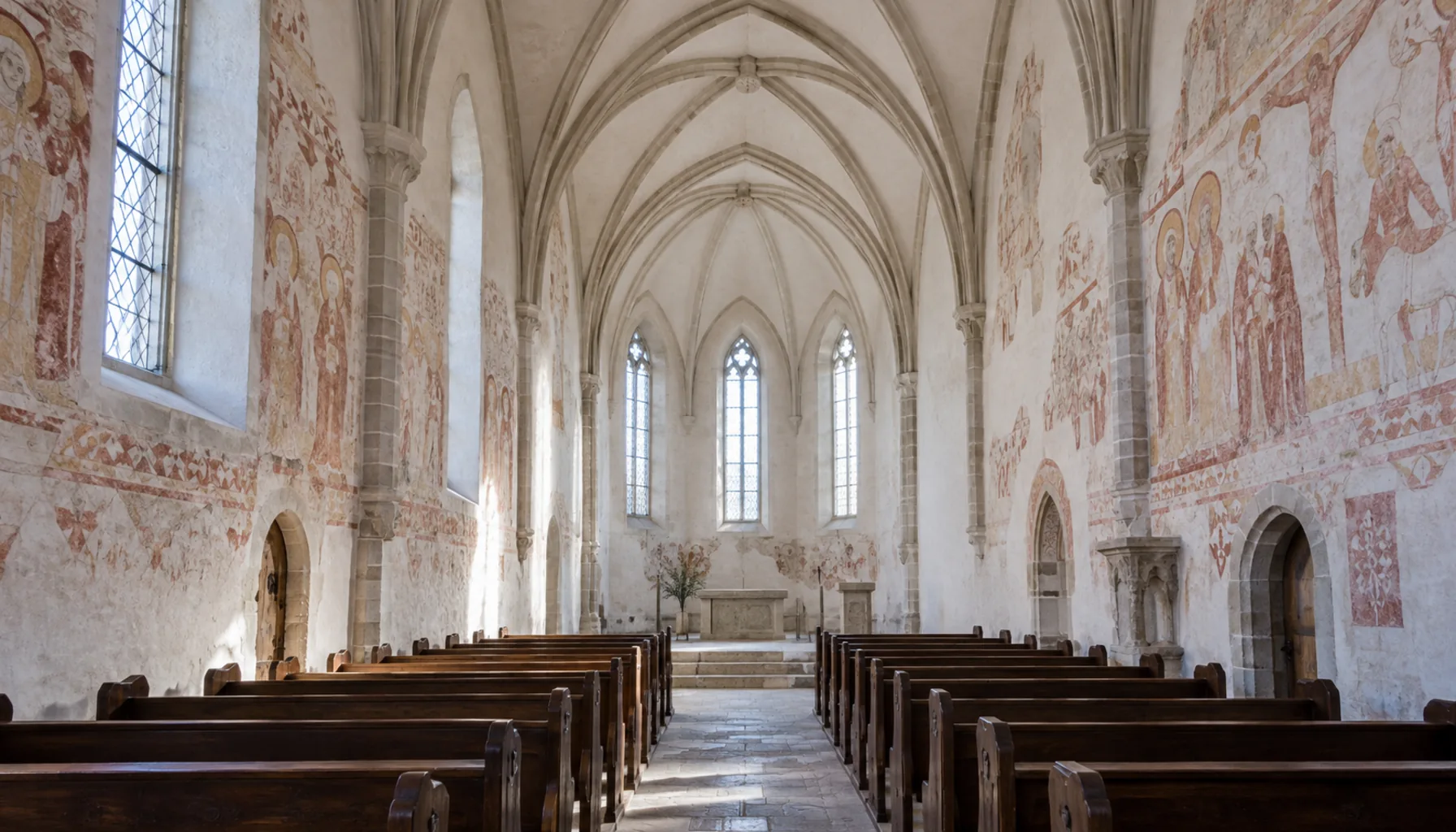
One building is the reason to stop. The former parish church, Romanesque in origin and Gothic in most of what you see, passed to the Reformed congregation at the Reformation and has been theirs ever since. Its interior is plain in the Reformed manner, which is exactly what makes the medieval wall paintings startling when you come in out of the light; they are among the more important cycles of their kind in Slovakia. They survived because later plaster covered them, and they were uncovered only in 1954 — the one respect in which the town's long decline turned out well.Zastaviť sa oplatí pre jednu budovu. Bývalý farský kostol, románsky pôvodom a gotický vo väčšine toho, čo vidno, prešiel pri reformácii reformovanej cirkvi a patrí jej dodnes. Interiér je podľa reformovaného zvyku holý, a práve preto stredoveké nástenné maľby zarazia každého, kto vojde zo svetla dnu; patria k významnejším súborom svojho druhu na Slovensku. Zachovali sa preto, že ich prekryla neskoršia omietka, a odkryli ich až roku 1954 — jediná vec, na ktorej mesto svojím dlhým úpadkom napokon získalo.
The rest is what a town of this size keeps: a cultural centre with a hall and a programme, a library, amateur choirs and folk groups, and a school of art for children. We name none of them individually, because premises and programmes move. The sports campus on the edge of town, the x-bionic sphere, is a different order of thing altogether — an Olympic-size pool, athletics, tennis, football pitches, an equestrian centre and hotels, privately built on open fields. It is not a monument, but it is the main reason people who are not from the island come here at all.Zvyšok je to, čo si mesto tejto veľkosti drží: kultúrne stredisko so sálou a programom, knižnica, amatérske zbory a folklórne skupiny a základná umelecká škola pre deti. Menovite ich neuvádzame, lebo priestory aj programy sa menia. Športový areál na okraji mesta, x-bionic sphere, je celkom iná kategória — bazén olympijských rozmerov, atletika, tenis, futbalové ihriská, jazdecké centrum a hotely, postavené súkromne na otvorených poliach. Nie je to pamiatka, no je hlavným dôvodom, prečo do Šamorína vôbec chodia ľudia, ktorí nie sú z ostrova.
The town is named after a building. Its church was dedicated to the Virgin Mary, and the Latin Sancta Maria wore down through Zent Maria and Somorja into Šamorín: the name is the church, repeated for eight hundred years. The building itself is a rarity — a four-aisled Romanesque hall, one of the oldest churches on the island — and historians disagree about when it went up, some placing it as early as the eleventh century and others in the second half of the thirteenth.Mesto je pomenované podľa budovy. Jeho kostol bol zasvätený Panne Márii a latinské Sancta Maria sa cez Zent Maria a Somorja obrúsilo na Šamorín: to meno je kostol, opakovaný osemsto rokov. Sama stavba je vzácnosť — štvorloďová románska halová stavba, jeden z najstarších kostolov na ostrove — a historici sa nezhodujú, kedy vznikla: niektorí ju kladú už do jedenásteho storočia, iní do druhej polovice trinásteho.
Dates here need the same care. Šamorín is often said to be first mentioned in 1238, but that charter is now regarded as a later forgery — forged parchments were common, because a convincing old document could win a lawsuit over land. The first mention historians accept comes from the 1280s, and in 1287 the place was granted to Károly, the castellan of Bratislava castle. A town largely built of wood burned in 1683, during the campaigns of that year, and was rebuilt slowly; the Pauline friars founded a monastery here in 1690 and finished a baroque church beside it in 1778, only for Joseph II to dissolve the order in the 1780s. The buildings stayed, the community did not. The long market street of low burgher houses fills what is left of a morning.S dátumami tu treba tú istú opatrnosť. Často sa píše, že Šamorín sa prvý raz spomína roku 1238, no tá listina sa dnes považuje za neskoršie falzum — falšované pergameny boli bežné, lebo presvedčivá stará listina vedela vyhrať spor o pôdu. Prvá zmienka, ktorú historici uznávajú, pochádza z osemdesiatych rokov 13. storočia a roku 1287 dostal miesto Karol, kastelán bratislavského hradu. Prevažne drevené mesto roku 1683 počas vtedajších ťažení zhorelo a stavalo sa pomaly; pavlíni tu roku 1690 založili kláštor a roku 1778 pri ňom dokončili barokový kostol, len aby Jozef II. v osemdesiatych rokoch 18. storočia rehoľu zrušil. Budovy ostali, komunita nie. Dlhá trhová ulica s nízkymi meštianskymi domami zaberie zvyšok dopoludnia.
At the edge of town the ground stops being farmland. In October 1992 engineers dammed the Danube at Čunovo and sent it into a bypass canal towards the turbines at Gabčíkovo; the water backed up into the Hrušov reservoir, sixteen kilometres long, which now lies against the dyke at Šamorín. The town sat at the sharp end of the argument about water, farmland and who may rebuild a river, and in 1997 the International Court of Justice ruled that the 1977 treaty still bound both countries and that both had broken it — a judgment neither side could call a victory.Na okraji mesta prestáva byť zem poľom. V októbri 1992 prehradili inžinieri Dunaj pri Čunove a poslali ho do obtokového kanála k turbínam v Gabčíkove; voda sa vzdula do Hrušovskej zdrže dlhej šestnásť kilometrov, ktorá dnes leží pri šamorínskej hrádzi. Mesto sedelo na ostrí sporu o vodu, o pôdu a o to, kto smie prestavať rieku; roku 1997 Medzinárodný súdny dvor rozhodol, že zmluva z roku 1977 obe krajiny stále viaže a že ju obe porušili — rozsudok, ktorý si ani jedna strana nemohla nazvať víťazstvom.
What that leaves a visitor is a view and a route: water on one side of the dyke, flat fields on the other, the Little Carpathians on the skyline behind, and the cycle path along the top runs back towards Bratislava in one direction and down the island in the other. It is the best short walk in the town, and the clearest way to see what has actually shaped Šamorín over the last forty years: not a lord and not a war, but a capital twenty minutes upstream and a great deal of engineered water.Návštevníkovi z toho ostáva výhľad a trasa: na jednej strane hrádze voda, na druhej rovné polia, na obzore Malé Karpaty, a cyklotrasa po jej korune vedie jedným smerom späť k Bratislave a druhým dolu ostrovom. Je to najlepšia krátka prechádzka v meste a zároveň najjasnejší spôsob, ako uvidieť, čo Šamorín za posledných štyridsať rokov naozaj formovalo: nie pán a nie vojna, ale hlavné mesto dvadsať minút proti prúdu a veľmi veľa inžiniersky presunutej vody.
Sixteen videos for Culture in Šamorín.Šestnásť videí — Kultúra v Šamoríne.