Dunajská Streda · Žitný ostrovDunajská Streda · Žitný ostrov
Culture in Dunajská StredaKultúra v Dunajskej Strede
The market at the middle of the Rye Island: a yellow baroque mansion holding the island's museum, a football crowd that comes in from the whole island, and a town whose name means Wednesday in two languages.Trh uprostred Žitného ostrova: žltý barokový kaštieľ s múzeom celého ostrova, futbalové publikum, ktoré sa zbieha z celého ostrova, a mesto, ktorého meno znamená stredu v dvoch jazykoch.
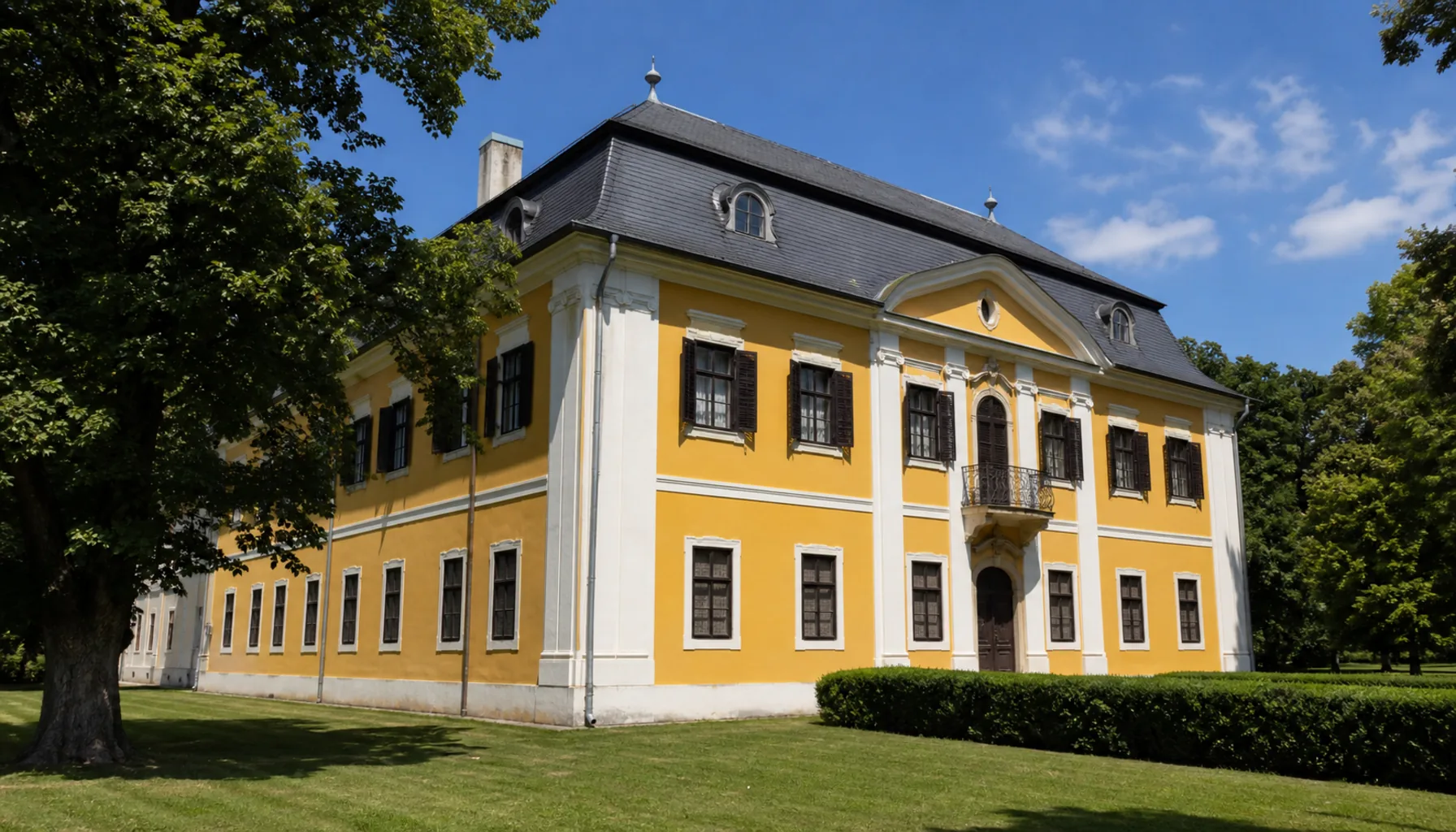
The Yellow Mansion in Dunajská Streda, the late-Baroque house that holds the Žitný ostrov museum.Žltý kaštieľ v Dunajskej Strede — neskorobaroková budova, v ktorej sídli Žitnoostrovské múzeum.
The year in Dunajská StredaRok v Dunajskej Strede
The town's name records its calendar. The market was held on Wednesday, and the Hungarian name Dunaszerdahely says exactly what the Slovak one does — szerda, Hungarian for Wednesday, is itself borrowed from a Slavic word meaning the middle of the week. Slovak and Hungarian are both everyday languages here, and the name is the oldest evidence of it. A report by the king's officer in Pozsony county already speaks of the markets of Szerdahely in 1324, and in 1429 an order of King Sigismund calls the place an oppidum, a market town with the right to hold fairs.Meno mesta zaznamenáva jeho kalendár. Trh sa konal v stredu a maďarský názov Dunaszerdahely hovorí presne to, čo slovenský — szerda, maďarské slovo pre stredu, je samo prevzaté zo slovanského slova pre stred týždňa. Po slovensky aj po maďarsky sa tu hovorí každý deň a meno je najstarším dokladom o tom. Správa kráľovho úradníka Bratislavskej stolice hovorí o trhoch v Szerdahelyi už v roku 1324 a v roku 1429 nazýva príkaz kráľa Žigmunda toto miesto oppidom — trhovým mestečkom s právom konať jarmoky.
The loudest public event now is a home match of the football club DAC, whose crowd comes in from the whole island and from over the border; a match here is the most reliable way to hear what the town actually sounds like. The thermal swimming complex on the edge of town runs its own season, and the flat lanes of the island carry the summer cycling calendar. Fixtures and programmes are published locally, so check them before you travel for a particular date.Najhlasnejším verejným podujatím je dnes domáci zápas futbalového klubu DAC, na ktorý sa publikum zbieha z celého ostrova aj spoza hraníc; zápas je najspoľahlivejší spôsob, ako počuť, ako mesto naozaj znie. Termálne kúpalisko na okraji mesta má vlastnú sezónu a rovné poľné cesty ostrova nesú letný cyklistický kalendár. Rozpisy aj programy sa zverejňujú miestne, preto si ich pred cestou za konkrétnym termínom overte.
Where culture livesKde žije kultúra
The Yellow Mansion is the town's collection. Mikuláš Kondé, bishop of Nagyvárad, built himself a two-storey baroque house here in the first half of the eighteenth century; around 1770 it was remodelled in a plainer classical taste and painted the colour that named it. It holds the Žitný Ostrov Museum, whose collections cover the island's archaeology, its water management and its rural life — the one place that explains the island as a whole rather than a single village of it.Zbierkou mesta je Žltý kaštieľ. Mikuláš Kondé, biskup z Nagyváradu, si tu v prvej polovici osemnásteho storočia postavil dvojpodlažný barokový dom; okolo roku 1770 ho prestavali v striedmejšom klasicistickom duchu a natreli farbou, ktorá mu dala meno. Sídli v ňom Žitnoostrovské múzeum, ktorého zbierky pokrývajú archeológiu ostrova, vodné hospodárstvo a vidiecky život — jediné miesto, ktoré vysvetľuje ostrov ako celok, nie jednu jeho dedinu.
Beyond it the town keeps the provision of a district seat: a cultural centre with a hall and a programme, a library, a school of art for children, choirs and amateur groups. We name none of them individually, because premises and programmes change faster than a page like this does, and the town's own listings are the reliable source.Popri ňom si mesto drží ponuku okresného sídla: kultúrne stredisko so sálou a programom, knižnicu, základnú umeleckú školu, zbory a amatérske súbory. Jednotlivo ich nemenujeme, lebo priestory a programy sa menia rýchlejšie než takáto stránka, a spoľahlivým zdrojom sú oznamy samotného mesta.
The buildings that carry itBudovy, ktoré ju nesú
There is no castle here, and that is the point. Across Slovakia the years after the Mongol invasion of 1241 are the great age of castle building; on this island there was no rock to build on, and the town's answer to a dangerous world was always a market rather than a wall. What it built instead were mansions, mills and a wide trading street, and the Yellow Mansion is the finest of them.Nie je tu hrad — a práve o to ide. Na Slovensku sú roky po mongolskom vpáde z roku 1241 veľkým vekom stavania hradov; na tomto ostrove nebolo na čom stavať a odpoveďou mesta na nebezpečný svet bol vždy trh, nie hradba. Namiesto hradieb tu vznikli kaštiele, mlyny a široká obchodná ulica — a Žltý kaštieľ je z nich najkrajší.
The modern town has a birthday, and it is not a medieval one. On 16 January 1861 Szerdahely and the three small places beside it — Nemesszeg, Újfalu and Előtejed — resolved to merge into a single municipality. A scatter of hamlets of a few dozen houses each stopped being a scatter, and Dunajská Streda as a shape on the map dates from that meeting rather than from any charter. Serfdom had been abolished thirteen years earlier, in 1848, which on the most productive soil in the country mattered here more than almost anywhere.Dnešné mesto má narodeniny a nie sú stredoveké. Szerdahely a tri malé obce vedľa neho — Nemesszeg, Újfalu a Előtejed — sa 16. januára 1861 uzniesli, že sa spoja do jednej obce. Roztrúsené osady po niekoľkých desiatkach domov prestali byť roztrúsené a Dunajská Streda ako tvar na mape pochádza z tohto zasadnutia, nie z nejakej listiny. Poddanstvo bolo zrušené o trinásť rokov skôr, v roku 1848, čo na najúrodnejšej pôde krajiny znamenalo viac než takmer kdekoľvek inde.
Everything here is made of waterVšetko je tu z vody
The island is not old rock but young river: for thousands of years the Danube slowed here, split into branches and dropped its gravel and mud. That decided where a village could stand, what it grew and how it ground its flour. After 1526, when Bratislava forty-five kilometres upstream became the capital of what was left of the kingdom, the island's floating water mills sent grain and flour up the river to feed the town, its garrison and the assemblies that met there.Ostrov nie je stará skala, ale mladá rieka: Dunaj sa tu po tisícročia spomaľoval, delil na ramená a ukladal štrk a bahno. To rozhodlo, kde mohla stáť dedina, čo pestovala a ako mlela múku. Po roku 1526, keď sa Bratislava štyridsaťpäť kilometrov proti prúdu stala hlavným mestom toho, čo z kráľovstva zostalo, posielali plávajúce vodné mlyny ostrova obilie a múku hore riekou, aby nasýtili mesto, jeho posádku aj snemy, ktoré sa tam schádzali.
Two working water mills survive within a short ride of the town, at Jelka and at Dunajský Klátov, and they are the most direct thing the island has to show about itself. Water is also its longest argument: beneath these fields lies the biggest store of drinking groundwater in Central Europe, and what the Gabčíkovo works have done to it has been contested in public since 1989. Hydrologists still disagree, and the museum in the Yellow Mansion is where the town keeps the question.Kúsok od mesta prežili dva funkčné vodné mlyny — v Jelke a v Dunajskom Klátove — a sú tým najpriamejším, čo ostrov o sebe dokáže ukázať. Voda je aj jeho najdlhším sporom: pod týmito poľami leží najväčšia zásoba pitnej podzemnej vody v strednej Európe a to, čo s ňou urobilo gabčíkovské dielo, sa verejne rieši od roku 1989. Hydrológovia sa dodnes nezhodujú a múzeum v Žltom kaštieli je miestom, kde si mesto túto otázku uchováva.