Púchov · The Váh and the White CarpathiansPúchov · Považie a Biele Karpaty
Culture in PúchovKultúra v Púchove
A town that gave its name to an archaeological culture, built its church out of a weaving trade carried over the mountains by exiles, and keeps a fuller hall programme than a town of this size usually manages.Mesto, ktoré dalo meno archeologickej kultúre, postavilo si kostol z tkáčskeho remesla, čo cezeň preniesli exulanti spoza hôr, a drží plnší program v sále, než mestu tejto veľkosti zvyčajne vychádza.
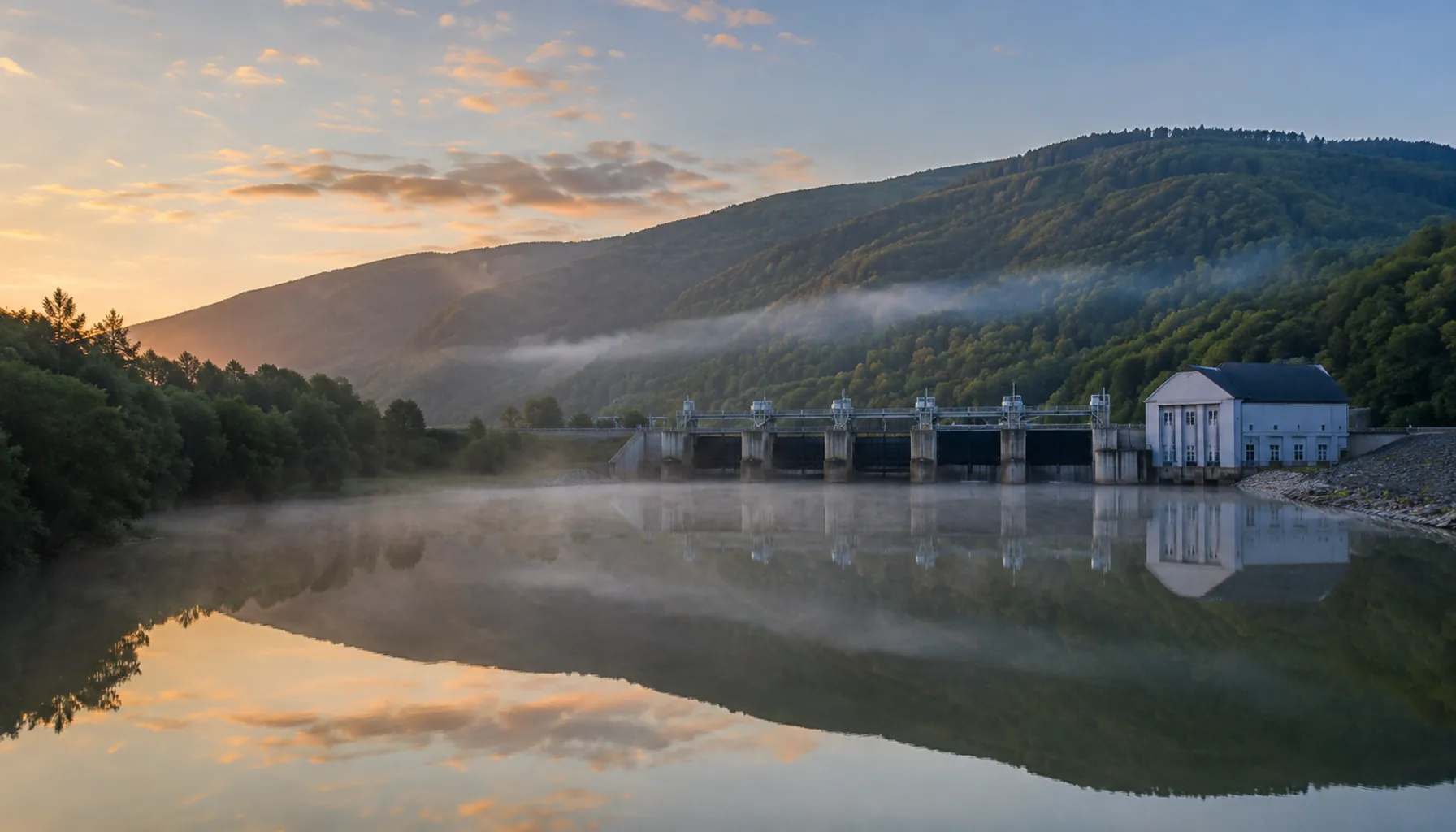
The Nosice dam on the Váh at the northern edge of Púchov, one step of the cascade of dams and power stations built along the river.Nosická priehrada na Váhu na severnom okraji Púchova — jeden stupeň kaskády priehrad a vodných elektrární postavených na rieke.
The year in PúchovRok v Púchove
The right to hold fairs came from King Ferdinand in 1649, granted because the town had a trade that needed selling: cloth, made by Protestant exiles who had crossed the mountains from Moravia after the Habsburg victory at the White Mountain in 1620. The market is the oldest thing in the town's calendar and still its ordinary rhythm.Právo konať jarmoky udelil kráľ Ferdinand v roku 1649 — a udelil ho preto, že mesto malo remeslo, ktoré bolo treba predať: súkno, ktoré vyrábali protestantskí exulanti, čo prešli cez hory z Moravy po habsburskom víťazstve na Bielej hore v roku 1620. Trh je najstaršou vecou v mestskom kalendári a stále jeho bežným rytmom.
The town's cultural centre keeps a fuller programme than a town of this size usually manages — a season of concerts, theatre and film in one hall rather than a scatter of small venues. Dates are announced locally, so check the listings before travelling for a particular night. Outside the town the Púchovská dolina runs west for many kilometres through scattered hamlets towards the border ridge, and it carries most of the outdoor year: cycling in summer, cross-country skiing in a decent winter.Mestské kultúrne stredisko drží plnší program, než mestu tejto veľkosti zvyčajne vychádza — sezónu koncertov, divadla a filmu v jednej sále namiesto rozptýlených malých priestorov. Termíny sa oznamujú miestne, takže si ich pred cestou na konkrétny večer overte. Za mestom sa Púchovská dolina tiahne na západ mnoho kilometrov cez roztrúsené osady k hraničnému hrebeňu a nesie väčšinu roka pod holým nebom: v lete bicykle, v poriadnej zime bežky.
Where culture livesKde žije kultúra
The local museum sits in the county house that Imrich Marczibányi built late in the eighteenth century, a baroque building that still stands in the town's core. The Marczibányis held Púchov from 1469 for close to four hundred years, until the middle of the nineteenth century — an unusually long grip by one family on one Slovak town, and the reason the estate buildings are the oldest civil architecture here.Mestské múzeum sídli v župnom dome, ktorý dal koncom osemnásteho storočia postaviť Imrich Marczibányi — barokovej budove, ktorá v jadre mesta stojí dodnes. Marczibányiovci držali Púchov od roku 1469 takmer štyristo rokov, do polovice devätnásteho storočia — nezvyčajne dlhý zovretý stisk jednej rodiny na jednom slovenskom meste a dôvod, prečo sú panské budovy najstaršou svetskou architektúrou v meste.
The rest is the ordinary provision of a district town: the cultural centre and its hall, a library, a school of art for children, choirs and folk groups. We do not name them individually, because premises and programmes change faster than a page like this does, and the town's own noticeboards are the reliable source.Zvyšok je bežná ponuka okresného mesta: kultúrne stredisko a jeho sála, knižnica, základná umelecká škola, zbory a folklórne súbory. Jednotlivo ich nemenujeme, lebo priestory a programy sa menia rýchlejšie než takáto stránka, a spoľahlivým zdrojom sú oznamy samotného mesta.
The buildings that carry itBudovy, ktoré ju nesú
The Reformation made Púchov a Protestant town and it stayed one, and the building that says so was a long time coming. The Lutheran church went up between 1864 and 1880 to a design by Michal Urbánek, a builder from Vsetín just over the Moravian border — which tells you how close the two sides of these mountains still were.Reformácia urobila z Púchova protestantské mesto a tým aj zostal — no budova, ktorá to hovorí nahlas, prišla neskoro. Evanjelický kostol vyrástol v rokoch 1864 až 1880 podľa návrhu Michala Urbánka, staviteľa z Vsetína hneď za moravskou hranicou, čo hovorí za všetko o tom, ako blízko si obe strany týchto hôr stále boli.
What it replaced was a toleration-era prayer house, the sort Protestants were allowed after 1781: no tower, no front onto the street, nothing that looked like a church from outside. A Renaissance altar of 1643 survives from the congregation of the century before that — the years when the exiles' street, Moravian Street, held sixty-eight textile workshops by 1761 and the whole town lived off a single craft. Weavers, dyers, potters and printers all worked in the town in those decades, which is why Púchov mattered rather more than its size suggested.Nahradil ním tolerančnú modlitebňu, akú protestanti smeli mať po roku 1781: bez veže, bez priečelia do ulice, zvonku nič, čo by vyzeralo ako kostol. Z cirkevného zboru o storočie skôr sa zachoval renesančný oltár z roku 1643 — z čias, keď na ulici exulantov, Moravskej ulici, stálo do roku 1761 šesťdesiatosem textilných dielní a celé mesto žilo z jediného remesla. Tkáči, farbiari, hrnčiari aj tlačiari pracovali v tých desaťročiach priamo v meste, a preto Púchov znamenal podstatne viac, než by sa podľa jeho veľkosti zdalo.
A culture named after the townKultúra pomenovaná po meste
For roughly five centuries around the turn of our era, the hills of north-western Slovakia belonged to people who built fortified settlements on high ground, worked iron and traded with the Roman world across the Danube. Archaeologists call them the Púchov culture, after this town, because the finds that first defined it came from the rock above the valley, Púchovská skala. Between 1888 and 1894 an Austrian army officer, Baron Emil Hoenning O'Carroll, dug there and pulled two bronze swords out of the hillside.Zhruba päť storočí okolo prelomu letopočtu patrili kopce severozápadného Slovenska ľuďom, ktorí stavali opevnené sídliská na vyvýšeninách, spracúvali železo a obchodovali s rímskym svetom za Dunajom. Archeológovia ich volajú púchovská kultúra, podľa tohto mesta, pretože nálezy, ktoré ju prvýkrát vymedzili, pochádzajú z brala nad údolím — z Púchovskej skaly. V rokoch 1888 až 1894 tam kopal rakúsky dôstojník barón Emil Hoenning O'Carroll a vytiahol zo svahu dva bronzové meče.
The name stuck and is still standard across Central European archaeology, which makes Púchov one of the very few Slovak towns whose name is used daily by people who have never been here. It is the town's one genuine claim on a wider culture, and worth knowing before anyone decides there is nothing here but a tyre plant. The town's own name is a smaller puzzle of the same kind. Púchov is first written down in 1243, in a document of King Béla IV naming a man called Puch who held the place, and whether Puch was a real person or the word is older than he is has never been settled.Meno sa ujalo a v stredoeurópskej archeológii je dodnes štandardným pojmom, čo robí z Púchova jedno z mála slovenských miest, ktorých meno denne používajú ľudia, ktorí tu nikdy neboli. Je to jediný skutočný nárok mesta na širšiu kultúru a stojí za to o ňom vedieť skôr, než niekto usúdi, že tu nie je nič okrem gumárne. Vlastné meno mesta je menšou hádankou toho istého druhu. Púchov je prvýkrát písomne doložený v roku 1243, v listine kráľa Bela IV., ktorá menuje muža zvaného Puch, čo miesto držal — a či bol Puch skutočnou osobou, alebo je to slovo staršie než on, sa dodnes nerozhodlo.