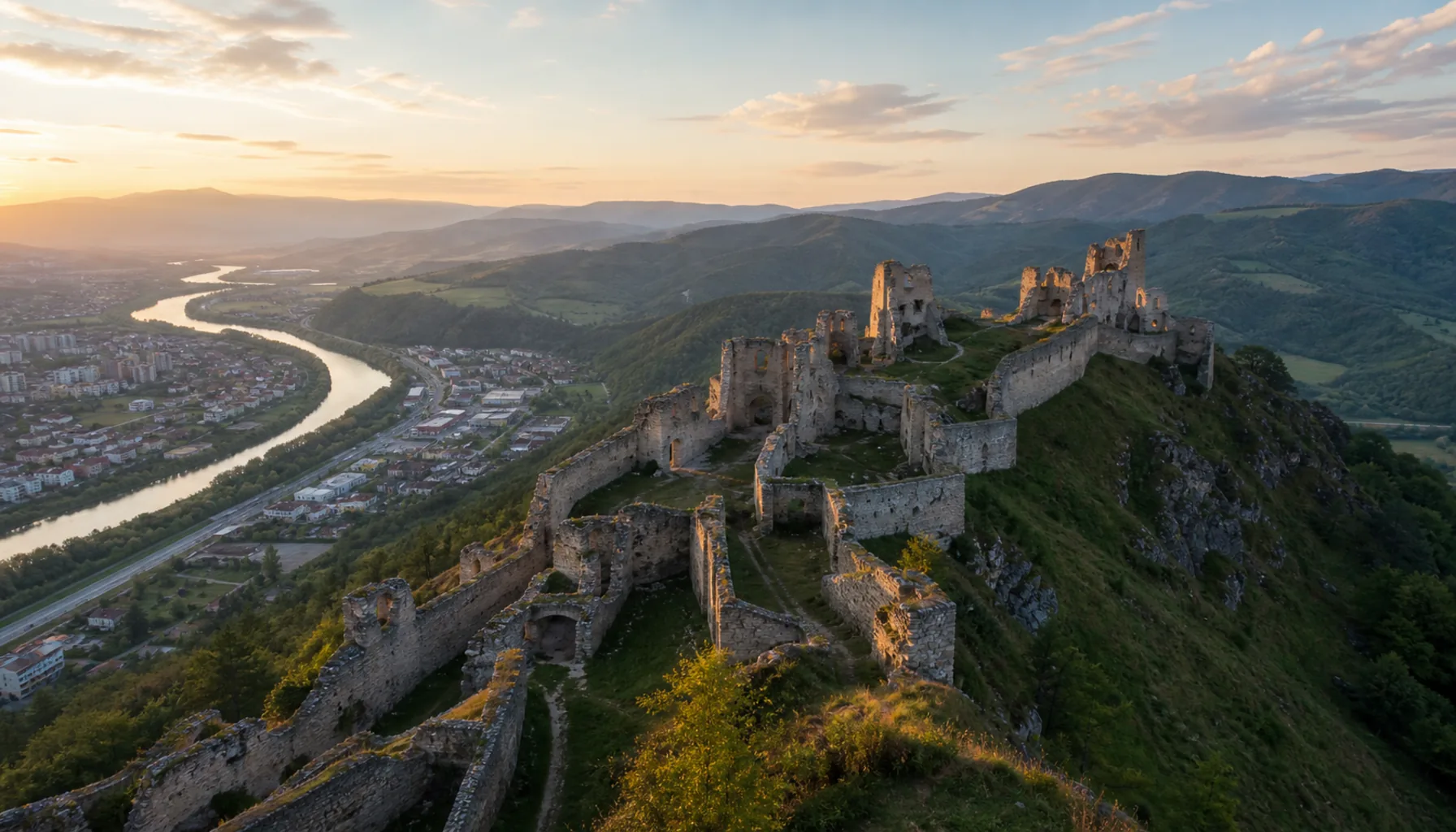
A Castle Built the Length of a RidgeHrad postavený po celej dĺžke hrebeňa
Považský hrad belongs to the generation of stone castles raised across the Hungarian kingdom in the thirteenth century, after the Mongol invasion of 1241 had shown what a wooden stockade was worth. It was one of the royal castles set to watch the road up the Váh — the great natural corridor running north through the western Carpathians, and for centuries the only sensible way to move an army, a merchant train or a timber raft through this country.Považský hrad patrí ku generácii kamenných hradov, ktoré vyrástli v Uhorskom kráľovstve v trinástom storočí, keď mongolský vpád v roku 1241 ukázal, akú cenu má drevené opevnenie. Bol jedným z kráľovských hradov, ktoré strážili cestu proti prúdu Váhu — veľký prirodzený koridor smerujúci na sever cez Západné Karpaty, po stáročia jedinú rozumnú trasu, po ktorej sa dalo týmto krajom pohnúť vojskom, kupeckou karavánou či pltou.
In the early fourteenth century it was among the strongholds under the sway of Matúš Čák of Trenčín, the oligarch who ran most of this part of the kingdom as though it were his own. From the fifteenth and sixteenth centuries the castle was the seat of the Podmanický family — the Podmanickovci — and it is their long tenure that gave the ridge the shape you walk today, the castle spreading outward along the crest in gates, walls and courtyards because there was nowhere else for it to go.Začiatkom štrnásteho storočia patril medzi opevnenia pod mocou Matúša Čáka Trenčianskeho, veľmoža, ktorý spravoval väčšinu tejto časti kráľovstva, akoby bola jeho vlastná. Od pätnásteho a šestnásteho storočia bol hrad sídlom rodu Podmanickovcov — a práve ich dlhé panstvo dalo hrebeňu podobu, po ktorej dnes chodíte: hrad sa rozťahoval po chrbte v bránach, múroch a nádvoriach, pretože inam sa rozrastať nemohol.
The castle was damaged during the anti-Habsburg uprisings of the late seventeenth and early eighteenth centuries, and afterwards nobody rebuilt it. Roofs went first, then floors, then the wall tops; by the nineteenth century it was a ruin, and it stayed one. What has changed is recent. For years now a local civic association has worked here with volunteer work camps — wall crowns consolidated course by course, a tower and a gate made safe, a viewing point opened on the crest. The work is seasonal, done by hand, and it is the reason the ridge still has walls standing on it.Hrad poškodili protihabsburské povstania konca sedemnásteho a začiatku osemnásteho storočia a potom ho už nikto neobnovil. Najprv zmizli strechy, potom stropy, napokon vrchy múrov; v devätnástom storočí to už bola zrúcanina a zrúcaninou zostala. Zmena prišla až v posledných rokoch. Už roky tu pracuje miestne občianske združenie s dobrovoľníckymi pracovnými tábormi — koruny múrov sa domurúvajú vrstvu po vrstve, veža a brána sú zabezpečené, na hrebeni pribudla vyhliadka. Práca je sezónna, robí sa ručne — a je dôvodom, prečo na hrebeni vôbec ešte stoja múry.