Svit · a company town under the TatrasSvit · baťovské mesto pod Tatrami
Culture in SvitKultúra vo Svite
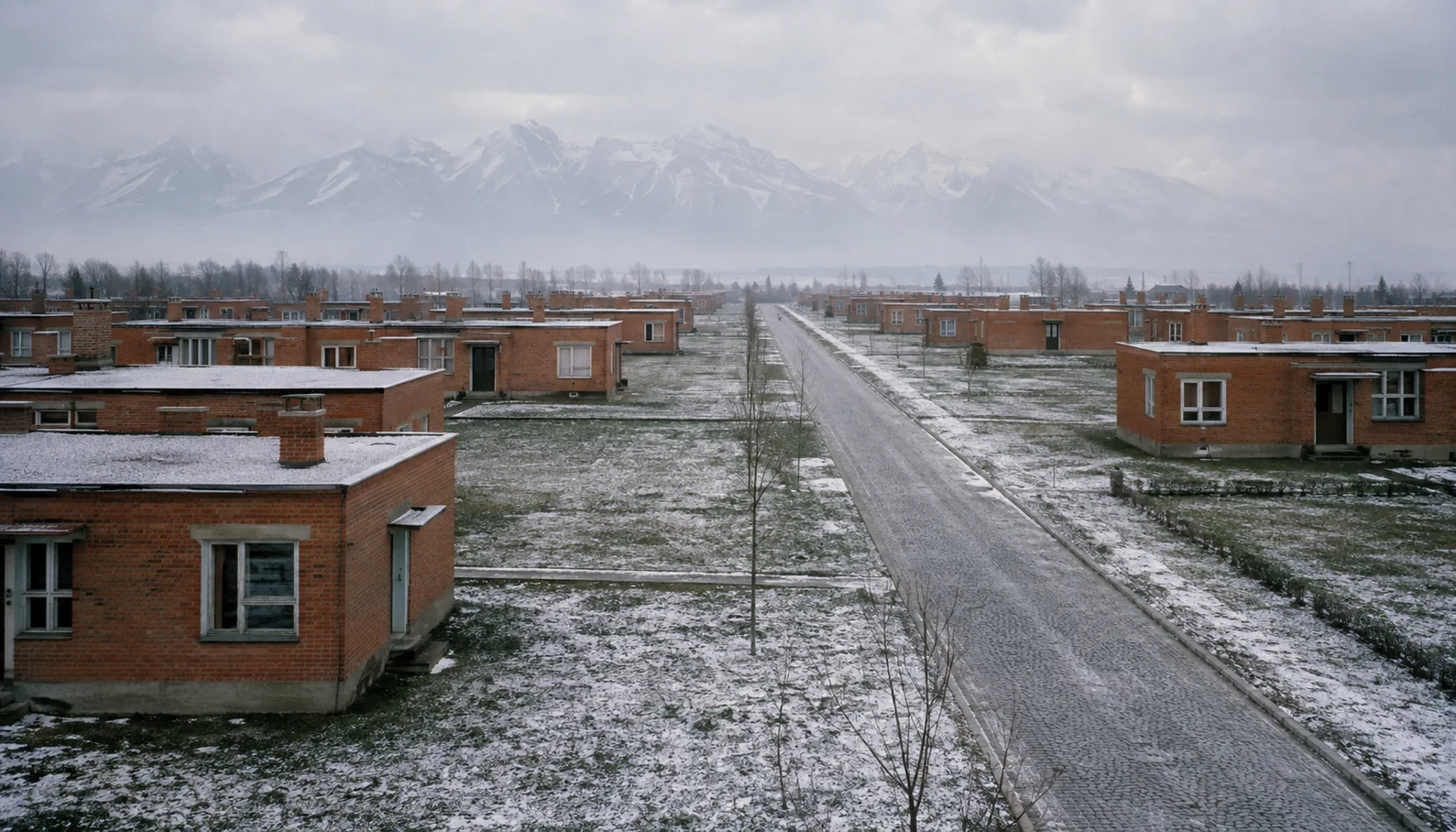
A town built from 1934 to house a viscose works, and still one of the clearest pieces of interwar company-town planning in Slovakia.Mesto stavané od roku 1934 pre robotníkov viskózky a dodnes jedna z najčitateľnejších ukážok medzivojnového firemného urbanizmu na Slovensku.
The flat-roofed brick terraces Baťa built at Svit from 1934, laid out on the grid that still defines the town.Tehlové radové domy s plochými strechami, ktoré tu Baťa staval od roku 1934 — mriežka, ktorá dodnes určuje podobu Svitu.
The year in SvitRok vo Svite
Svit is the youngest town in the basin and the only one built to a plan, and its calendar reflects what the plan valued. Sport comes first — a company that put up a sports ground before it had finished the housing left a town that still organises itself around fixtures — and the mountains come second: the Mlynica valley opens directly behind the town into the High Tatras, and the Poprad riverside carries a cycle path along the basin.Svit je najmladším mestom v kotline a jediným, ktoré vzniklo podľa plánu, a jeho kalendár verne ukazuje, čo si ten plán cenil. Na prvom mieste je šport — firma, ktorá postavila ihrisko skôr, než dokončila bývanie, zanechala mesto, ktoré sa dodnes organizuje okolo zápasov — a na druhom hory: Mlynická dolina sa otvára priamo za mestom do Vysokých Tatier a popri Poprade vedie kotlinou cyklistický chodník.
For the rest, this is a town of some seven thousand people and its year is the ordinary one: a town day, the church year, whatever the cultural centre and the schools put on. We name no individual event, because in a town this size programmes change faster than a page like this does. Poprad is a few kilometres down the road and a regional train away, and it supplies most of what Svit does not.Inak je to mesto so siedmimi tisíckami obyvateľov a jeho rok je celkom obyčajný: mestské dni, cirkevný rok a to, čo pripraví kultúrne stredisko a školy. Konkrétne podujatia tu nemenujeme, lebo v meste tejto veľkosti sa program mení rýchlejšie než takáto stránka. Poprad je pár kilometrov po ceste a jednu zastávku osobným vlakom a dopĺňa väčšinu toho, čo Svit sám nemá.
Where culture livesKde žije kultúra
The company built the cultural infrastructure before anybody thought of it as culture. Baťa's standard plan included schools, a hotel, a cinema and a sports ground in the same functionalist idiom as the housing, and those buildings, or the sites of them, are still the town's public places. That is unusual. Most Slovak towns of this size acquired their hall and their library from the state decades after they already existed; here they arrived with the first houses.Kultúrnu infraštruktúru postavila firma skôr, než ju niekto začal volať kultúrou. Baťov štandardný plán obsahoval školy, hotel, kino a športový areál v tom istom funkcionalistickom jazyku ako bytovky a tieto budovy — alebo aspoň ich miesta — sú verejným priestorom mesta dodnes. Je to nezvyčajné. Väčšina slovenských miest tejto veľkosti dostala sálu a knižnicu od štátu desaťročia po tom, čo vznikla; tu prišli spolu s prvými domami.
Today the pattern is the standing one: a cultural centre with a hall and a programme, a library, a school of art for children, amateur groups. We name none of them individually, and we do not promise a museum of the town's own founding — whether one is open, and where, is exactly the kind of thing that changes. Ask at the town office. The regional museum and the gallery are in Poprad, a few minutes away.Dnes platí obvyklá schéma: kultúrne stredisko so sálou a programom, knižnica, základná umelecká škola, amatérske súbory. Menovite neuvádzame ani jedno a nesľubujeme ani múzeum o založení mesta — či je otvorené a kde presne sídli, je práve to, čo sa mení. Spýtajte sa na mestskom úrade. Regionálne múzeum a galéria sú v Poprade, pár minút odtiaľto.
The buildings that carry itBudovy, ktoré ju nesú
The heritage of Svit is not a monument but a layout. On 9 March 1934 the council of Veľká agreed to sell flat ground by the Poprad river to the Baťa company of Zlín; building began three weeks later, more than forty houses were standing by 7 November 1935, and viscose production started in February 1936. On 29 January 1937 the place was given its name: SVIT, an acronym of the Slovak viscose works and at the same time the ordinary Slovak word for the first light of morning.Pamiatkou Svitu nie je jedna stavba, ale pôdorys. Deviateho marca 1934 obecné zastupiteľstvo Veľkej odsúhlasilo predaj rovnej pôdy pri Poprade zlínskej firme Baťa; o tri týždne sa začalo stavať, do 7. novembra 1935 stálo vyše štyridsať domov a vo februári 1936 sa rozbehla výroba viskózy. Dvadsiateho deviateho januára 1937 dostalo miesto meno: SVIT, skratka slovenskej viskózovej továrne a zároveň bežné slovenské slovo pre prvé ranné svetlo.
What went up is still legible: a grid of flat-roofed red-brick terraces, wide green strips between them, a boulevard running straight to the works gate, and the company's public buildings in the same idiom. Housing was graded by rank and the geometry made that visible to everybody, which is part of why the town is worth reading rather than simply admiring. Svit became a municipality in its own right on 4 June 1946, the station stopped being called Batizovce on 1 December 1947, and town status followed on 30 May 1962. Blocks of flats were added on the edges; nobody demolished the 1930s core.To, čo vyrástlo, je dodnes čitateľné: sieť radoviek z červenej tehly s plochými strechami, široké zelené pásy medzi nimi, bulvár mieriaci rovno k bráne závodu a firemné verejné budovy v tom istom jazyku. Bývanie bolo odstupňované podľa postavenia a geometria to dávala každému najavo — aj preto sa toto mesto oplatí skôr čítať než jednoducho obdivovať. Svit sa stal samostatnou obcou 4. júna 1946, stanica prestala byť Batizovcami 1. decembra 1947 a štatút mesta prišiel 30. mája 1962. Na okrajoch pribudli panelové domy, ale jadro z tridsiatych rokov nikto nezbúral.
A basketball townBasketbalové mesto
Sport was built into the system from the start and it outlasted the company that paid for it. The basketball club founded in Svit in 1947 won the Czechoslovak league in the 1961/62 season and has been a fixture of Slovak basketball ever since. For a town of a few thousand people that is a strange thing to be nationally known for, and it is a direct inheritance from the way the place was planned.Šport bol do systému zabudovaný od začiatku a prežil firmu, ktorá ho platila. Basketbalový klub založený vo Svite v roku 1947 vyhral v sezóne 1961/62 československú ligu a odvtedy je stálicou slovenského basketbalu. Na mesto s pár tisíckami obyvateľov je to čudná vec, ktorou byť známy po celej krajine — a je to priame dedičstvo toho, ako bolo mesto naplánované.
It is also the clearest surviving piece of the company town as a social idea. Baťa housed, schooled and fed its own workforce and organised its leisure as well; the state that took the works over after 1945 kept the sports club because it suited its own purposes just as well. The plants on the original estate still make flexible packaging film, machinery and their own energy, most of the rest of the town commutes to Poprad, and the fixtures are still on.Je to aj najzreteľnejší zvyšok firemného mesta ako spoločenskej myšlienky. Baťa svojich robotníkov ubytoval, vzdelával a stravoval a organizoval im aj voľný čas; štát, ktorý závod po roku 1945 prevzal, si športový klub ponechal, lebo mu vyhovoval rovnako dobre. Závody na pôvodnom areáli dodnes vyrábajú obalové fólie, stroje a vlastnú energiu, väčšina zvyšku mesta dochádza do Popradu — a zápasy sa hrajú ďalej.