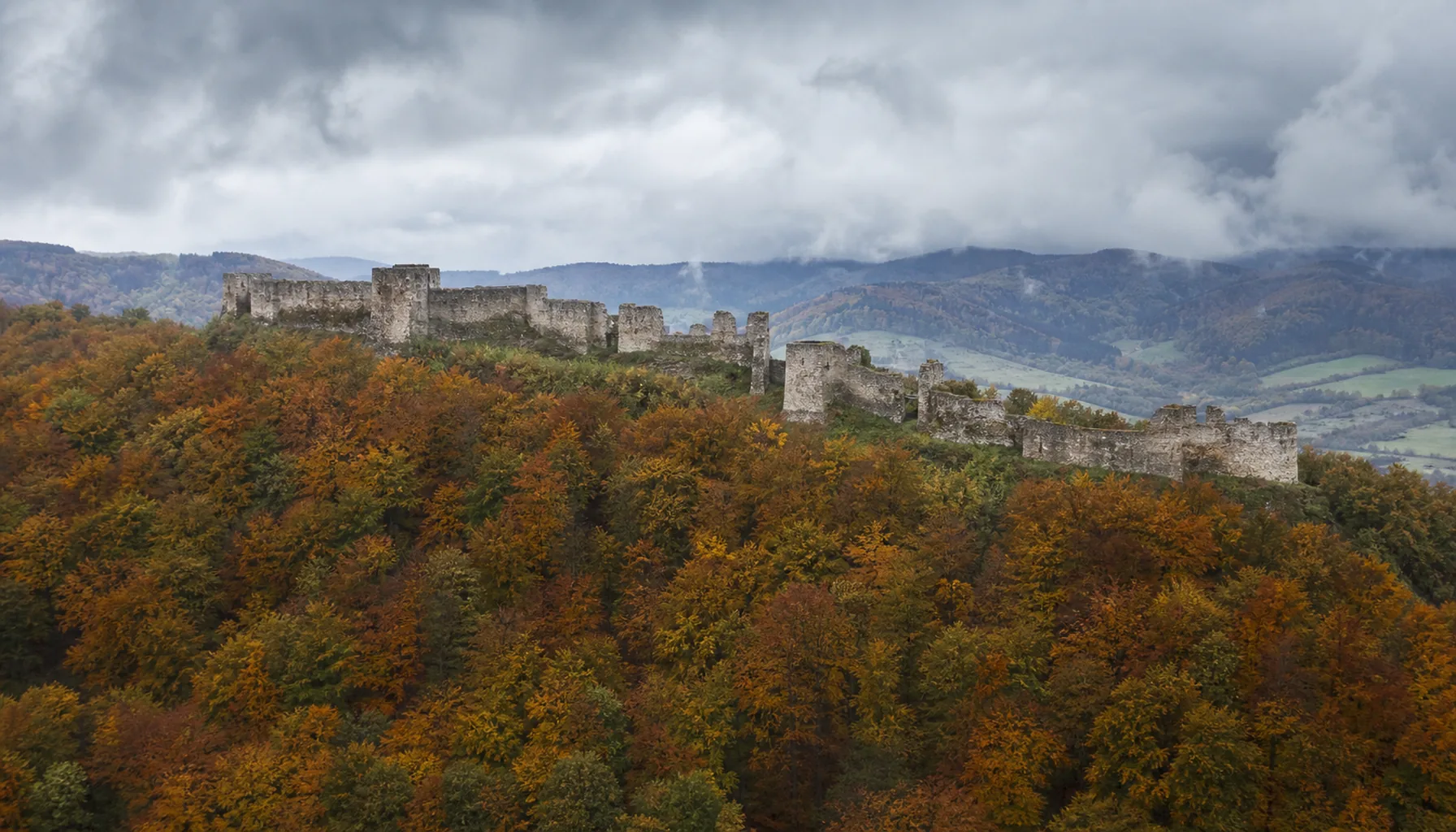
A Castle Built on TradeHrad postavený na obchode
Zborov Castle — Makovica in the old records, and still the name most people here use — went up in the first half of the fourteenth century, possibly begun late in the thirteenth. Its job was the road: the way north out of Šariš over the Carpathian passes into Poland, carrying cloth, wine and salt to and from Bardejov. A free royal town grew rich on that traffic, and a castle above it grew powerful on the same thing.Hrad Zborov — v starých prameňoch Makovica, a tak ho tu väčšina ľudí volá dodnes — vyrástol v prvej polovici štrnásteho storočia, možno so začiatkami už koncom trinásteho. Jeho úlohou bola cesta: trasa zo Šariša na sever cez karpatské priesmyky do Poľska, po ktorej putovalo súkno, víno a soľ do Bardejova a späť. Slobodné kráľovské mesto na tej doprave zbohatlo a hrad nad ním na tom istom zmocnel.
Among its lords were the Cudar family, later the Rozgonyi and the Serédy, and from the early seventeenth century the Rákóczi family, to whose vast eastern estates Makovica belonged. That is a lot of grandeur for a place this remote, and it shows in the ground plan: this was not a watchtower on a rock but a large seat with wards, gates and outworks strung along the whole crest of the ridge.Medzi jeho pánmi boli Cudarovci, neskôr Rozgoňovci a Serédyovci a od začiatku sedemnásteho storočia Rákócziovci, k ktorých rozsiahlym východným panstvám Makovica patrila. Na takto odľahlé miesto je to veľa vznešenosti — a vidno to na pôdoryse: nebola to strážna veža na skale, ale veľké sídlo s nádvoriami, bránami a predsunutými opevneniami rozloženými po celom hrebeni.
The seventeenth-century uprisings against the Habsburgs finished it as a working castle. Damaged and then abandoned, it was already a long-standing ruin by the time anyone alive today was born — and unlike most Slovak ruins, its worst damage was still ahead of it, in a war nobody in the fourteenth century could have imagined.Sedemnáste storočie a povstania proti Habsburgovcom hrad ako fungujúce sídlo ukončili. Poškodený a potom opustený bol dávnou zrúcaninou už dlho predtým, než sa narodil ktokoľvek dnes žijúci — a na rozdiel od väčšiny slovenských zrúcanín ho to najhoršie ešte len čakalo, vo vojne, akú si v štrnástom storočí nikto nevedel predstaviť.