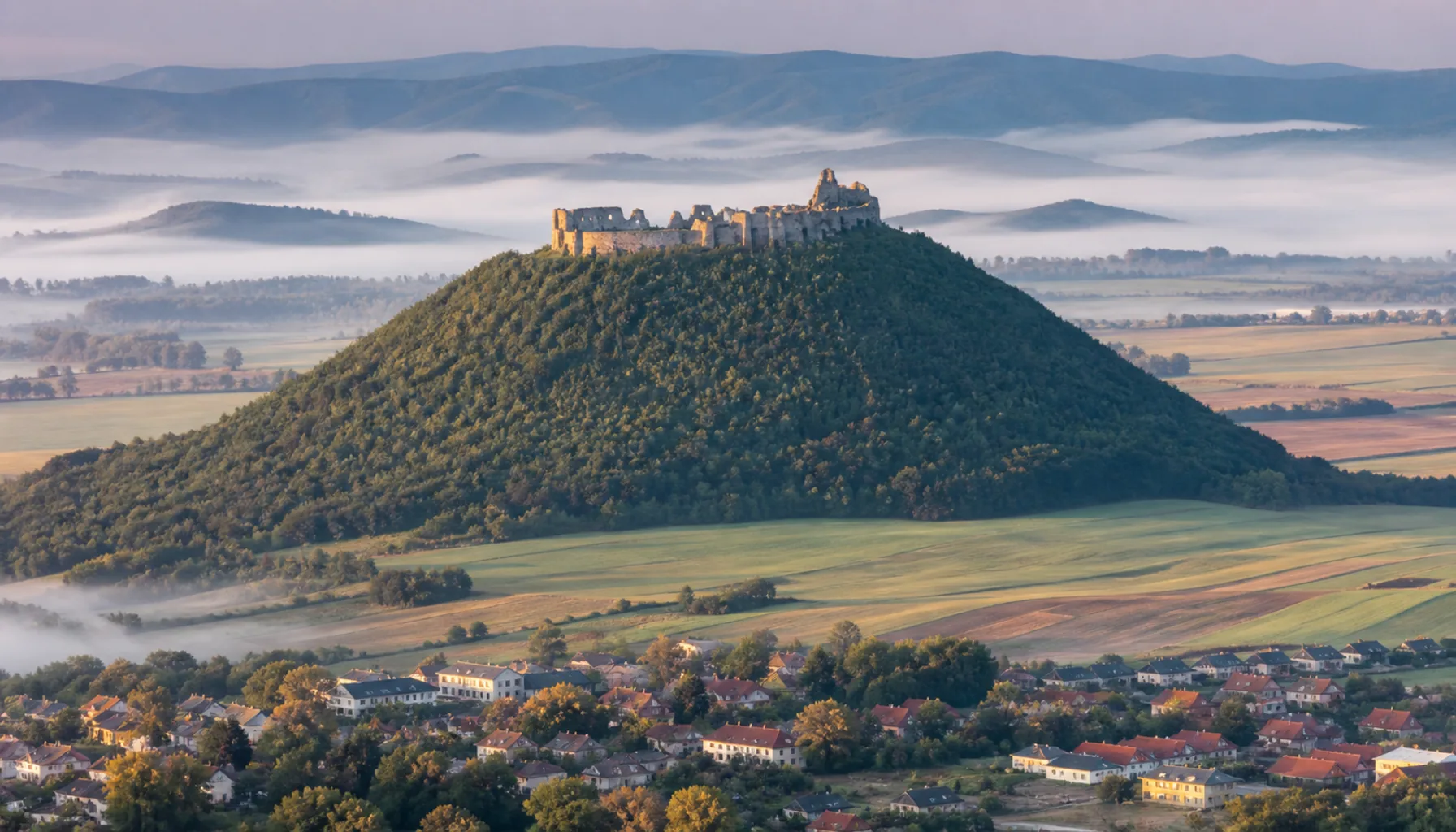
The Castle That Named a RegionHrad, ktorý dal meno celému kraju
Šariš gave its name to a county and then to a whole region of eastern Slovakia — the country around Prešov that people still call Šariš, with its own dialect, its own food and a distinct sense of itself. The castle came first. Raised in the thirteenth century on an isolated volcanic cone commanding the Torysa valley, it was a royal stronghold and the administrative seat of the county that grew around it.Šariš dal meno stolici a potom celému kraju východného Slovenska — okoliu Prešova, ktoré ľudia dodnes volajú Šariš, s vlastným nárečím, vlastnou kuchyňou a zreteľným vedomím vlastnej svojbytnosti. Hrad tu bol prvý. Postavený v trinástom storočí na osamelom sopečnom kuželi ovládajúcom údolie Torysy, bol kráľovskou pevnosťou a správnym sídlom stolice, ktorá okolo neho vyrástla.
The site is what makes it. The hill stands alone above the plain, with a broad flat summit — room for an enormous enclosure rather than the cramped ridge-top most Slovak castles had to make do with. Over the medieval centuries the walls spread to fill it, with an upper castle, lower wards, gates, cisterns and towers, until Šariš was among the biggest fortified sites in the kingdom.Rozhoduje o ňom samotné miesto. Kopec stojí osamotene nad rovinou a má široké ploché temeno — priestor pre obrovský areál namiesto stiesneného hrebeňa, s akým sa musela uspokojiť väčšina slovenských hradov. V priebehu stredoveku sa hradby rozliali po celom temene, s horným hradom, dolnými nádvoriami, bránami, cisternami a vežami, až sa Šariš zaradil medzi najrozsiahlejšie opevnené lokality kráľovstva.
It passed through royal hands and noble ones, was fought over in the dynastic wars of the fifteenth century and garrisoned through the anti-Habsburg risings of the seventeenth. And then, in 1687, it ended in a single afternoon — the gunpowder store went up, and Šariš was never rebuilt. What you walk through today is what that blast and three hundred subsequent winters left behind.Prešiel kráľovskými aj šľachtickými rukami, bojovalo sa oň v dynastických vojnách pätnásteho storočia a mal posádku počas protihabsburských povstaní sedemnásteho storočia. A potom, v roku 1687, sa všetko skončilo za jediné popoludnie — vyletela pušnoprachová komora a Šariš už nikdy neobnovili. To, čím dnes prechádzate, je to, čo po sebe zanechal ten výbuch a tristo nasledujúcich zím.