The Summer Capital of a New RepublicLetné hlavné mesto novej republiky
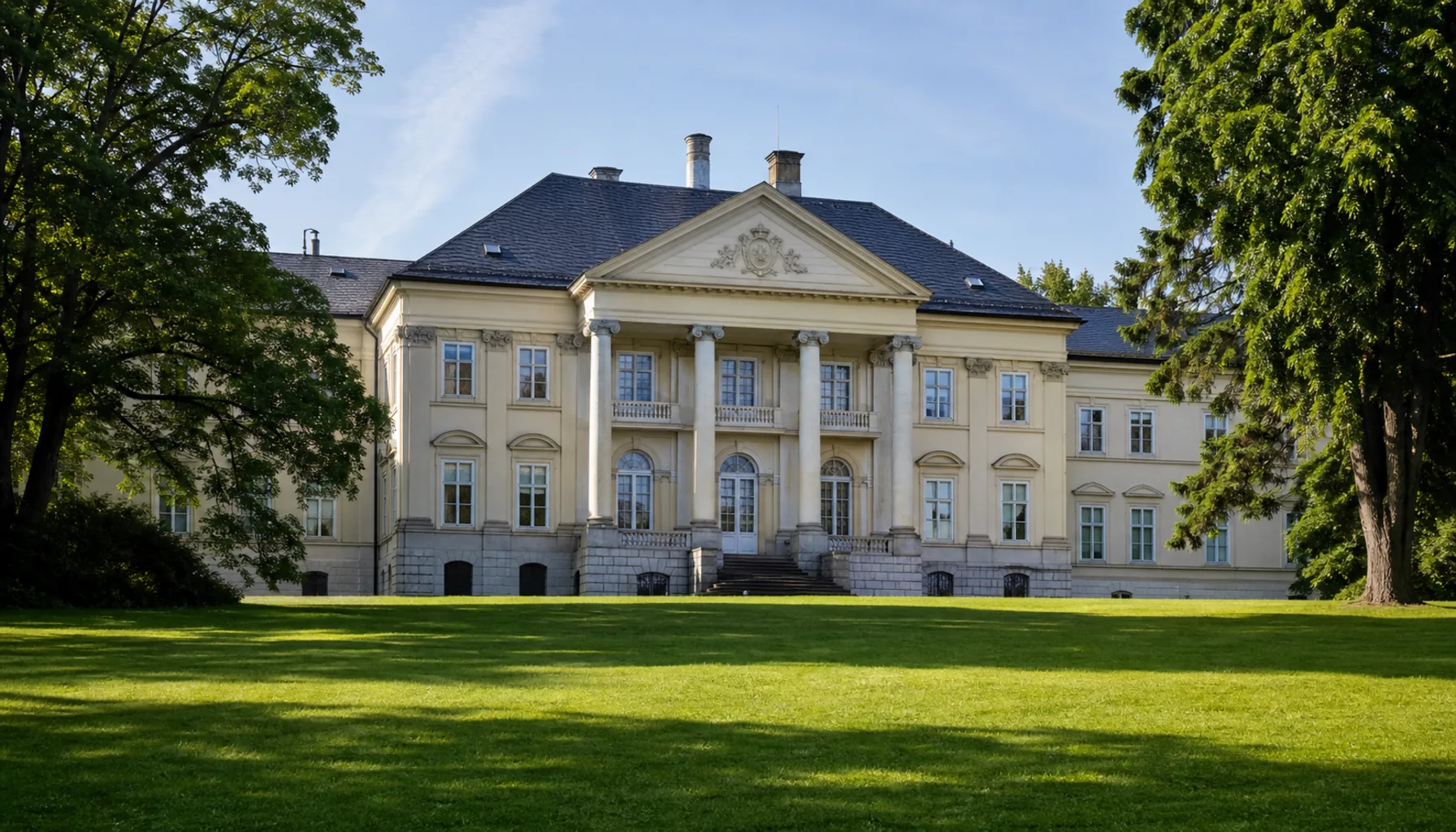
When Czechoslovakia was created in 1918, a country that had never had a head of state suddenly needed the furniture of one — including somewhere for the president to spend the summer. Topoľčianky, with its park, its forest and its horses, became that place, and Tomáš Garrigue Masaryk came here year after year. For a couple of decades the running of a state moved to this village every summer.Keď v roku 1918 vzniklo Československo, krajina, ktorá nikdy nemala hlavu štátu, zrazu potrebovala všetko, čo k nej patrí — vrátane miesta, kde bude prezident tráviť leto. Topoľčianky s parkom, lesom a koňmi sa takým miestom stali a Tomáš Garrigue Masaryk sem prichádzal rok čo rok. Na dve desaťročia sa každé leto presunul chod štátu do tejto obce.
An aristocrat's country house, taken over intact by a republic that had just abolished aristocrats — and used, of all things, as a summer office.Šľachtické vidiecke sídlo, ktoré nedotknuté prevzala republika práve zrušivšia šľachtu — a používala ho, zo všetkého najviac, ako letnú kanceláriu.
The stud farm belongs to the same moment. Founded in 1921, three years into the new state, it was a deliberate act of institution-building: a national breeding centre on a former noble estate, taking over its stables and its pastures. That is why the horses and the château are not two separate attractions that happen to share a village. They are the same decision, and the reason Topoľčianky still works as a place rather than surviving as a monument.Do toho istého okamihu patrí aj žrebčín. Založený v roku 1921, tri roky po vzniku štátu, bol zámerným budovaním inštitúcie: národné chovateľské centrum na bývalom šľachtickom panstve, ktoré prevzalo jeho stajne aj pasienky. Preto nie sú kone a kaštieľ dve oddelené atrakcie, ktoré náhodou zdieľajú jednu obec. Sú tým istým rozhodnutím — a dôvodom, prečo Topoľčianky dodnes fungujú ako miesto, a nielen prežívajú ako pamiatka.