A Family and Its HillRod a jeho kopec
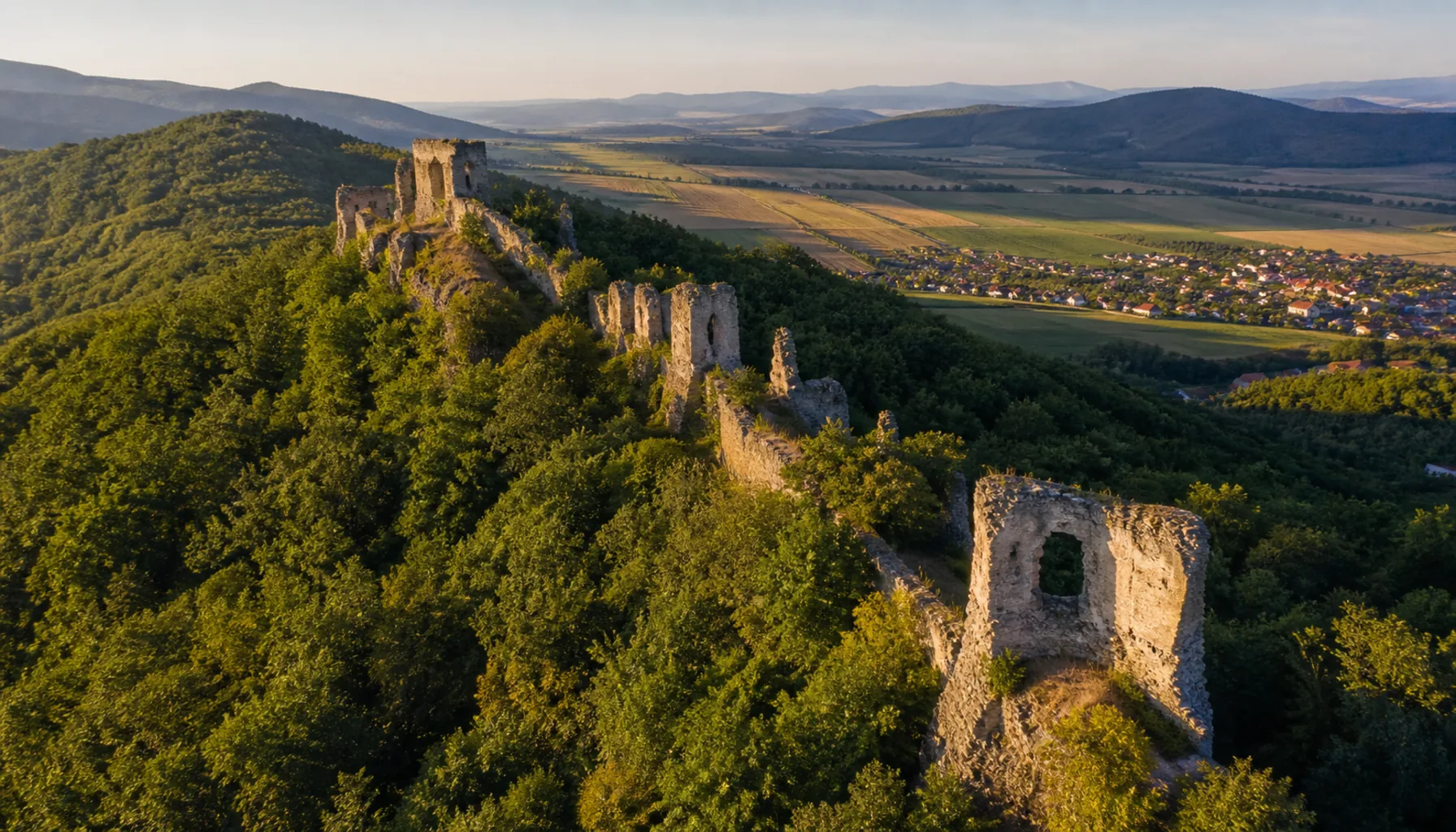
The castle came first. It was raised in the thirteenth century, in the same defensive wave that produced most of the Tribeč strongholds, on a ridge that looks straight down the valley toward the Nitra plain. Toward the end of the fourteenth century the estate passed to the family who would keep it for the next five hundred years — and who took their name from the place itself. Oponice, in the Latin and Hungarian of the chancery, was Appony: the Apponyi family, in Slovak the Aponiovci.Najprv bol hrad. Postavili ho v trinástom storočí, v tej istej obrannej vlne, z ktorej pochádza väčšina tribečských pevností, na hrebeni s výhľadom priamo dolu dolinou k Nitrianskej pahorkatine. Ku koncu štrnásteho storočia prešlo panstvo na rod, ktorý ho držal ďalších päťsto rokov — a ktorý si meno vzal práve z tohto miesta. Oponice sa v latinčine a maďarčine kancelárií písali Appony: rod Apponyiovcov, po slovensky Aponiovcov.
A hilltop castle is a fine thing to own and a miserable thing to live in. Like most of their neighbours, the Apponyis came down off the ridge as soon as the wars allowed, and the castle — battered in the anti-Habsburg uprisings that rolled across the Nitra region in the seventeenth century — was left to weather. The family built themselves a manor house on the flat ground in the village instead, and it was there, not on the hill, that the interesting part of the story happened.Hrad na kopci sa pekne vlastní a mizerne sa v ňom býva. Ako väčšina susedov aj Aponiovci zišli z hrebeňa hneď, ako to vojny dovolili, a hrad — dobitý počas protihabsburských povstaní, ktoré sa v sedemnástom storočí prevalili cez Nitriansku stolicu — nechali napospas počasiu. Rod si namiesto neho postavil kaštieľ na rovine v dedine a práve tam, nie na kopci, sa odohrala tá zaujímavejšia časť príbehu.
Because the Apponyis collected books. From the later eighteenth century onward the family assembled a library of many thousands of volumes — the kind of encyclopaedic private collection an educated Enlightenment nobleman was expected to build, and then actually did. It survived the family's own decline, two world wars and the confiscations that followed, and it survived them largely intact. That is the rarest thing about it: most such libraries in Central Europe were broken up and scattered. This one was not.Aponiovci totiž zbierali knihy. Od neskorého osemnásteho storočia rod zhromaždil knižnicu s mnohými tisíckami zväzkov — presne ten druh encyklopedickej súkromnej zbierky, akú sa od vzdelaného osvietenského šľachtica čakalo a akú tento skutočne vybudoval. Prežila úpadok samotného rodu, dve svetové vojny aj konfiškácie, ktoré po nich nasledovali — a prežila ich z veľkej časti neporušená. To je na nej najvzácnejšie: väčšinu podobných knižníc v strednej Európe rozobrali a rozptýlili. Túto nie.
The castle is what the family built. The library is what they thought.Hrad je to, čo rod postavil. Knižnica je to, čo si myslel.