Six Centuries of One FamilyŠesť storočí jedného rodu
There is no ghost on this page and no walled-up bride. Gýmeš has not handed down a famous legend, and inventing one would be a poor trade for the story it actually has — because six centuries of a single family on a single hill is stranger than most folklore. From the late fourteenth century until the modern age, the Forgách family held this ridge. Kingdoms were reorganised around them, the Ottoman frontier came and went, the Habsburgs arrived, gunpowder made their walls obsolete twice over — and the name on the hill did not change.Na tejto stránke nie je duch ani zamurovaná nevesta. Gýmeš nám neodovzdal slávnu povesť a vymyslieť mu nejakú by bola zlá výmena za príbeh, ktorý naozaj má — pretože šesť storočí jedného rodu na jednom kopci je čudnejších než väčšina folklóru. Od konca štrnásteho storočia až do novoveku držali tento hrebeň Forgáčovci. Kráľovstvá sa okolo nich prestavovali, osmanská hranica prišla a odišla, prišli Habsburgovci, pušný prach im dvakrát urobil z hradieb prežitok — a meno na kopci sa nezmenilo.
What that does to a place is hard to overstate. A castle held for a generation is a possession; a castle held for six hundred years becomes an address, a surname and a piece of a family’s own idea of itself. Both names the hill answers to — Gýmeš and the Hungarian Ghymes — belong to the family as much as to the castle, and the village at the foot of the ridge lived under the same arrangement for just as long.Ťažko preceniť, čo to s miestom urobí. Hrad držaný jednu generáciu je majetok; hrad držaný šesťsto rokov sa stáva adresou, priezviskom a kusom vlastnej rodovej predstavy o sebe. Obe mená, na ktoré kopec počúva — Gýmeš a maďarský Ghymes — patria rodu rovnako ako hradu a dedina pod hrebeňom žila v tom istom usporiadaní rovnako dlho.
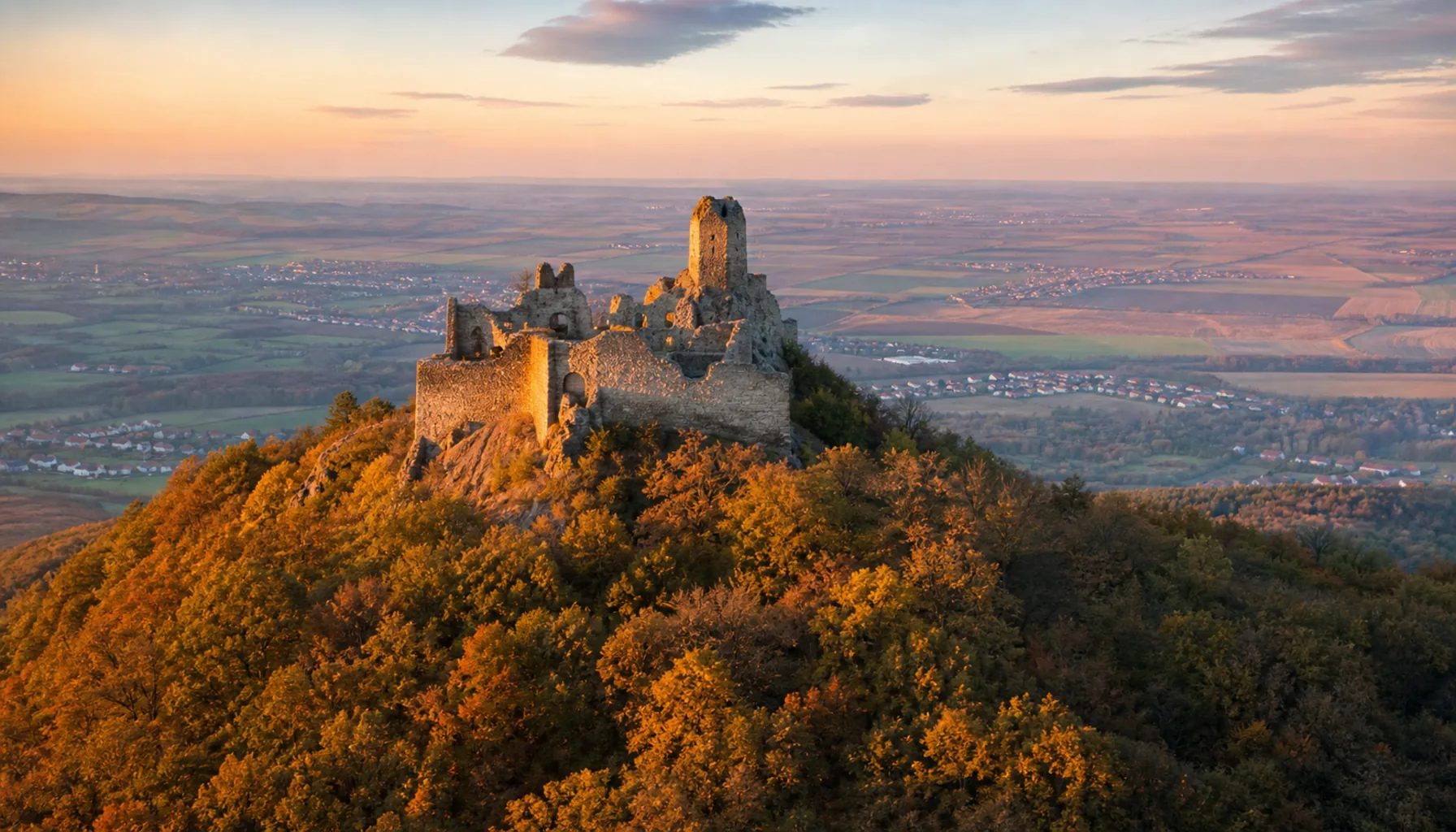
And then the ending, which is the least dramatic and most human part of it. Gýmeš was not stormed, blown up or burned out of the record — nothing of the kind is documented, and this page will not invent it. The castle was simply out-lived by comfort. Somewhere in the long slide from fortress to family seat, the valley became a better address than the ridge: warmer, flatter, on the road, with rooms that could be heated and a door a carriage could reach. The manor houses went up below, the castle above them emptied by degrees, and the forest took the difference.A potom koniec — na celom príbehu tá najmenej dramatická a najľudskejšia časť. Gýmeš nikto nedobyl, nevyhodil do vzduchu ani nevypálil z dejín — nič také nie je doložené a táto stránka si to nevymyslí. Hrad jednoducho prežilo pohodlie. Kdesi na dlhom zostupe od pevnosti k rodovému sídlu sa údolie stalo lepšou adresou než hrebeň: teplejšie, rovnejšie, pri ceste, s izbami, ktoré sa dali vykúriť, a s dverami, ku ktorým došiel koč. Dole vyrástli kaštiele, hrad nad nimi sa po častiach vyprázdnil a rozdiel si vzal les.
Gýmeš was never stormed out of history. It was out-lived by a better address in the valley.Gýmeš nikto z dejín nedobyl. Prežila ho lepšia adresa v údolí.