Spišská Nová Ves · Spiš and the HornádSpišská Nová Ves · Spiš a Hornád

Culture in Spišská Nová VesKultúra v Spišskej Novej Vsi

A professional theatre, a museum and a gallery on one square a kilometre long — and the season that fills the town's beds happening in the gorges a few kilometres up the valley.Profesionálne divadlo, múzeum a galéria na jednom námestí dlhom kilometer — a sezóna, ktorá napĺňa mestské postele, sa odohráva v tiesňavách pár kilometrov vyššie v doline.

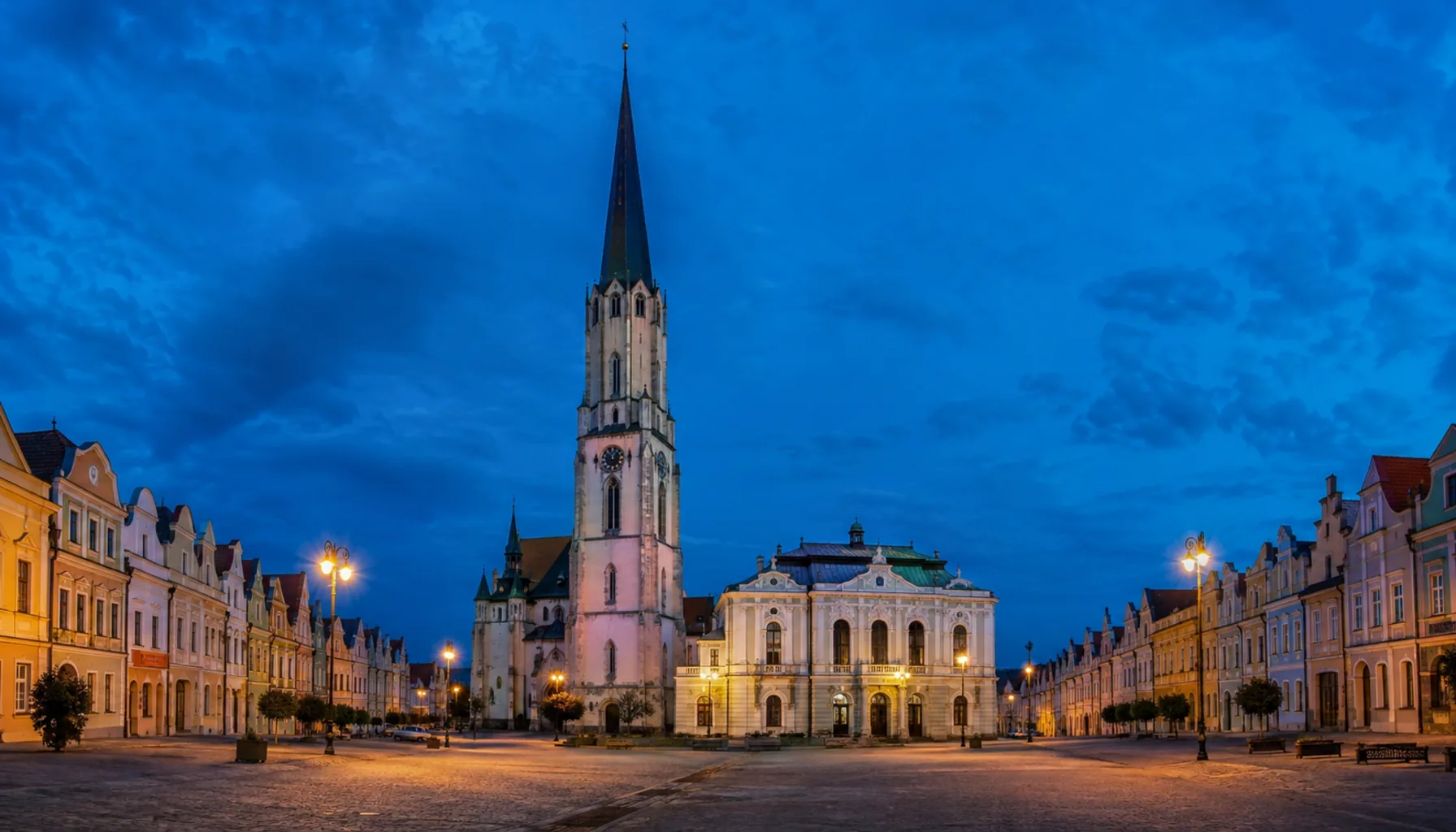
The 87-metre church tower, the tallest in Slovakia, over the lens-shaped square of Spišská Nová Ves at dusk
The 87-metre church tower, the tallest in Slovakia, over the lens-shaped square of Spišská Nová Ves at dusk.Osemdesiatsedemmetrová kostolná veža, najvyššia na Slovensku, nad šošovkovitým námestím Spišskej Novej Vsi za súmraku.

The year in Spišská Nová VesRok v Spišskej Novej Vsi

Two calendars run here and they barely overlap. The outdoor one belongs to the Slovak Paradise: from late spring into autumn the buses run from the station out to Čingov and the other park entrances, the gorge routes with their ladders and log steps are walkable, and the town is full. The park's one-way rules hold all season — the ladder gorges may only be climbed upward.Bežia tu dva kalendáre a takmer sa neprekrývajú. Ten vonkajší patrí Slovenskému raju: od konca jari do jesene chodia od stanice autobusy na Čingov a k ďalším vstupom do parku, tiesňavy s rebríkmi a drevenými stupňami sú priechodné a mesto je plné. Jednosmerné pravidlá parku platia celú sezónu — rebríkovými roklinami sa smie stúpať iba nahor.

The indoor calendar is the town's own and runs the other way round: a professional theatre with a season from autumn into spring, a museum and a gallery open all year on the square, and the church tower open to climb only in season. A wet week in July has more under a roof here than most towns this size do.Vnútorný kalendár je mestský a beží opačne: profesionálne divadlo so sezónou od jesene do jari, múzeum a galéria na námestí otvorené po celý rok a veža kostola prístupná len v sezóne. Daždivý júlový týždeň tu ponúka pod strechou viac než väčšina miest tejto veľkosti.

On top of that the square does what a square this size is for: markets, open-air programmes in the warm months, an Advent market in December, town celebrations. We give no names and no dates, because they change; the town's own listings are the only reliable source, for the tower's opening as well.K tomu robí námestie to, na čo je námestie takejto veľkosti: trhy, podujatia pod holým nebom v teplých mesiacoch, adventný trh v decembri, mestské oslavy. Názvy ani dátumy neuvádzame, lebo sa menia; spoľahlivým zdrojom sú jedine oznamy mesta — aj pokiaľ ide o otváranie veže.

Where culture livesKde žije kultúra

The Reduta is the centre of it: an ornate building of the turn of the twentieth century standing free in the middle of the square, built as the town's assembly and concert house and now the home of the Spiš Theatre. A professional theatre in a town this size is unusual in Slovakia.Ťažiskom je Reduta: ozdobná budova z prelomu devätnásteho a dvadsiateho storočia, ktorá stojí voľne uprostred námestia, postavená ako mestský spoločenský a koncertný dom a dnes domov Spišského divadla. Profesionálne divadlo v meste tejto veľkosti je na Slovensku nezvyčajné.

The Spiš Museum, also on the square, covers the region rather than only the town — the ore, the trades, the German settlement, the long Polish administration. The Košice region runs a gallery here as well. Beneath those sit the ordinary institutions of a district town, a library, a school of art for children, choirs and amateur groups, which we do not list because programmes change.Múzeum Spiša, takisto na námestí, pokrýva región, nie iba mesto — rudu, remeslá, nemecké osídlenie, dlhú poľskú správu. Košický kraj tu vedie aj galériu. Pod tým sú bežné inštitúcie okresného mesta: knižnica, základná umelecká škola, zbory a amatérske súbory, ktoré neuvádzame, lebo programy sa menia.

Two more museum interiors are a few kilometres east at Markušovce: a manor house and the Dardanely, a rococo garden pavilion, both furnished and both the sensible answer to a day of rain in the gorges. Levoča, with Master Pavol's altar, is a short drive north.Ďalšie dva múzejné interiéry sú pár kilometrov na východ v Markušovciach: kaštieľ a Dardanely, rokokový záhradný letohrádok — oba zariadené a oba rozumnou odpoveďou na daždivý deň v roklinách. Levoča s oltárom Majstra Pavla je kúsok na sever.

The buildings that carry itBudovy, ktoré ju nesú

The square is the town. It is a lens in plan — wide in the middle, tapering at both ends — and it runs for about a kilometre, which is why it is commonly called the longest square of its shape in Europe. Burgher houses line both long sides; the three buildings standing free in the middle are the church, the town hall and the theatre.Námestie je mesto. Má šošovkovitý pôdorys — v strede široké, na oboch koncoch zúžené — a tiahne sa asi kilometer, preto sa o ňom bežne hovorí ako o najdlhšom námestí svojho tvaru v Európe. Po oboch dlhých stranách stoja meštianske domy; tri budovy voľne stojace v strede sú kostol, radnica a divadlo.

The Gothic Church of the Assumption carries a tower 87 metres high, the tallest church tower in Slovakia, open to climb in season. Its neo-Gothic top is younger than it looks: it was rebuilt in 1893 and 1894 to a design by Imre Steindl, the Budapest professor then at work on the Hungarian Parliament building.Gotický Kostol Nanebovzatia Panny Márie nesie vežu vysokú 87 metrov, najvyššiu kostolnú vežu na Slovensku, v sezóne prístupnú. Jej novogotický vrchol je mladší, než vyzerá: prestavali ho v rokoch 1893 a 1894 podľa návrhu Imreho Steindla, budapeštianskeho profesora, ktorý vtedy pracoval na budove uhorského parlamentu.

The rest is history. German settlers were brought into the Spiš in the twelfth and thirteenth centuries, and the new village that gave the town its name was one of their foundations — Villa Nova in Latin, Neudorf in German, Igló in Hungarian, Nová Ves in Slovak. In 1412 Sigismund of Luxembourg pledged the town with a dozen others to the Polish crown; the pledge was never redeemed, and the Spiš was administered from Poland until 1772.Zvyšok je história. Nemeckí osadníci boli na Spiš privedení v dvanástom a trinástom storočí a nová ves, ktorá dala mestu meno, bola jednou z ich osád — po latinsky Villa Nova, po nemecky Neudorf, po maďarsky Igló, po slovensky Nová Ves. V roku 1412 dal Žigmund Luxemburský mesto s tuctom ďalších do zálohu poľskej korune; záloh nikto nikdy nevyplatil a Spiš spravovalo Poľsko až do roku 1772.

Metal, and what it left behindKov a to, čo po ňom zostalo

Iron, copper and silver came out of the hills immediately south, and the town was confirmed as a mining town in 1380. The metal also stayed here to be worked: Spišská Nová Ves became one of the great bell-founding towns of the kingdom, and its most famous master, Konrád Gaal, endowed a foundation for the town's priests in 1369. Bells and bronze fonts from workshops here still stand in churches around the region.Železo, meď a striebro vychádzali z kopcov hneď na juh a mesto bolo v roku 1380 potvrdené ako banské. Kov sa tu aj spracúval: Spišská Nová Ves sa stala jedným z veľkých zvonolejárskych miest kráľovstva a jej najznámejší majster Konrád Gaal založil v roku 1369 nadáciu pre mestských kňazov. Zvony a bronzové krstiteľnice z tunajších dielní stoja v kostoloch po kraji dodnes.

That trade is the town's oldest cultural export, and it is audible rather than visible. The railway up the Hornád valley, opened in 1871, then fixed the town as the centre of the Spiš — largely why it, and not Levoča, is the biggest town of the region today.Toto remeslo je najstarším kultúrnym vývozom mesta a je skôr počuteľné než viditeľné. Železnica Hornádskou dolinou, otvorená v roku 1871, potom upevnila postavenie mesta ako centra Spiša — vo veľkej miere preto je dnes najväčším mestom regiónu ono a nie Levoča.

Mining ended and the town rebuilt on engineering, electrical manufacturing and services. The other pillar is the national park — the gorges were declared a protected landscape area in 1964 and a national park in 1988 — and it is honest to say how narrow that pillar is: concentrated in summer and vulnerable to a wet season.Baníctvo skončilo a mesto sa prebudovalo na strojárstvo, elektrotechniku a služby. Druhou oporou je národný park — tiesňavy boli v roku 1964 vyhlásené za chránenú krajinnú oblasť a v roku 1988 za národný park — a je poctivé povedať, aká úzka tá opora je: sústredená do leta a zraniteľná daždivou sezónou.

← Spišská Nová Ves← Spišská Nová Ves

WatchPozrite si

Sixteen videos for Culture in Spišská Nová Ves.Šestnásť videí — Kultúra v Spišskej Novej Vsi.