Rožňava · Gemer and the Slovak KarstRožňava · Gemer a Slovenský kras
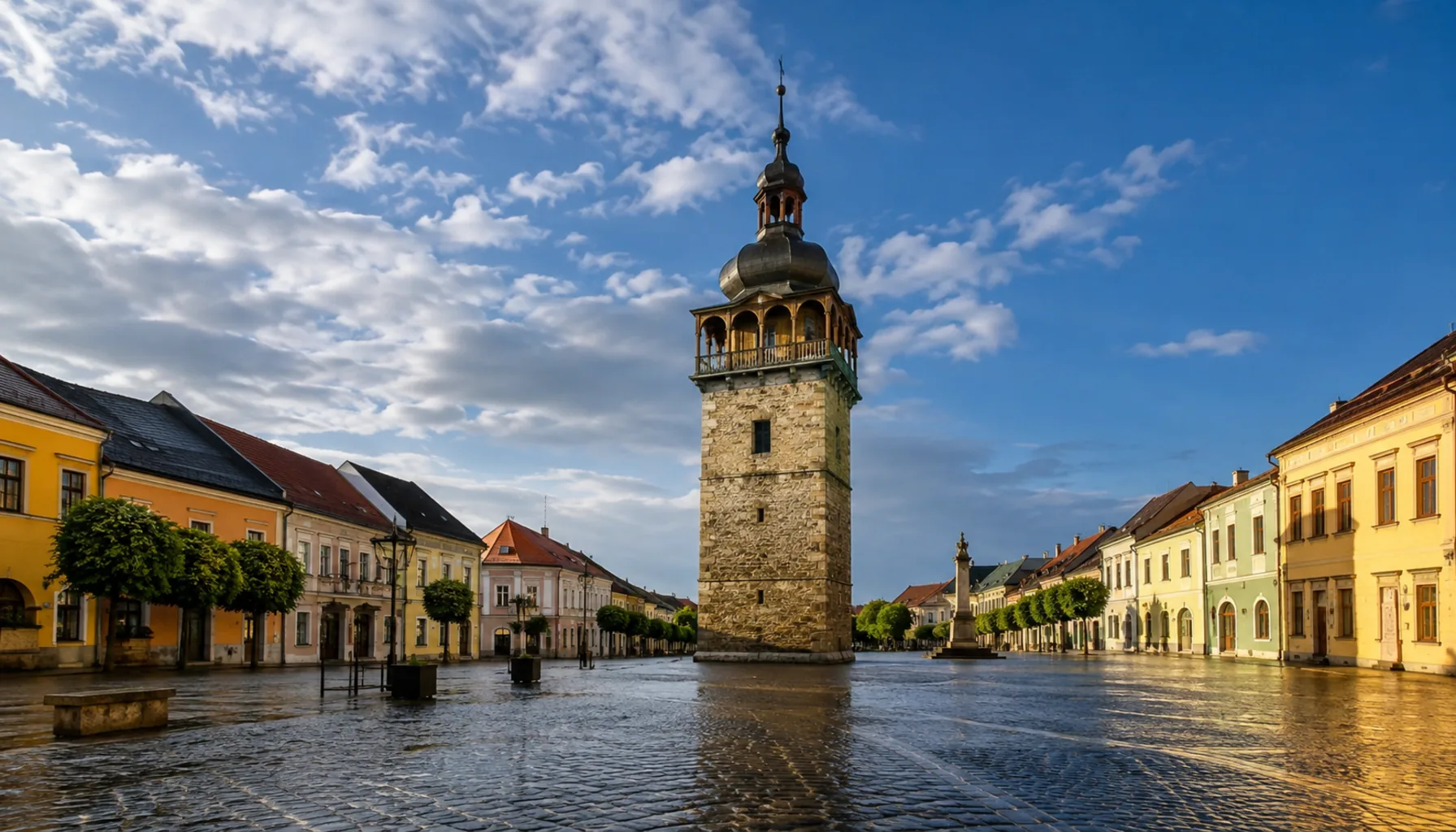
A mining town that was made a bishop's seat: a watchtower standing free in one of the largest squares in Slovakia, a cathedral holding a painting of 1513 with miners at work in its background, and the caves of the Slovak Karst on the plateaus above.Banské mesto, z ktorého sa stalo biskupské sídlo: strážna veža stojaca voľne uprostred jedného z najväčších námestí na Slovensku, katedrála s obrazom z roku 1513, v ktorého pozadí pracujú baníci, a nad mestom planiny a jaskyne Slovenského krasu.
Rožňava's year is a visitor season with a town underneath it. The caves — the aragonite cave at Ochtiná, Gombasecká, Domica and Krásnohorská, and the ice cave at Dobšiná in the same district — along with the gorges, Betliar and the karst trails, work from roughly spring to autumn and close or go to limited hours in winter. Rožňava is where the beds, the buses and the guides are.Rožňavský rok je návštevníckou sezónou, pod ktorou beží mesto. Jaskyne — aragonitová v Ochtinej, Gombasecká, Domica a Krásnohorská a Dobšinská ľadová v tom istom okrese — spolu s tiesňavami, Betliarom a krasovými chodníkmi fungujú zhruba od jari do jesene a v zime zatvárajú alebo prechádzajú na obmedzené hodiny. Rožňava je tým, kde sú postele, autobusy a sprievodcovia.
Underneath it runs the ordinary year of a district seat and a bishop's seat at once: the market, the church calendar of the diocese, school and club dates, and whatever the cultural centre puts in its hall. We name no events and give no dates, because a page like this outlives them; only the town's own listings are current.Pod tým beží obyčajný rok okresného aj biskupského sídla naraz: trh, cirkevný kalendár diecézy, školské a spolkové termíny a to, čo dá kultúrne stredisko do sály. Názvy podujatí ani dátumy neuvádzame, lebo takáto stránka ich prežije; aktuálne sú len oznamy samotného mesta.
Check one thing before you build a day around it. Krásna Hôrka, the castle east of the town above Krásnohorské Podhradie, was badly damaged by fire in 2012 and has been under long-term reconstruction ever since; access is limited and it changes. The Andrássy mausoleum below it is a separate and reliable stop, and Betliar to the north is open.Jedno si pred plánovaním dňa overte: Krásnu Hôrku, hrad východne od mesta nad Krásnohorským Podhradím, v roku 2012 ťažko poškodil požiar a odvtedy je v dlhodobej rekonštrukcii; prístup je obmedzený a mení sa. Andrássyho mauzóleum pod hradom je samostatná a spoľahlivá zastávka a Betliar na severe je otvorený.
The mining museum is the town's own institution and it exists for a plain reason: for seven hundred years one industry was very nearly the whole life of the place. Gold and silver came out of these valleys first, then iron and copper, and iron ore was still worked around the town until the end of the twentieth century. Lamps, tools, ore and mine maps are not a curiosity here; they are the record of what everybody did.Banícke múzeum je vlastnou inštitúciou mesta a existuje z prostého dôvodu: sedemsto rokov bolo jedno odvetvie takmer celým životom tohto miesta. Z týchto dolín sa najprv ťažilo zlato a striebro, potom železo a meď, a železná ruda sa v okolí dobývala až do konca dvadsiateho storočia. Kahance, náradie, rudy a banské mapy tu nie sú kuriozitou; sú záznamom o tom, čo tu robil každý.
The other institution is education, and it came with the bishop. The diocese founded in 1776 brought a seminary and schools with it, and for the next century and a half Rožňava was where the sons of Gemer were sent to be taught, whatever their families did for a living. Pavol Jozef Šafárik, born in 1795 at Kobeliarovo a few valleys north and schooled for a time here, spent his life proving that the Slavs had a documented history of their own — work that is one of the foundations of the Slovak national movement.Druhou inštitúciou je vzdelávanie a prišlo s biskupom. Diecéza založená v roku 1776 priniesla seminár a školy a Rožňava bola nasledujúce storočie a pol miestom, kam sa posielali gemerskí synovia na štúdiá, nech ich rodiny robili čokoľvek. Pavol Jozef Šafárik, narodený v roku 1795 v Kobeliarove pár dolín na sever a istý čas študujúci tu, strávil život dokazovaním, že Slovania majú vlastné doložené dejiny — a jeho dielo je jedným zo základov slovenského národného hnutia.
Around those two the town keeps what a district seat keeps: a cultural centre with a hall, a library, a school of art for children, amateur choirs and folk groups. None is named here, because programmes and premises change. The region's great-house culture is at Betliar, a few kilometres north, where the Andrássy manor has kept its interiors, its library and its English park — rare, because most Slovak manor houses are shown as empty rooms.Okolo tých dvoch si mesto drží to, čo si drží okresné sídlo: kultúrne stredisko so sálou, knižnicu, základnú umeleckú školu, amatérske zbory a folklórne súbory. Menovite ich neuvádzame, lebo programy a priestory sa menia. Kultúra veľkých panských domov je v Betliari pár kilometrov na sever, kde si andrássyovský kaštieľ zachoval interiéry, knižnicu aj anglický park — čo je vzácne, lebo väčšina slovenských kaštieľov sa ukazuje ako prázdne miestnosti.
The square is one of the largest in Slovakia and unusual in plan, because the watchtower stands free in the middle of it rather than on a corner or against the town hall. It went up between 1643 and 1654 as a lookout and a fire tower, which tells you what a town of timber roofs and forge fires expected of its century, and it is still the town's emblem.Námestie patrí k najväčším na Slovensku a je nezvyčajné pôdorysom, lebo strážna veža stojí voľne uprostred neho, nie na rohu či pri radnici. Postavili ju v rokoch 1643 až 1654 ako vartu a požiarnu vežu, čo prezrádza, čo mesto drevených striech a kováčskych ohňov od svojho storočia čakalo — a dodnes je znakom mesta.
Around the edges, the burgher houses, the town hall and the bishop's palace record the two things that paid for Rožňava. The first was metal: a free royal town from 1410, with its own court, its own market and a guild economy built on ore. The second was the church — Maria Theresa had a diocese carved out here in 1776, and the parish church of 1304 was raised to cathedral rank.Meštianske domy, radnica a biskupský palác po obvode zaznamenávajú dve veci, ktoré Rožňavu zaplatili. Prvou bol kov: od roku 1410 slobodné kráľovské mesto s vlastným súdom, vlastným trhom a cechovým hospodárstvom postaveným na rude. Druhou bola cirkev — Mária Terézia tu dala v roku 1776 vyčleniť diecézu a farský kostol z roku 1304 bol povýšený na katedrálu.
The cathedral itself is Gothic in origin and has been rebuilt several times, which is normal for a church that served a mining town, then a frontier, then a diocese in turn. What is inside it is not normal at all.Samotná katedrála je pôvodom gotická a bola viackrát prestavaná, čo je pri kostole, ktorý slúžil baníckemu mestu, potom pohraničiu a napokon diecéze, normálne. To, čo je vnútri, normálne nie je.
The cathedral holds the Metercia panel of 1513 — St Anne with the Virgin and Child, a subject painted all over late-medieval Europe. What makes this one exceptional is the background: behind the holy figures, miners are washing and hauling ore in a working landscape taken from the valleys around the town.Katedrála uchováva tabuľový obraz Metercia z roku 1513 — svätá Anna s Pannou Máriou a Dieťaťom, námet rozšírený po celej neskorostredovekej Európe. Výnimočné je pozadie: za svätými postavami baníci perú a vozia rudu v pracovnej krajine odpozorovanej z dolín okolo mesta.
It is one of the earliest depictions of mining anywhere in Europe and the single most important object in the town. It is also the clearest statement Rožňava ever made about itself: a community that pays for an altar panel and then asks the painter to put its own work in the background is telling you exactly where it thought its life came from.Je to jedno z najstarších zobrazení baníctva v Európe a najdôležitejší predmet v meste. Zároveň je to najjasnejšia výpoveď, akú Rožňava o sebe kedy urobila: komunita, ktorá zaplatí oltárny obraz a potom požiada maliara, aby do pozadia dal jej vlastnú prácu, presne hovorí, odkiaľ podľa seba pochádzal jej život.
That the mines are gone makes the panel read differently now. Through the 1990s one pit after another in the valleys closed, the district has lived with high unemployment ever since, and the growth industry is the same ground seen from above instead of below — the caves, the plateaus, the gorges. For a town that spent seven centuries valuing limestone only for what could be dug out of it, that is a strange reversal.Tým, že bane sú preč, sa obraz číta inak. Cez deväťdesiate roky zavrela v dolinách jedna šachta za druhou, okres odvtedy žije s vysokou nezamestnanosťou a rastúcim odvetvím je tá istá zem videná zhora namiesto zdola — jaskyne, planiny, tiesňavy. Pre mesto, ktoré sedem storočí cenilo vápenec len pre to, čo sa z neho dalo vykopať, je to zvláštny obrat.
Sixteen videos for Culture in Rožňava.Šestnásť videí — Kultúra v Rožňave.