863Cyril and Methodius, and an alphabet made to orderCyril a Metod a písmo šité na mieru
SlovakiaSlovensko
Cyril and Methodius, and an alphabet made to orderCyril a Metod a písmo šité na mieru
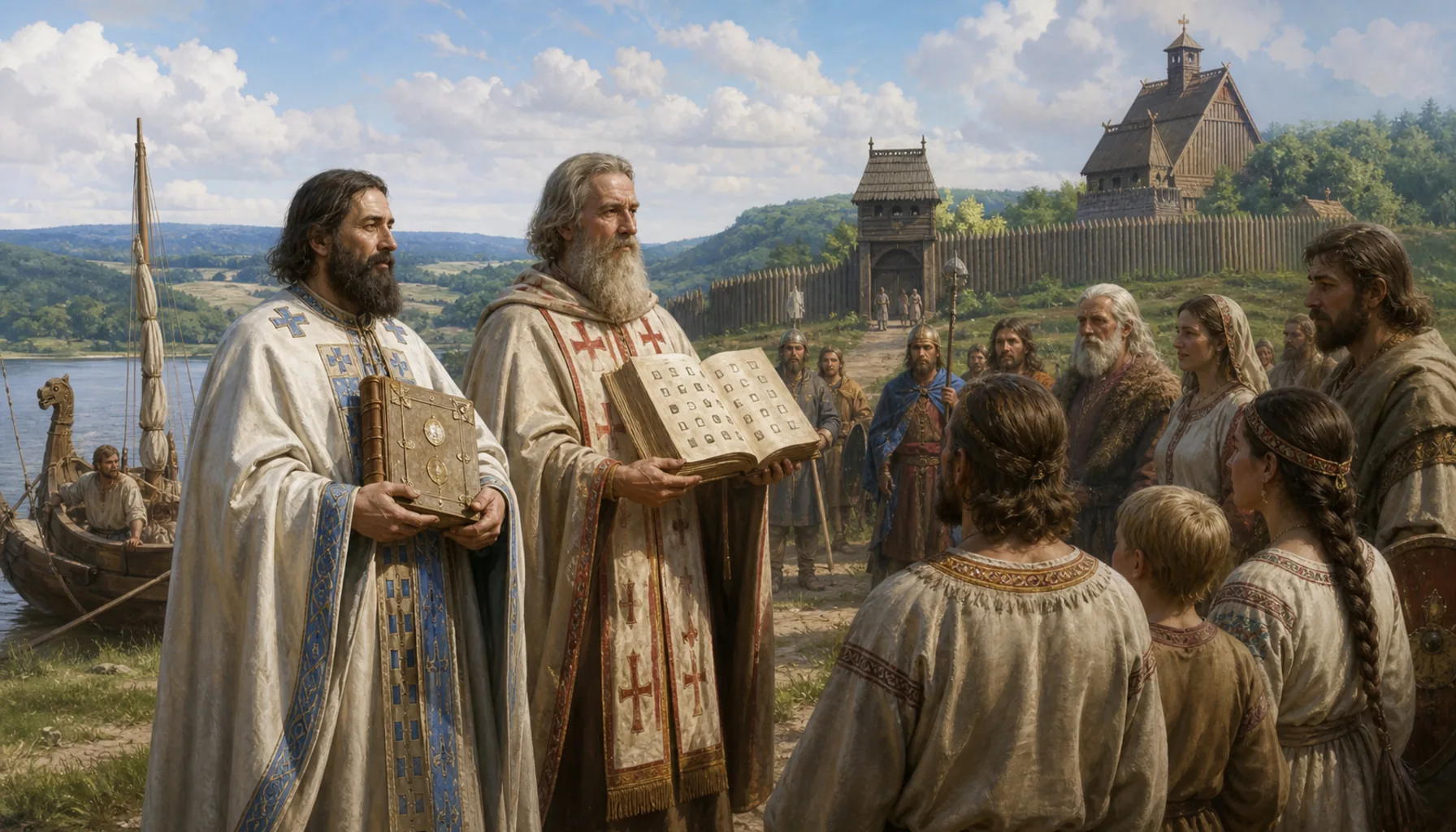
Rastislav asked the Byzantine emperor Michael III for teachers who could preach in a language his people understood, and in 863 the emperor sent the brothers Constantine and Methodius from Thessaloniki. Before they left, Constantine did something nobody had done here: for a language that had never been written down he built an alphabet from scratch, Glagolitic, with a letter for every sound of Slavic speech. With it the brothers translated the Gospels and the church service into Old Church Slavonic and trained pupils who could use them. Rastislav's motive was political — a church that spoke Slavic would not answer to Bavarian bishops — but the result outlasted the politics: this is the beginning of literature in a Slavic language, and 5 July, the brothers' feast day, is still a public holiday in Slovakia.Rastislav požiadal byzantského cisára Michala III. o učiteľov, ktorí by kázali rečou, akej ľudia rozumejú, a cisár roku 863 poslal na Veľkú Moravu bratov Konštantína a Metoda zo Solúna. Konštantín pred cestou urobil niečo, čo tu dovtedy nikto: pre jazyk, ktorý sa nikdy nezapisoval, zostavil celkom nové písmo — hlaholiku so znakom pre každú hlásku slovanskej reči. Preložili ňou evanjeliá aj bohoslužbu do staroslovienčiny a vychovali žiakov, ktorí ich vedeli používať. Rastislavov zámer bol politický — cirkev hovoriaca po slovansky by nepodliehala bavorským biskupom — lenže výsledok politiku prežil: je to začiatok literatúry v slovanskom jazyku a 5. júl, sviatok oboch bratov, je na Slovensku štátnym sviatkom dodnes.
ReferencesZdroje
Where this came fromOdkiaľ to pochádza
Sources consulted while researching this page. Follow them to read further — and to check us.Zdroje, z ktorých sme pri príprave tejto stránky vychádzali. Kliknite a čítajte ďalej — aj si nás overte.
Černová massacre — Wikipediadate, 15 killed and 12 seriously wounded, gendarmes' own nationalitydate, 15 killed and 12 seriously wounded, gendarmes' own nationality
Magyarization — Wikipediathe 1907 Apponyi education laws, the closing of the Slovak grammar schools and of Matica slovenská in April 1875the 1907 Apponyi education laws, the closing of the Slovak grammar schools and of Matica slovenská in April 1875
Žiadosti slovenského národa — Wikipédia10 May 1848, fourteen points, the arrest warrants of May–June 184810 May 1848, fourteen points, the arrest warrants of May–June 1848
Slovak Uprising of 1848–49 — Wikipediathe three volunteer campaigns and the disbanding of the corps on 21 November 1849the three volunteer campaigns and the disbanding of the corps on 21 November 1849
Pittsburgh Agreement — Wikipediathe Cleveland Agreement of 22 October 1915 and the text of the Pittsburgh promisesthe Cleveland Agreement of 22 October 1915 and the text of the Pittsburgh promises
Slovak–Hungarian War — Wikipediathe 'Little War' of March 1939 and the 1,697 km² ceded on 4 April 1939the 'Little War' of March 1939 and the 1,697 km² ceded on 4 April 1939
Slovak National Uprising — Wikipediainsurgent numbers, territory held, the fall of Banská Bystrica on 27 October 1944insurgent numbers, territory held, the fall of Banská Bystrica on 27 October 1944
Kremnička and Nemecká massacres — Wikipedia747 victims at Kremnička, about 900 at Nemecká, the units responsible747 victims at Kremnička, about 900 at Nemecká, the units responsible
Masaker v Kľakovskej doline — Wikipédia21 January 1945, 148 civilians including 48 children under eighteen21 January 1945, 148 civilians including 48 children under eighteen
Battle of the Dukla Pass — Wikipedia8 September – 28 October 1944 and the casualty figures8 September – 28 October 1944 and the casualty figures
Kalinov — Wikipédiathe first village in Slovakia liberated, 21 September 1944the first village in Slovakia liberated, 21 September 1944
Slovak Greek Catholic Church — Wikipediathe staged Prešov assembly of April 1950, Bishop Gojdič, the 1968 restorationthe staged Prešov assembly of April 1950, Bishop Gojdič, the 1968 restoration