Romans on the Danube, a Church at NitraRimania na Dunaji, kostol v Nitre
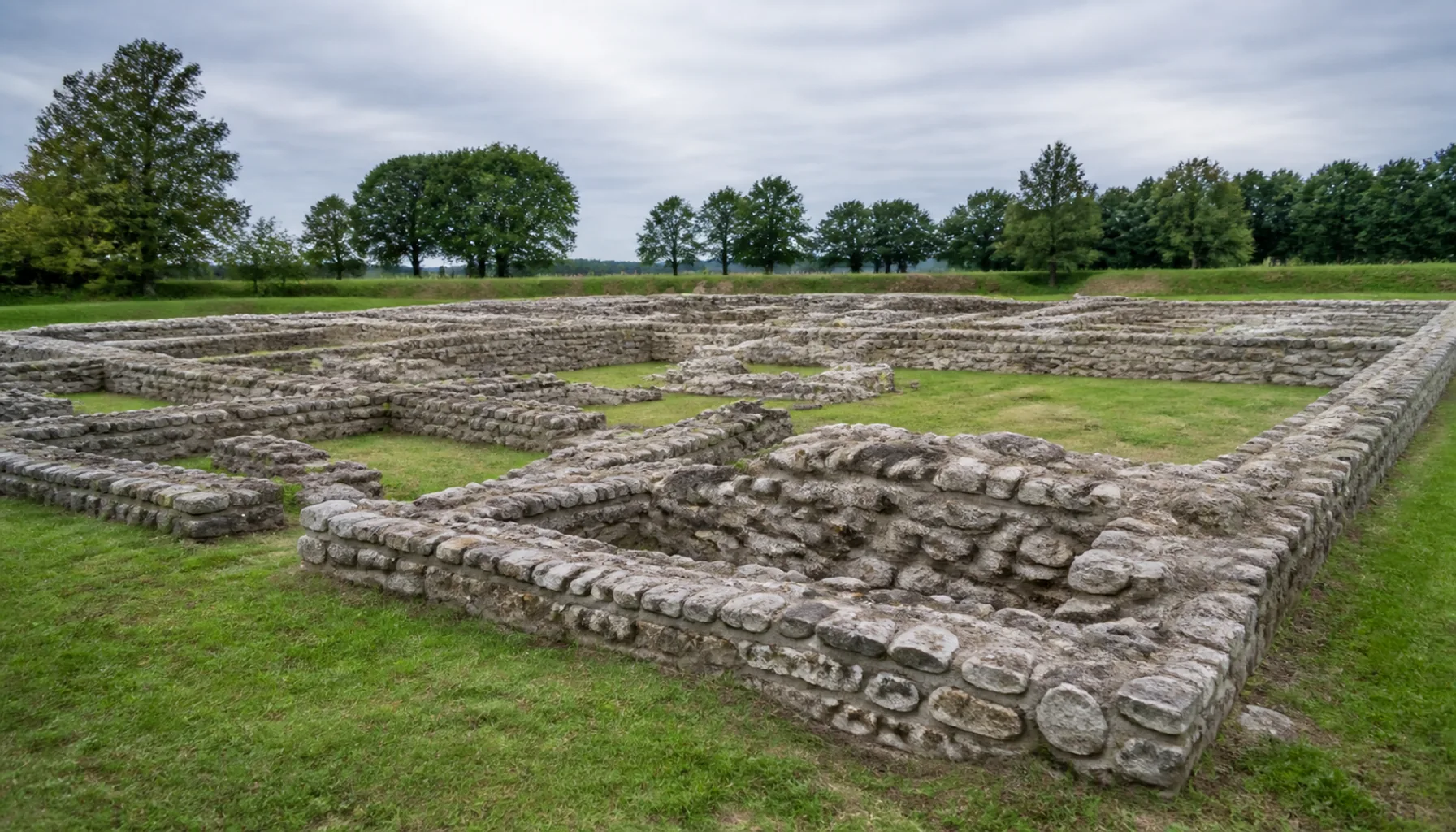
Written history reaches this land with the Celts: after about 113 BC the Boii held a fortified oppidum on and around Bratislava’s castle hill, and in the 1st century BC they struck fine silver coins there — the biatec hexadrachms, whose Latin-letter inscriptions are the oldest known use of the Latin alphabet on Slovak territory. Then came Rome. For four centuries the Danube was the empire’s frontier, the Limes Romanus: the auxiliary fort of Gerulata, built in the 2nd century at today’s Rusovce on Bratislava’s edge, guarded it until the legions withdrew in the 4th century, and a Roman border post stood on the crag of Devín above the meeting of the Morava and the Danube until around the year 400. Since 2021 Gerulata has been part of the transnational UNESCO listing of the Danube Limes, which runs from Bavaria to the earthworks of Iža near Komárno.Písané dejiny prichádzajú do tejto krajiny s Keltmi: po roku 113 pred n. l. držali Bójovia opevnené oppidum na bratislavskom hradnom kopci a v jeho okolí a v 1. storočí pred n. l. tam razili kvalitné strieborné mince — hexadrachmy biateky, ktorých nápisy latinkou sú najstarším známym použitím latinského písma na území Slovenska. Potom prišiel Rím. Štyri storočia bol Dunaj hranicou ríše, Limes Romanus: strážil ju pomocný tábor Gerulata, postavený v 2. storočí v dnešných Rusovciach na okraji Bratislavy, kým légie v 4. storočí neodišli, a na brale Devína nad sútokom Moravy a Dunaja stála rímska pohraničná hliadka až do obdobia okolo roku 400. Od roku 2021 je Gerulata súčasťou nadnárodného zápisu UNESCO Dunajský limes, ktorý sa tiahne od Bavorska po valy pri Iži neďaleko Komárna.
The Slavs enter the record in 623, when the Frankish merchant Samo united their tribes against the Avars and was elected king — the first recorded political entity of the Slavs, centred most likely on Moravia and the Nitra region, and victor over a Frankish army in the three-day battle of Wogastisburg in 631, at a site never identified. Two centuries later, this site’s home city steps to the front of the story. Around 828, Prince Pribina of Nitra — himself still a pagan — had a church built here and consecrated by Archbishop Adalram of Salzburg: the first known Christian church on the territory of Slovakia, and the earliest church among the West Slavs whose existence is documented in writing. The building itself is long gone, but archaeology confirms a 9th-century church beneath the cathedral complex on Nitra’s castle hill, and Pribina’s statue watches over the square that bears his name in the Upper Town.Slovania vstupujú do písomných prameňov v roku 623, keď franský kupec Samo zjednotil ich kmene proti Avarom a bol zvolený za kráľa — vznikol prvý zaznamenaný politický útvar Slovanov, s ťažiskom najskôr na Morave a v Ponitrí, ktorý v roku 631 porazil franské vojsko v trojdňovej bitke pri Wogastisburgu, na mieste, ktoré sa dodnes nepodarilo určiť. O dve storočia neskôr vystupuje do popredia príbehu domovské mesto tejto stránky. Okolo roku 828 dal nitriansky knieža Pribina — sám ešte pohan — postaviť kostol, ktorý vysvätil salzburský arcibiskup Adalrám: prvý známy kresťanský kostol na území Slovenska a zároveň najstarší kostol u západných Slovanov, ktorého existenciu dokladá písomný prameň. Samotná stavba sa nezachovala, archeológia však potvrdzuje kostol z 9. storočia pod katedrálnym komplexom na nitrianskom hradnom kopci a Pribinova socha dnes hľadí na námestie v Hornom meste, ktoré nesie jeho meno.
In 833 Mojmír I of Moravia drove Pribina out and joined the Principality of Nitra to his own — the state historians call Great Moravia. At Prince Rastislav’s request, the Byzantine emperor Michael III sent the brothers Constantine (Cyril) and Methodius here in 863; they brought the Glagolitic alphabet created for the mission, translated the Gospels and the liturgy into Old Church Slavonic, and founded the first Slavic literary culture. Under Svätopluk I (870–894), first appanage prince of Nitra, the realm reached its greatest extent — and in 880 Nitra received its first bishop, Wiching, the first bishopric of the Western and Eastern Slavs; refounded around 1110, it makes Nitra the oldest diocese in Slovakia. After Svätopluk’s death the realm weakened and was overrun by the Magyars around 906–907; at the three-day Battle of Pressburg in 907 — the first written mention of Bratislava — Great Moravia passes out of the record.V roku 833 vyhnal moravský Mojmír I. Pribinu a pripojil Nitrianske kniežatstvo k svojmu — vznikol štát, ktorý historici nazývajú Veľká Morava. Na žiadosť kniežaťa Rastislava sem byzantský cisár Michal III. poslal v roku 863 bratov Konštantína (Cyrila) a Metoda; priniesli hlaholiku vytvorenú pre túto misiu, preložili evanjeliá a liturgiu do staroslovienčiny a založili prvú slovanskú literárnu kultúru. Za Svätopluka I. (870–894), prvého nitrianskeho údelného kniežaťa, dosiahla ríša najväčší rozsah — a v roku 880 dostala Nitra prvého biskupa Wichinga, prvé biskupstvo západných a východných Slovanov; obnovené okolo roku 1110 robí z Nitry najstaršiu diecézu na Slovensku. Po Svätoplukovej smrti ríša oslabla a okolo rokov 906–907 ju ovládli starí Maďari; trojdňovou bitkou pri Bratislave v roku 907 — prvou písomnou zmienkou o meste — sa Veľká Morava vytráca z prameňov.
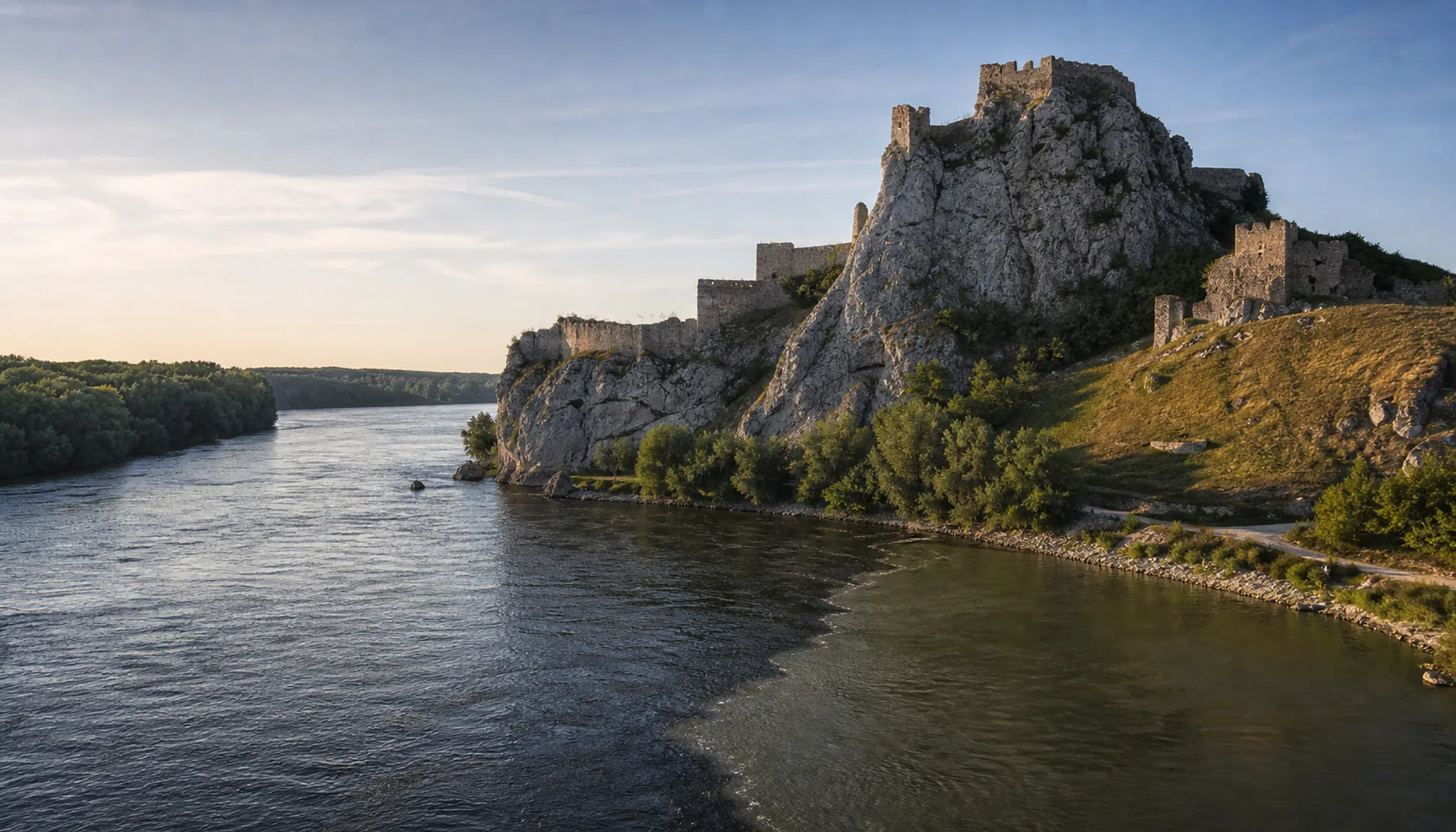
Devín — “Dowina”, 864Devín — „Dowina“, 864
The crag over the Danube–Morava confluence enters writing in 864, when Louis the German besieged Prince Rastislav here.Bralo nad sútokom Dunaja a Moravy vstupuje do písomných prameňov v roku 864, keď tu Ľudovít Nemec obliehal knieža Rastislava.
Nitra’s bishopric, 880Nitrianske biskupstvo, 880
The first bishopric of the Western and Eastern Slavs — and, refounded around 1110, the oldest diocese in Slovakia today.Prvé biskupstvo západných a východných Slovanov — a po obnovení okolo roku 1110 dodnes najstaršia diecéza na Slovensku.
The Bojná plaquesPlakety z Bojnej
Gilded plaques from a portable altar of around 800, found at the Bojná–Valy hillfort, carry short Latin texts — the first documented writing among Central Europe’s Slavs; the museum in Bojná shows the finds.Pozlátené plakety z prenosného oltára z obdobia okolo roku 800, nájdené na hradisku Bojná-Valy, nesú krátke latinské texty — prvé doložené písmo u Slovanov strednej Európy; nálezy vystavuje múzeum v Bojnej.
The first known church, the first bishopric of the Slavs, their first documented written words — all of it stood in the heartland of the Nitra principality.Prvý známy kostol, prvé biskupstvo Slovanov, ich prvé doložené písané slová — to všetko stálo v srdci Nitrianskeho kniežatstva.
Nitra today — the city where it began →Nitra dnes — mesto, kde sa to začalo →
Nitra Castle & St Emmeram’s Cathedral →Nitriansky hrad a Katedrála sv. Emeráma →
Devín Castle over the two rivers →Hrad Devín nad dvoma riekami →