6th century – 658Slavs, Avars, and a merchant who became kingSlovania, Avari a kupec, z ktorého bol kráľ
SlovakiaSlovensko
Slavs, Avars, and a merchant who became kingSlovania, Avari a kupec, z ktorého bol kráľ
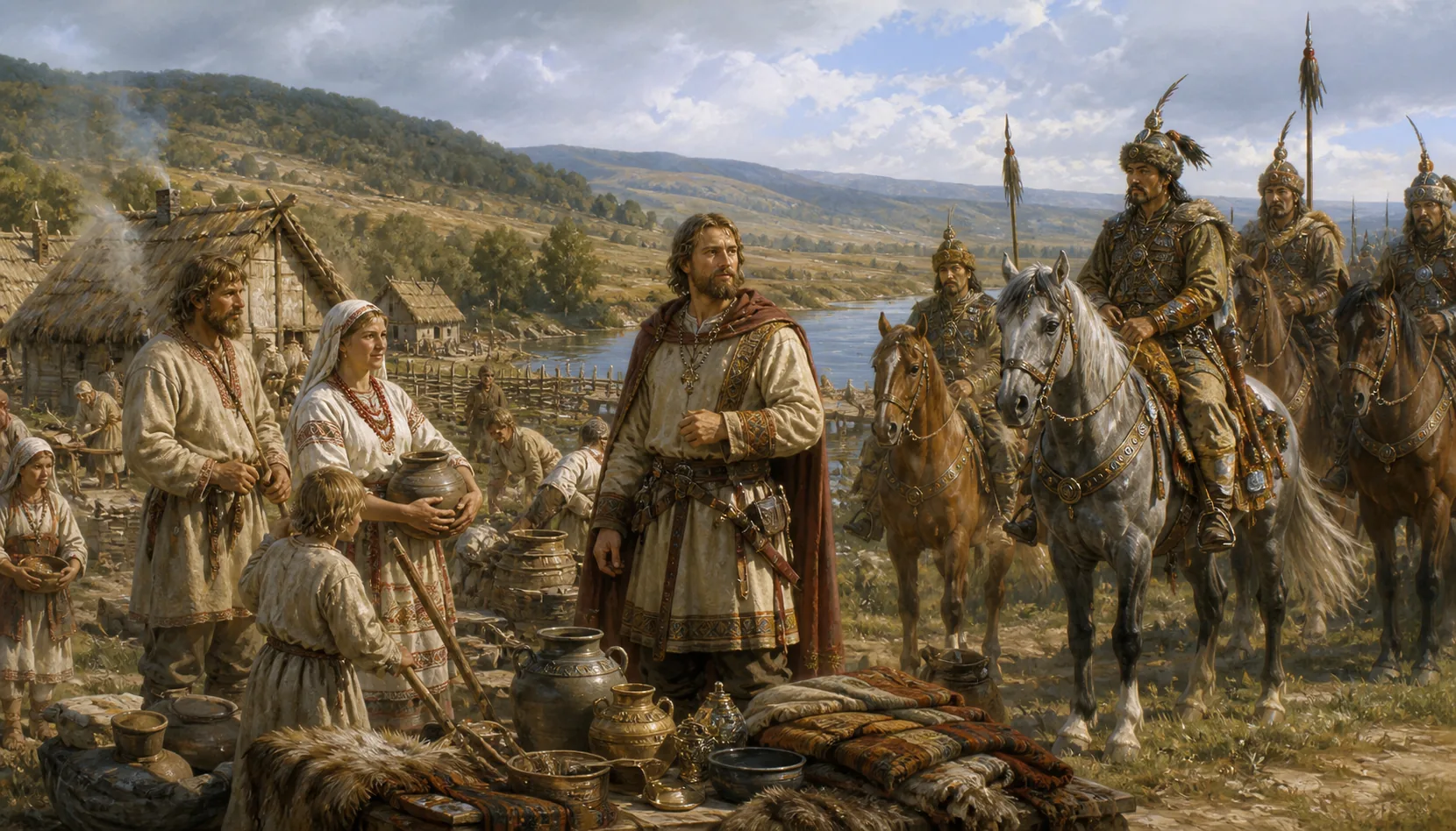
Slavs settled this land from the fifth and sixth centuries, moving into a Danube basin that the Avars — horsemen from the steppe — had dominated since 568. In 623 the Slavs rebelled, and the chronicle of Fredegar, the only source we have, says they chose as their leader a Frankish merchant named Samo, who ruled them for thirty-five years; some historians place the revolt a few years later than Fredegar's date. In 631 Samo destroyed the army of the Frankish king Dagobert I at a place the chronicle calls Wogastisburg — a battle nobody has yet been able to put on a map. His realm is the first political body of the Slavs that anyone wrote down, but it did not outlive him: he died about 658 and it vanishes from the record with him. What finally cleared the ground for Slavic states was Charlemagne's destruction of the Avar khaganate in the 790s.Slovania sa na tomto území usadzovali od 5. a 6. storočia a prichádzali do Podunajska, ktorému od roku 568 vládli Avari, jazdci zo stepi. Roku 623 sa Slovania vzbúrili a Fredegarova kronika — jediný prameň, ktorý o tom hovorí — uvádza, že si na čelo postavili franského kupca menom Samo; vládol im tridsaťpäť rokov, hoci časť historikov kladie vzburu o niekoľko rokov neskôr. V roku 631 Samo rozdrvil vojsko franského kráľa Dagoberta I. pri mieste, ktoré kronika nazýva Wogastisburg — dodnes ho nikto nevedel nájsť na mape. Jeho ríša je prvý písomne doložený politický útvar Slovanov, prežiť ho však nedokázala: Samo zomrel okolo roku 658 a spolu s ním mizne z prameňov aj ona. Cestu slovanským štátom uvoľnil až Karol Veľký, keď v 90. rokoch 8. storočia rozvrátil avarský kaganát.
ReferencesZdroje
Where this came fromOdkiaľ to pochádza
Sources consulted while researching this page. Follow them to read further — and to check us.Zdroje, z ktorých sme pri príprave tejto stránky vychádzali. Kliknite a čítajte ďalej — aj si nás overte.
Černová massacre — Wikipediadate, 15 killed and 12 seriously wounded, gendarmes' own nationalitydate, 15 killed and 12 seriously wounded, gendarmes' own nationality
Magyarization — Wikipediathe 1907 Apponyi education laws, the closing of the Slovak grammar schools and of Matica slovenská in April 1875the 1907 Apponyi education laws, the closing of the Slovak grammar schools and of Matica slovenská in April 1875
Žiadosti slovenského národa — Wikipédia10 May 1848, fourteen points, the arrest warrants of May–June 184810 May 1848, fourteen points, the arrest warrants of May–June 1848
Slovak Uprising of 1848–49 — Wikipediathe three volunteer campaigns and the disbanding of the corps on 21 November 1849the three volunteer campaigns and the disbanding of the corps on 21 November 1849
Pittsburgh Agreement — Wikipediathe Cleveland Agreement of 22 October 1915 and the text of the Pittsburgh promisesthe Cleveland Agreement of 22 October 1915 and the text of the Pittsburgh promises
Slovak–Hungarian War — Wikipediathe 'Little War' of March 1939 and the 1,697 km² ceded on 4 April 1939the 'Little War' of March 1939 and the 1,697 km² ceded on 4 April 1939
Slovak National Uprising — Wikipediainsurgent numbers, territory held, the fall of Banská Bystrica on 27 October 1944insurgent numbers, territory held, the fall of Banská Bystrica on 27 October 1944
Kremnička and Nemecká massacres — Wikipedia747 victims at Kremnička, about 900 at Nemecká, the units responsible747 victims at Kremnička, about 900 at Nemecká, the units responsible
Masaker v Kľakovskej doline — Wikipédia21 January 1945, 148 civilians including 48 children under eighteen21 January 1945, 148 civilians including 48 children under eighteen
Battle of the Dukla Pass — Wikipedia8 September – 28 October 1944 and the casualty figures8 September – 28 October 1944 and the casualty figures
Kalinov — Wikipédiathe first village in Slovakia liberated, 21 September 1944the first village in Slovakia liberated, 21 September 1944
Slovak Greek Catholic Church — Wikipediathe staged Prešov assembly of April 1950, Bishop Gojdič, the 1968 restorationthe staged Prešov assembly of April 1950, Bishop Gojdič, the 1968 restoration