1st – 4th century ADRome stops at the DanubeRím sa zastavil na Dunaji
SlovakiaSlovensko
Rome stops at the DanubeRím sa zastavil na Dunaji
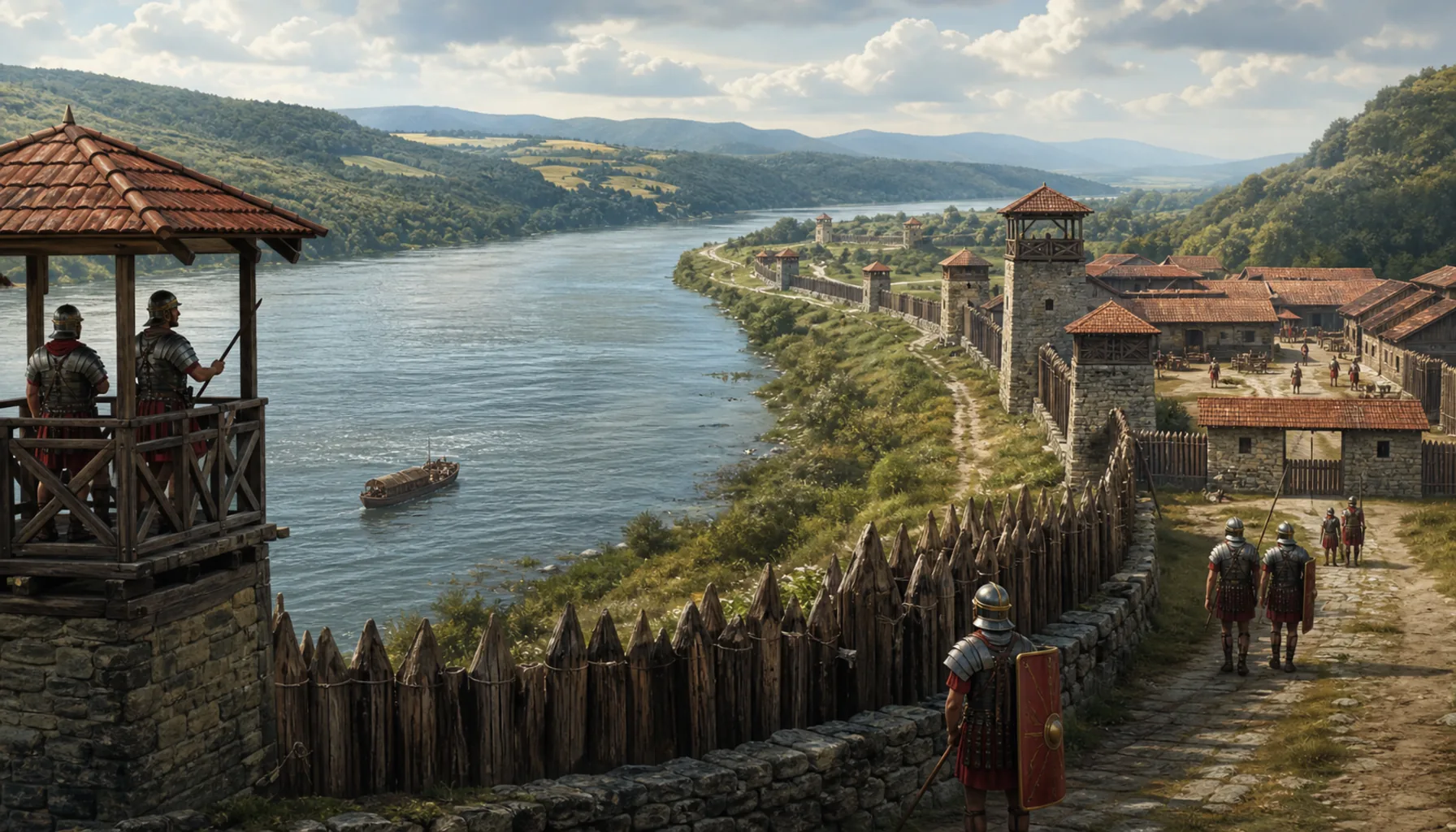
For four centuries the Danube was the northern edge of the Roman Empire — the limes, a guarded frontier of forts, roads and watchtowers. Rome held the right bank and watched the Germanic tribes on the left; the auxiliary fort of Gerulata, built in the second century at today's Rusovce on the edge of Bratislava, and the camp at Iža near Komárno — that one on the northern, Slovak bank, facing the legionary base of Brigetio across the water — have both been part of the UNESCO World Heritage listing of the Danube frontier since 2021. The soldiers did cross the river: a fortified Roman post also stood on the crag of Devín. And in the year 179, during the wars against the Quadi and the Marcomanni, men of the Second Legion cut an inscription into the rock below Trenčín Castle recording the victory of an army of 855 soldiers stationed at a place called Laugaricio — the oldest surviving record of a place name on Slovak territory, still on the rock it names. Rome pulled back from the river in the fourth century and the Devín post was abandoned around the year 400.Štyri storočia bol Dunaj severnou hranicou Rímskej ríše — limes, strážená čiara táborov, ciest a strážnych veží. Rím držal pravý breh a spoza rieky sledoval germánske kmene na ľavom; pomocný tábor Gerulata, postavený v 2. storočí v dnešných Rusovciach na okraji Bratislavy, aj tábor pri Iži neďaleko Komárna — ten už na severnom, teda našom brehu, oproti légiovej pevnosti Brigetio — sú od roku 2021 súčasťou zoznamu svetového dedičstva UNESCO. Vojaci rieku prekračovali: opevnená rímska stanica stála aj na devínskom brale. A v roku 179, počas vojen s Kvádmi a Markomanmi, vytesali muži II. légie do skaly pod Trenčianskym hradom nápis o víťazstve vojska 855 mužov, ktoré sídlilo na mieste zvanom Laugaricio — najstarší zachovaný záznam miestneho názvu na Slovensku, stále na tej istej skale. V 4. storočí sa Rím od rieky stiahol a devínsku stanicu opustili okolo roku 400.
ReferencesZdroje
Where this came fromOdkiaľ to pochádza
Sources consulted while researching this page. Follow them to read further — and to check us.Zdroje, z ktorých sme pri príprave tejto stránky vychádzali. Kliknite a čítajte ďalej — aj si nás overte.
Černová massacre — Wikipediadate, 15 killed and 12 seriously wounded, gendarmes' own nationalitydate, 15 killed and 12 seriously wounded, gendarmes' own nationality
Magyarization — Wikipediathe 1907 Apponyi education laws, the closing of the Slovak grammar schools and of Matica slovenská in April 1875the 1907 Apponyi education laws, the closing of the Slovak grammar schools and of Matica slovenská in April 1875
Žiadosti slovenského národa — Wikipédia10 May 1848, fourteen points, the arrest warrants of May–June 184810 May 1848, fourteen points, the arrest warrants of May–June 1848
Slovak Uprising of 1848–49 — Wikipediathe three volunteer campaigns and the disbanding of the corps on 21 November 1849the three volunteer campaigns and the disbanding of the corps on 21 November 1849
Pittsburgh Agreement — Wikipediathe Cleveland Agreement of 22 October 1915 and the text of the Pittsburgh promisesthe Cleveland Agreement of 22 October 1915 and the text of the Pittsburgh promises
Slovak–Hungarian War — Wikipediathe 'Little War' of March 1939 and the 1,697 km² ceded on 4 April 1939the 'Little War' of March 1939 and the 1,697 km² ceded on 4 April 1939
Slovak National Uprising — Wikipediainsurgent numbers, territory held, the fall of Banská Bystrica on 27 October 1944insurgent numbers, territory held, the fall of Banská Bystrica on 27 October 1944
Kremnička and Nemecká massacres — Wikipedia747 victims at Kremnička, about 900 at Nemecká, the units responsible747 victims at Kremnička, about 900 at Nemecká, the units responsible
Masaker v Kľakovskej doline — Wikipédia21 January 1945, 148 civilians including 48 children under eighteen21 January 1945, 148 civilians including 48 children under eighteen
Battle of the Dukla Pass — Wikipedia8 September – 28 October 1944 and the casualty figures8 September – 28 October 1944 and the casualty figures
Kalinov — Wikipédiathe first village in Slovakia liberated, 21 September 1944the first village in Slovakia liberated, 21 September 1944
Slovak Greek Catholic Church — Wikipediathe staged Prešov assembly of April 1950, Bishop Gojdič, the 1968 restorationthe staged Prešov assembly of April 1950, Bishop Gojdič, the 1968 restoration