2nd – 1st century BCThe Celts, and the first writing on this soilKelti a prvé písmo na tomto území
SlovakiaSlovensko
The Celts, and the first writing on this soilKelti a prvé písmo na tomto území
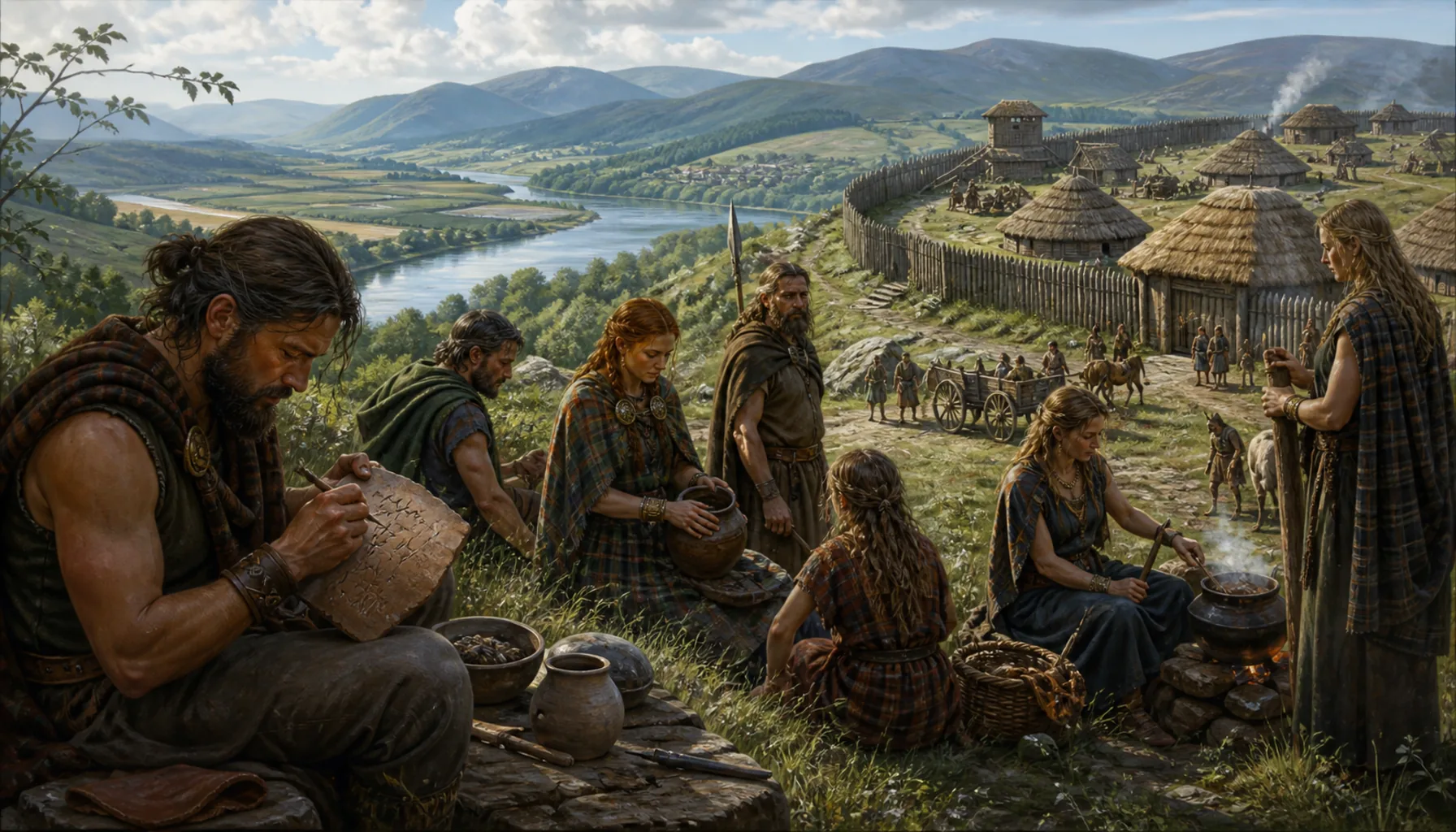
Before there were Slovaks, Slavs or Hungarians here, there were Celts. In the last two centuries BC a Celtic people called the Boii held an oppidum — a fortified hill town — on and around the castle hill of what is now Bratislava, and in the first century BC they struck their own silver coins there. The coins carry names written in Latin letters, and one of them, BIATEC, gave the whole series its nickname; they are the oldest use of the Latin alphabet found on Slovak soil. Celts lived in the mountains too — the best known of their sites is the hillfort of Havránok above the Liptov basin. When Slovakia minted its own money after independence in 1993, it put a biatec on a coin.Skôr než tu boli Slováci, Slovania či Maďari, boli tu Kelti. V posledných dvoch storočiach pred naším letopočtom držal keltský kmeň Bójov oppidum — opevnené mesto na kopci — na hradnom vrchu dnešnej Bratislavy a v jeho okolí a v 1. storočí pred n. l. tam razil vlastné strieborné mince. Nesú mená písané latinkou a jedno z nich, BIATEC, dalo celej sérii prezývku; je to najstaršie použitie latinskej abecedy doložené na našom území. Kelti žili aj v horách — najznámejším ich sídlom je hradisko Havránok nad Liptovskou kotlinou. Keď si Slovensko po osamostatnení v roku 1993 razilo vlastné peniaze, biatec sa dostal na mincu.
ReferencesZdroje
Where this came fromOdkiaľ to pochádza
Sources consulted while researching this page. Follow them to read further — and to check us.Zdroje, z ktorých sme pri príprave tejto stránky vychádzali. Kliknite a čítajte ďalej — aj si nás overte.
Černová massacre — Wikipediadate, 15 killed and 12 seriously wounded, gendarmes' own nationalitydate, 15 killed and 12 seriously wounded, gendarmes' own nationality
Magyarization — Wikipediathe 1907 Apponyi education laws, the closing of the Slovak grammar schools and of Matica slovenská in April 1875the 1907 Apponyi education laws, the closing of the Slovak grammar schools and of Matica slovenská in April 1875
Žiadosti slovenského národa — Wikipédia10 May 1848, fourteen points, the arrest warrants of May–June 184810 May 1848, fourteen points, the arrest warrants of May–June 1848
Slovak Uprising of 1848–49 — Wikipediathe three volunteer campaigns and the disbanding of the corps on 21 November 1849the three volunteer campaigns and the disbanding of the corps on 21 November 1849
Pittsburgh Agreement — Wikipediathe Cleveland Agreement of 22 October 1915 and the text of the Pittsburgh promisesthe Cleveland Agreement of 22 October 1915 and the text of the Pittsburgh promises
Slovak–Hungarian War — Wikipediathe 'Little War' of March 1939 and the 1,697 km² ceded on 4 April 1939the 'Little War' of March 1939 and the 1,697 km² ceded on 4 April 1939
Slovak National Uprising — Wikipediainsurgent numbers, territory held, the fall of Banská Bystrica on 27 October 1944insurgent numbers, territory held, the fall of Banská Bystrica on 27 October 1944
Kremnička and Nemecká massacres — Wikipedia747 victims at Kremnička, about 900 at Nemecká, the units responsible747 victims at Kremnička, about 900 at Nemecká, the units responsible
Masaker v Kľakovskej doline — Wikipédia21 January 1945, 148 civilians including 48 children under eighteen21 January 1945, 148 civilians including 48 children under eighteen
Battle of the Dukla Pass — Wikipedia8 September – 28 October 1944 and the casualty figures8 September – 28 October 1944 and the casualty figures
Kalinov — Wikipédiathe first village in Slovakia liberated, 21 September 1944the first village in Slovakia liberated, 21 September 1944
Slovak Greek Catholic Church — Wikipediathe staged Prešov assembly of April 1950, Bishop Gojdič, the 1968 restorationthe staged Prešov assembly of April 1950, Bishop Gojdič, the 1968 restoration