Revolution and the awakeningRevolúcia a národné prebudenie
11 April 1848Serfdom endsKoniec poddanstva
SlovakiaSlovensko
Serfdom endsKoniec poddanstva
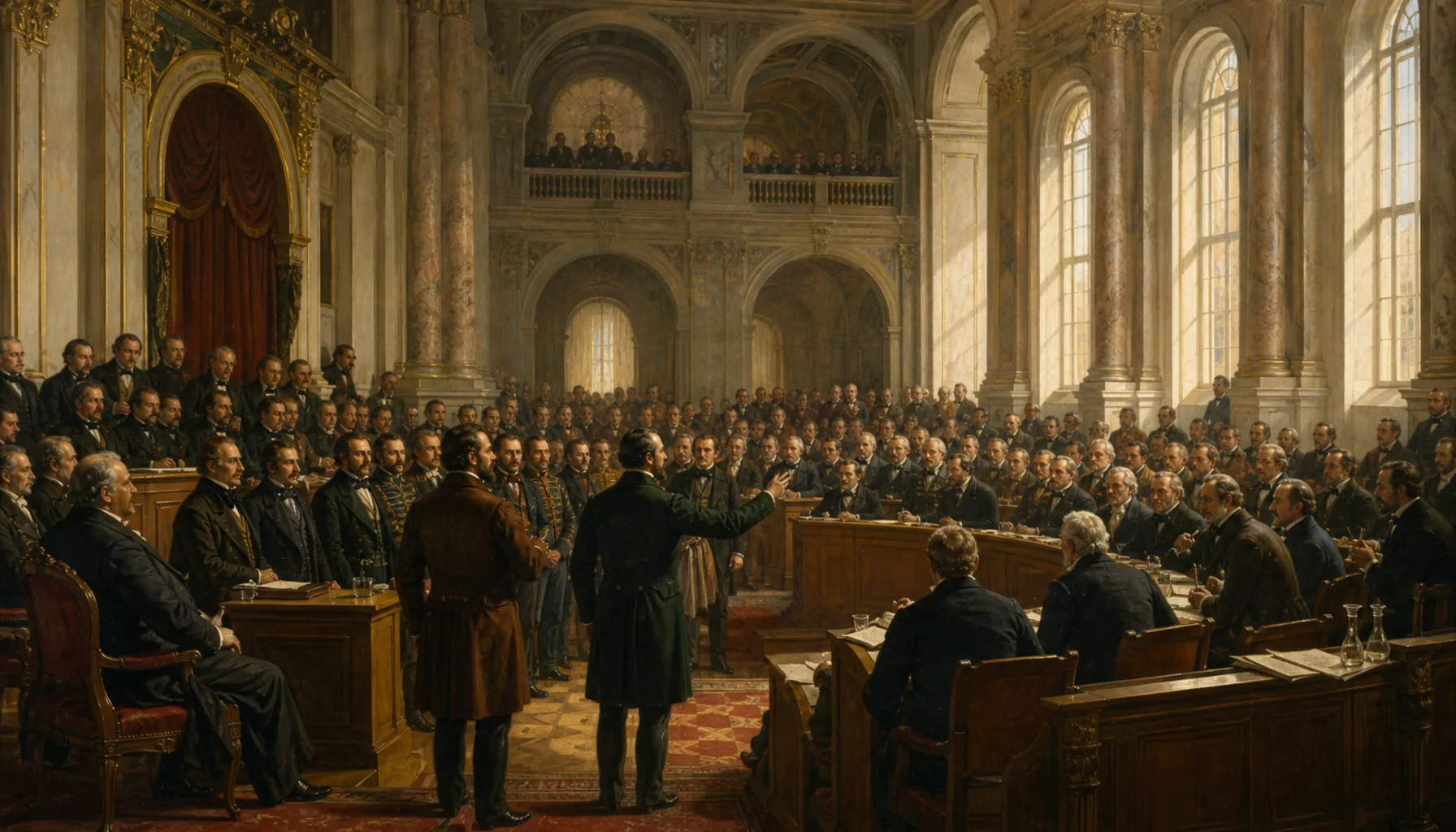
The Hungarian diet met at Pressburg — today's Bratislava — in 1847 for the last time in its history. On 11 April 1848, in the Primate's Palace there, King Ferdinand V signed the laws it had passed: serfdom was abolished, and with it the labour days and dues that peasants had owed their landlords for centuries. For the overwhelming majority of people living on the territory of today's Slovakia, that April is the single biggest change in the whole nineteenth century. It did not fix everything — land was still desperately short, and the debts run up buying out the old obligations were paid off over decades — but a villager was now a citizen instead of somebody's subject.Uhorský snem zasadal v Prešporku — dnešnej Bratislave — roku 1847 naposledy v dejinách. Jedenásteho apríla 1848 podpísal v tamojšom Primaciálnom paláci kráľ Ferdinand V. zákony, ktoré snem prijal: zrušilo sa poddanstvo a s ním aj robota a dávky, ktoré sedliaci po stáročia odvádzali zemepánom. Pre drvivú väčšinu ľudí na území dnešného Slovenska je práve tento apríl najväčšou zmenou celého 19. storočia. Nevyriešil všetko — pôdy bolo stále zúfalo málo a dlhy za vykúpenie starých povinností sa splácali desaťročia — no z poddaného sa stal občan.
ReferencesZdroje
Where this came fromOdkiaľ to pochádza
Sources consulted while researching this page. Follow them to read further — and to check us.Zdroje, z ktorých sme pri príprave tejto stránky vychádzali. Kliknite a čítajte ďalej — aj si nás overte.
Černová massacre — Wikipediadate, 15 killed and 12 seriously wounded, gendarmes' own nationalitydate, 15 killed and 12 seriously wounded, gendarmes' own nationality
Magyarization — Wikipediathe 1907 Apponyi education laws, the closing of the Slovak grammar schools and of Matica slovenská in April 1875the 1907 Apponyi education laws, the closing of the Slovak grammar schools and of Matica slovenská in April 1875
Žiadosti slovenského národa — Wikipédia10 May 1848, fourteen points, the arrest warrants of May–June 184810 May 1848, fourteen points, the arrest warrants of May–June 1848
Slovak Uprising of 1848–49 — Wikipediathe three volunteer campaigns and the disbanding of the corps on 21 November 1849the three volunteer campaigns and the disbanding of the corps on 21 November 1849
Pittsburgh Agreement — Wikipediathe Cleveland Agreement of 22 October 1915 and the text of the Pittsburgh promisesthe Cleveland Agreement of 22 October 1915 and the text of the Pittsburgh promises
Slovak–Hungarian War — Wikipediathe 'Little War' of March 1939 and the 1,697 km² ceded on 4 April 1939the 'Little War' of March 1939 and the 1,697 km² ceded on 4 April 1939
Slovak National Uprising — Wikipediainsurgent numbers, territory held, the fall of Banská Bystrica on 27 October 1944insurgent numbers, territory held, the fall of Banská Bystrica on 27 October 1944
Kremnička and Nemecká massacres — Wikipedia747 victims at Kremnička, about 900 at Nemecká, the units responsible747 victims at Kremnička, about 900 at Nemecká, the units responsible
Masaker v Kľakovskej doline — Wikipédia21 January 1945, 148 civilians including 48 children under eighteen21 January 1945, 148 civilians including 48 children under eighteen
Battle of the Dukla Pass — Wikipedia8 September – 28 October 1944 and the casualty figures8 September – 28 October 1944 and the casualty figures
Kalinov — Wikipédiathe first village in Slovakia liberated, 21 September 1944the first village in Slovakia liberated, 21 September 1944
Slovak Greek Catholic Church — Wikipediathe staged Prešov assembly of April 1950, Bishop Gojdič, the 1968 restorationthe staged Prešov assembly of April 1950, Bishop Gojdič, the 1968 restoration