1242 – 1270Why Slovakia is full of stone castlesPrečo je Slovensko plné kamenných hradov
SlovakiaSlovensko
Why Slovakia is full of stone castlesPrečo je Slovensko plné kamenných hradov
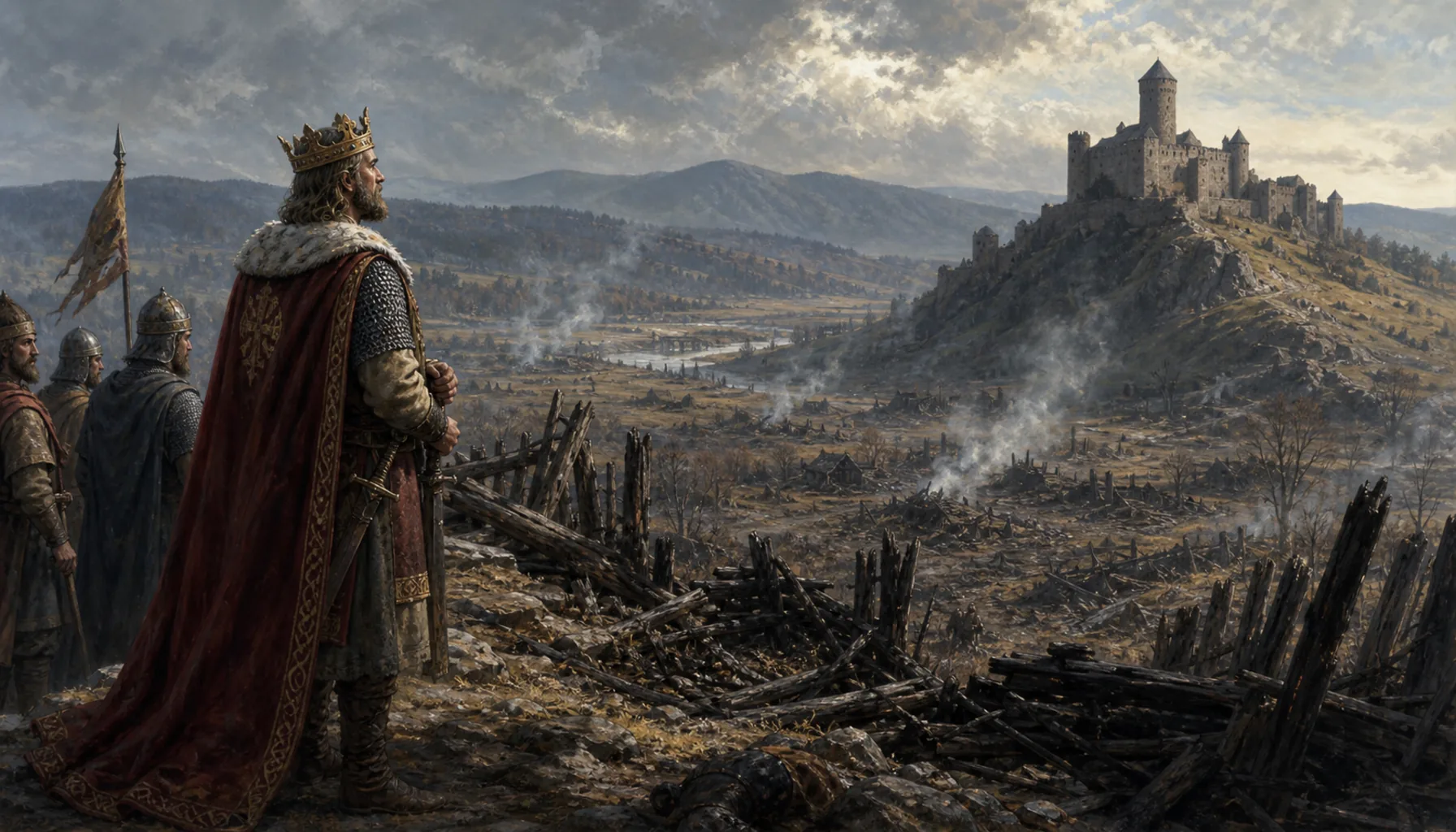
Béla IV came back to a wrecked kingdom and drew one conclusion from it: earth and timber had failed, stone had not. Around eighty fortified places in the kingdom had held out against the Mongols, and the king now ordered stone castles built on high, defensible rock — dozens of them within a decade — and, just as importantly, gave his great lords both the right and the duty to build their own. This is the most useful single fact anyone can take to a Slovak castle: most of them were built because of the Mongol invasion, in the decades after it, and were not knocked down by it. The other half of Béla's answer was people. He invited settlers, many of them German-speaking, to repopulate emptied land and to fill towns he now let wall themselves — Trnava had already received the first royal town charter in today's Slovakia in 1238, and after 1242 a whole generation of towns followed.Belo IV. sa vrátil do rozvrátenej krajiny a vyvodil z toho jediný záver: hlina a drevo neobstáli, kameň áno. Mongolskému náporu odolalo v kráľovstve asi osemdesiat opevnených miest, a tak kráľ nariadil stavať kamenné hrady na vysokých, ťažko dostupných skalách — za desaťročie ich pribudli desiatky — a rovnako dôležité bolo, že právo aj povinnosť stavať vlastné hrady dal veľmožom. Toto je najužitočnejší fakt, aký si možno vziať so sebou na slovenský hrad: väčšina z nich vznikla pre mongolský vpád, v desaťročiach po ňom, a nie tak, že by ich vpád zrúcal. Druhou polovicou Belovej odpovede boli ľudia. Pozýval osadníkov, mnohých z nemeckých krajín, aby dosídlili vyľudnenú zem a zaplnili mestá, ktorým teraz dovolil obohnať sa hradbami — Trnava dostala prvé kráľovské mestské výsady na území dnešného Slovenska už roku 1238 a po roku 1242 nasledovala celá generácia miest.
ReferencesZdroje
Where this came fromOdkiaľ to pochádza
Sources consulted while researching this page. Follow them to read further — and to check us.Zdroje, z ktorých sme pri príprave tejto stránky vychádzali. Kliknite a čítajte ďalej — aj si nás overte.
Černová massacre — Wikipediadate, 15 killed and 12 seriously wounded, gendarmes' own nationalitydate, 15 killed and 12 seriously wounded, gendarmes' own nationality
Magyarization — Wikipediathe 1907 Apponyi education laws, the closing of the Slovak grammar schools and of Matica slovenská in April 1875the 1907 Apponyi education laws, the closing of the Slovak grammar schools and of Matica slovenská in April 1875
Žiadosti slovenského národa — Wikipédia10 May 1848, fourteen points, the arrest warrants of May–June 184810 May 1848, fourteen points, the arrest warrants of May–June 1848
Slovak Uprising of 1848–49 — Wikipediathe three volunteer campaigns and the disbanding of the corps on 21 November 1849the three volunteer campaigns and the disbanding of the corps on 21 November 1849
Pittsburgh Agreement — Wikipediathe Cleveland Agreement of 22 October 1915 and the text of the Pittsburgh promisesthe Cleveland Agreement of 22 October 1915 and the text of the Pittsburgh promises
Slovak–Hungarian War — Wikipediathe 'Little War' of March 1939 and the 1,697 km² ceded on 4 April 1939the 'Little War' of March 1939 and the 1,697 km² ceded on 4 April 1939
Slovak National Uprising — Wikipediainsurgent numbers, territory held, the fall of Banská Bystrica on 27 October 1944insurgent numbers, territory held, the fall of Banská Bystrica on 27 October 1944
Kremnička and Nemecká massacres — Wikipedia747 victims at Kremnička, about 900 at Nemecká, the units responsible747 victims at Kremnička, about 900 at Nemecká, the units responsible
Masaker v Kľakovskej doline — Wikipédia21 January 1945, 148 civilians including 48 children under eighteen21 January 1945, 148 civilians including 48 children under eighteen
Battle of the Dukla Pass — Wikipedia8 September – 28 October 1944 and the casualty figures8 September – 28 October 1944 and the casualty figures
Kalinov — Wikipédiathe first village in Slovakia liberated, 21 September 1944the first village in Slovakia liberated, 21 September 1944
Slovak Greek Catholic Church — Wikipediathe staged Prešov assembly of April 1950, Bishop Gojdič, the 1968 restorationthe staged Prešov assembly of April 1950, Bishop Gojdič, the 1968 restoration