Svätý Jur · Little Carpathian wine roadSvätý Jur · Malokarpatská vínna cesta

Culture in Svätý JurKultúra vo Svätom Jure

The smallest of the three wine towns keeps its culture in one protected street, in the cellars behind it, and in several kilometres of dry-stone wall on the hill above.Najmenšie z troch vinohradníckych miest má svoju kultúru v jednej chránenej ulici, v pivniciach za ňou a v niekoľkých kilometroch kamenných múrikov na svahu nad ňou.

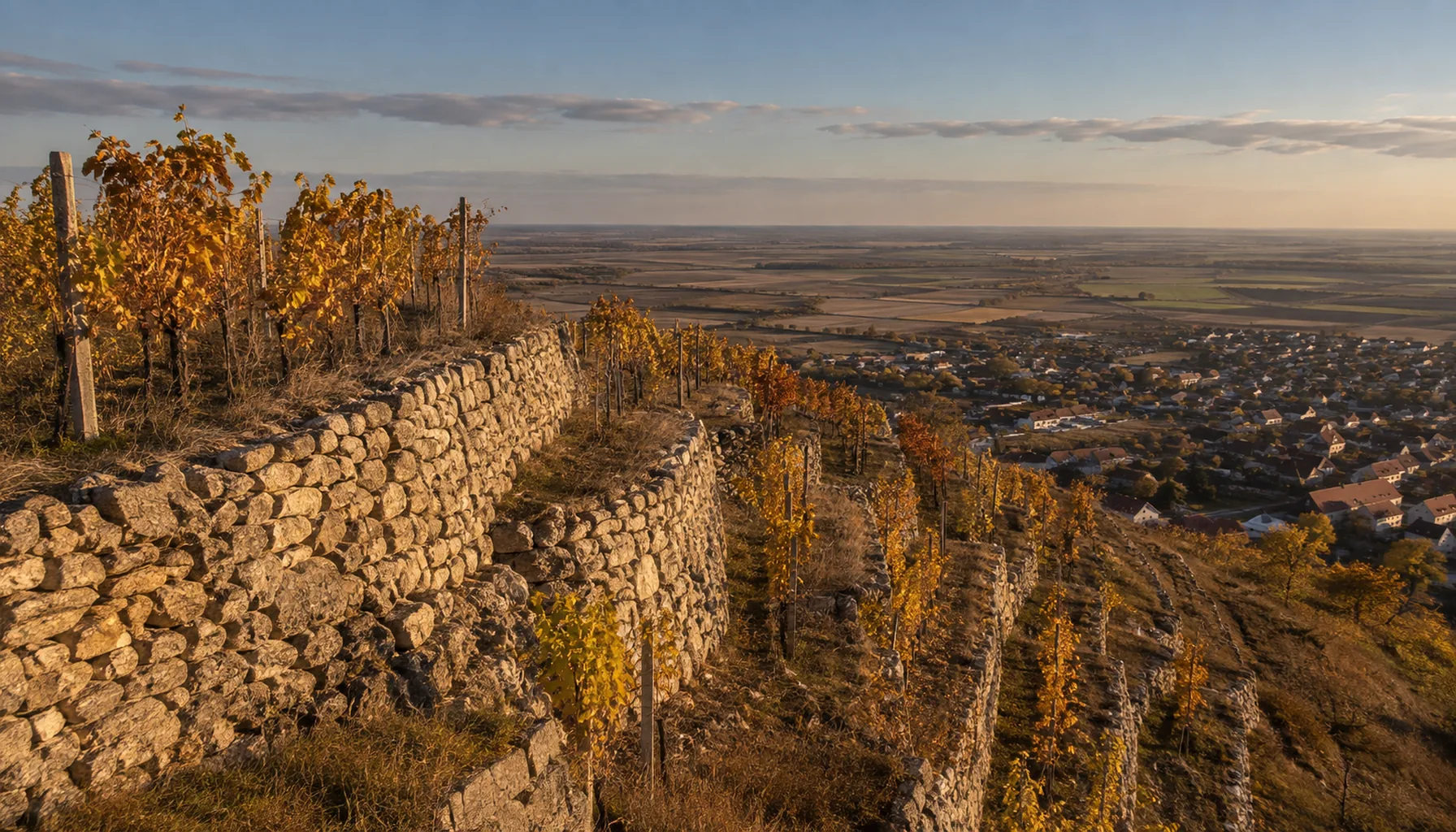
The dry-stone vineyard terraces above Svätý Jur, cut into the slope by hand and still walled the same way
The dry-stone vineyard terraces above Svätý Jur, cut into the slope by hand and still walled the same way.Vinohradnícke terasy nad Svätým Jurom, vysekané do svahu ručne a dodnes múrané nasucho.

The year in Svätý JurRok vo Svätom Jure

The wine year is the calendar. Pruning in late winter, work on the walls when the ground allows it, and the harvest in autumn, which is when the town is at its busiest and the press-houses at the back of the yards are actually in use. Small family cellars take visitors for tastings, and there are a handful of larger producers; between them they are the reason most people make the short trip out from Bratislava.Kalendárom je tu vinohradnícky rok. Koncom zimy rez, keď to zem dovolí práca na múrikoch a na jeseň oberačka, keď je mesto najrušnejšie a lisovne v hĺbke dvorov naozaj pracujú. Malé rodinné pivnice prijímajú návštevníkov na degustáciu, k tomu je tu niekoľko väčších výrobcov; práve pre nich sa väčšina ľudí vyberie na krátku cestu z Bratislavy.

The other season belongs to the Šúr, the alder swamp forest on the flat ground below the town — one of very few woods of its kind left in Central Europe, declared a national nature reserve in 1952 and the reason ornithologists come here at all. A nature trail runs along its edge; the interior is protected and not open to walkers, and that restriction is the point of the place.Druhá sezóna patrí Šúru, jelšovému slatinnému lesu na rovine pod mestom — jednému z mála takých lesov, aké v strednej Európe ešte zostali, vyhlásenému roku 1952 za národnú prírodnú rezerváciu a dôvodu, prečo sem vôbec chodia ornitológovia. Popri okraji vedie náučný chodník; vnútro je chránené a pre turistov neprístupné, a práve to obmedzenie je zmyslom rezervácie.

We name no festivals and no dates. A town of this size keeps the calendar you would expect — church feasts, seasonal markets, a harvest weekend — but it is arranged year by year, and the town's own listings are where to check it.Názvy podujatí ani termíny tu neuvádzame. Mesto tejto veľkosti si vedie kalendár, aký človek čaká — hody, sezónne trhy, oberačkový víkend — ale zostavuje sa rok po roku a treba ho hľadať v mestskom programe.

Where culture livesKde žije kultúra

There is no museum quarter here, and pretending otherwise would misdescribe the town. What Svätý Jur has instead is the street itself: in 1990 the historic core was declared an urban conservation area, and the protection covers the whole street and its yards rather than one showpiece building. That is unusual, and it is exactly what makes walking through the place worth doing.Múzejná štvrť tu nie je a tváriť sa opačne by mesto opísalo nesprávne. Svätý Jur má namiesto nej samotnú ulicu: v roku 1990 vyhlásili historické jadro za mestskú pamiatkovú zónu a ochrana sa vzťahuje na celú ulicu aj s dvormi, nie na jednu výkladnú budovu. To je nezvyčajné a práve preto sa tadiaľ oplatí prejsť.

The town's own name is part of the record. In 1960 the government took the saint out of it and for thirty years the place was called Jur pri Bratislave — Jur near Bratislava. In 1990 it got the name back, saint included, in the same year as the conservation area. Both decisions were about what the town was allowed to say it was.Do tohto záznamu patrí aj samotný názov mesta. V roku 1960 z neho vláda odstránila svätca a tridsať rokov sa mesto volalo Jur pri Bratislave. V roku 1990 dostalo meno späť aj so svätcom, v tom istom roku ako pamiatkovú zónu. V oboch rozhodnutiach išlo o to, čím sa mesto smie nazývať.

Teaching has a longer history here than it looks: the Piarists, a teaching order, arrived in the 1680s and their church and school followed. Today's institutions are those of a small town, and we describe them as a category rather than name them, because premises and programmes change: a cultural centre with a hall, a library, amateur groups and a school of art for children. The working venues, in practice, are the cellars.Školstvo tu má dlhšiu históriu, než sa zdá: v osemdesiatych rokoch sedemnásteho storočia prišli piaristi, učiteľská rehoľa, a po nich ich kostol a škola. Dnešné inštitúcie sú tie, aké má malé mesto, a radšej ich opíšeme ako kategóriu, než by sme ich menovali, lebo priestory a programy sa menia: kultúrne stredisko so sálou, knižnica, ochotnícke súbory a základná umelecká škola. V praxi sú skutočnými sálami pivnice.

The buildings that carry itBudovy, ktoré ju nesú

The church of St George stands at the top of the main street, early Gothic and older than anything else in the town, and it is where the name came from. Below it the street runs the length of the old town between low, deep burgher houses with arched gateways into their yards, most of which still have a press-house at the back. That plan — house at the front, yard, press at the back — is what a wine town looks like when nobody has rebuilt it.Kostol svätého Juraja stojí na hornom konci hlavnej ulice, ranogotický a starší ako čokoľvek iné v meste, a práve z neho pochádza jeho meno. Pod ním sa ulica tiahne celým starým mestom medzi nízkymi hlbokými meštianskymi domami s klenutými bránami do dvorov, na konci ktorých väčšinou dodnes stojí lisovňa. Tento pôdorys — dom vpredu, dvor, lisovňa vzadu — je to, ako vyzerá vinohradnícke mesto, ktoré nikto neprestaval.

The seventeenth century added the rest. Štefan Ilešházy built himself a Renaissance manor down in the town rather than live in the draughty castle above; the townspeople walled their town between 1603 and 1664, because Ottoman raiding parties were reaching this far north; and in 1647 Ferdinand III made Svätý Jur a free royal town, answerable to the king alone and running its own wine trade. It was plundered and burned in 1663 all the same, and again in 1704 by Rákóczi's troops.Zvyšok pridalo sedemnáste storočie. Štefan Ilešházy si postavil renesančný kaštieľ dolu v meste namiesto toho, aby býval v prievanistom hrade nad ním; mešťania si mesto v rokoch 1603 až 1664 opevnili, lebo turecké lúpežné výpravy dosahovali až sem na sever; a v roku 1647 povýšil Ferdinand III. Svätý Jur na slobodné kráľovské mesto, zodpovedné len kráľovi a hospodáriace s vlastným obchodom s vínom. Aj tak ho v roku 1663 vyplienili a vypálili a v roku 1704 znova, tentoraz Rákócziho vojsko.

Above everything is Biely Kameň, White Stone — the castle of the counts of Svätý Jur and Pezinok, built in the middle of the thirteenth century after the Mongol invasion of 1241 showed the kingdom what a wooden fort was worth. It appears in the records in 1271 and again in 1295. Half an hour above the last vines it is consolidated walls, freely accessible, with the view back over the roofs: a walk, not a museum.Nad tým všetkým je Biely Kameň — hrad grófov zo Svätého Jura a Pezinka, postavený v polovici trinásteho storočia po tom, čo mongolský vpád roku 1241 ukázal kráľovstvu, čo je drevená pevnôstka. V písomnostiach sa objavuje roku 1271 a znova roku 1295. Polhodinu nad poslednými vinicami je z neho konzervované murivo, voľne prístupné, s výhľadom späť na strechy: prechádzka, nie múzeum.

The walls that hold the slopeMúriky, ktoré držia svah

The real monument of Svätý Jur is not a building. Generations of growers cut the hillside above the houses into steps held by dry-stone walls, built by hand and without mortar — among the oldest and most extensive vineyard terracing in Slovakia. Winegrowing on this slope has run without a break for more than seven hundred years, and the wine went north and west, to Vienna, Silesia and Poland, until new state borders in 1918 put customs posts across a market six centuries old.Skutočnou pamiatkou Svätého Jura nie je budova. Generácie vinohradníkov vysekali svah nad domami na stupne držané kamennými múrikmi, kladenými ručne a nasucho — patria k najstarším a najrozsiahlejším vinohradníckym terasám na Slovensku. Vinohradníctvo na tomto svahu beží bez prerušenia vyše sedemsto rokov a víno išlo na sever a na západ, do Viedne, Sliezska a Poľska, kým nové štátne hranice po roku 1918 nepostavili colnice naprieč šesťstoročným trhom.

The twentieth century nearly finished them. Collectivisation merged the plots into one cooperative, and a terrace too narrow and too steep for a tractor stopped paying its way, so the higher ones were abandoned and scrub and woodland took them back. Over the last twenty years some have been cleared and replanted, partly as a business and partly as heritage work, and the walls have to be rebuilt stone by stone because that is the only way they were ever built.Dvadsiate storočie ich takmer dorazilo. Kolektivizácia zlúčila políčka do jedného družstva a terasa priúzka a prikrutá na traktor sa prestala oplácať, takže vyššie polohy opustili a vzal si ich nálet a les. Za posledných dvadsať rokov niektoré vyčistili a znova vysadili, sčasti ako podnikanie a sčasti ako pamiatkovú prácu, a múriky treba stavať kameň po kameni, lebo inak sa nikdy nestavali.

The pressure now is the opposite of the old one. A quarter of an hour by train from Bratislava with vineyards behind the garden has pushed house prices far above what the town's own economy would explain: the problem is no longer that nobody wants the slope but that everybody does. A vineyard terrace and a building plot are worth very different amounts of money.Tlak je dnes opačný než kedysi. Štvrťhodina vlakom z Bratislavy a vinohrad za záhradou vyhnali ceny domov ďaleko nad to, čo by vysvetlilo vlastné hospodárstvo mesta: problémom už nie je, že o svah nikto nestojí, ale že oň stoja všetci. Vinohradnícka terasa a stavebný pozemok majú veľmi rozdielnu cenu.

← Svätý Jur← Svätý Jur

WatchPozrite si

Sixteen videos for Culture in Svätý Jur.Šestnásť videí — Kultúra vo Svätom Jure.