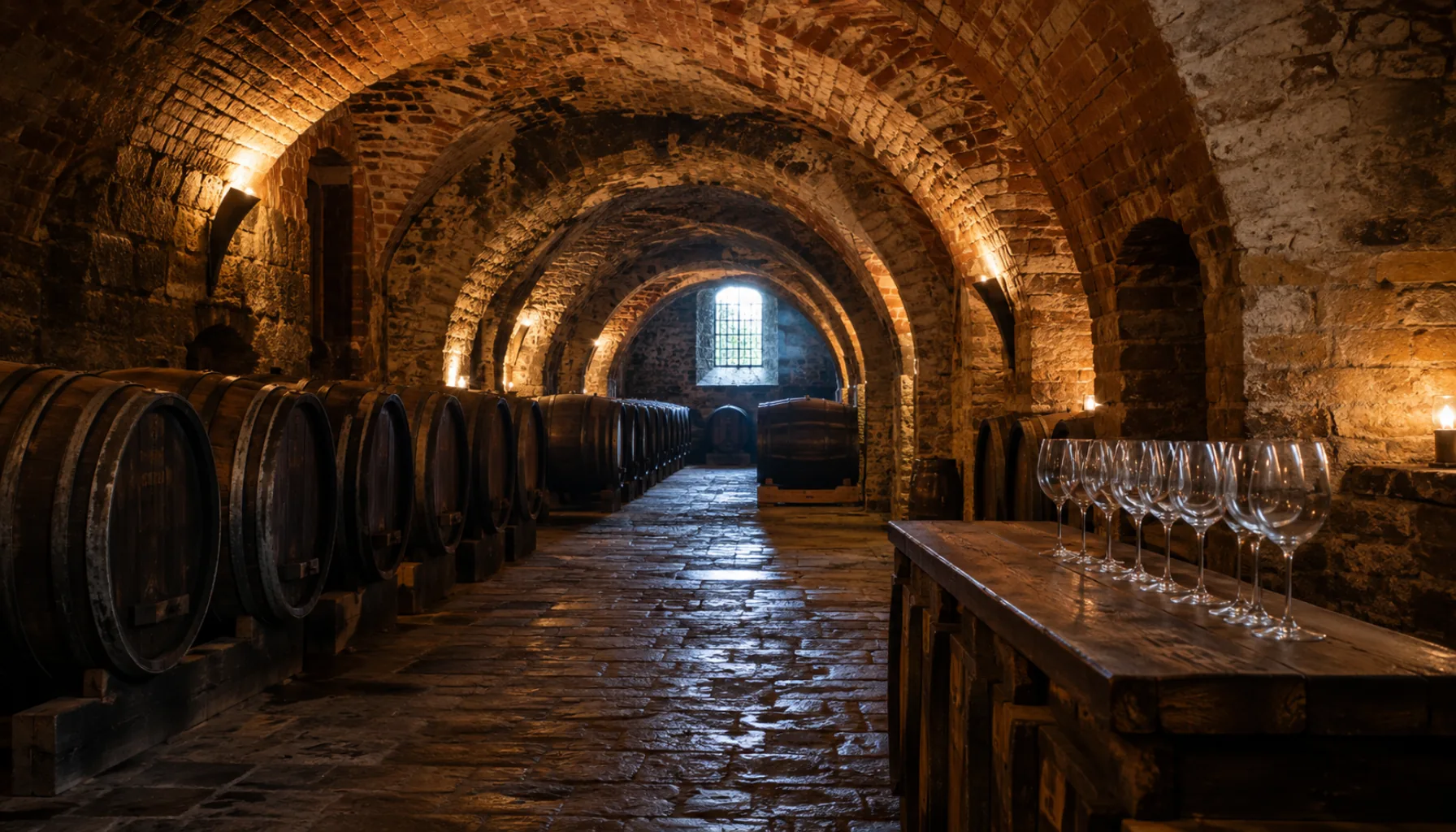
A wine town's culture keeps the calendar of the vineyard: a harvest festival in September, cellars thrown open in spring, and the rest of the year spent in a castle, a museum of presses and a mill full of paintings.Kultúra vinárskeho mesta sa riadi kalendárom vinice: vinobranie v septembri, na jar otvorené pivnice a zvyšok roka na zámku, v múzeu lisov a v mlyne plnom obrazov.
The vaulted cellar under Pezinok castle, where the national wine salon is poured.Klenutá pivnica pod pezinským zámkom, kde sa nalieva Národný salón vín.
The year turns on the grapeRok sa točí okolo hrozna
The busiest weekend in Pezinok is the September grape-harvest festival, when the long main square closes to traffic and the town's growers pour on it. It is the largest of the Small Carpathian vinobranie weekends and it draws far more people than the town holds, which is worth knowing before you plan a quiet visit around it.Najrušnejším víkendom v Pezinku je septembrové vinobranie, keď sa dlhé hlavné námestie zavrie pre dopravu a mestskí vinári na ňom nalievajú. Je to najväčšie z malokarpatských vinobraní a priláka oveľa viac ľudí, než sa do mesta zmestí — čo je dobré vedieť, ak si okolo neho plánujete pokojnú návštevu.
The other fixed point is the open-cellar day of the Small Carpathian Wine Route, when growers along the whole line of towns unlock their own cellars on the same weekend and one ticket walks you through them. Pezinok is the biggest stop on that route, so it carries the heaviest share of it.Druhým pevným bodom je deň otvorených pivníc Malokarpatskej vínnej cesty, keď vinári v celom rade mestečiek otvoria v ten istý víkend vlastné pivnice a jeden lístok vás nimi prevedie. Pezinok je na tejto ceste najväčšou zastávkou, takže nesie jej najväčšiu časť.
Dates move from year to year and the programmes are announced locally rather than nationally, so check the town's own listings before travelling for either.Termíny sa rok od roka menia a programy sa oznamujú miestne, nie celoštátne — pred cestou si teda overte oznamy priamo mesta.
Cellars under the castlePivnice pod zámkom
The four-winged Renaissance castle at the edge of the old town grew out of a medieval water castle, and its cellars are the reason to go in. The Slovak wine co-operative took them over and fitted them out between 1940 and 1943, and they have been working cellars ever since.Štvorkrídlový renesančný zámok na okraji starého mesta vyrástol zo stredovekého vodného hradu a dôvodom, prečo doň vojsť, sú jeho pivnice. Slovenské vinárske družstvo ich prevzalo a v rokoch 1940 až 1943 vybavilo — a pracujú dodnes.
They now hold the national wine salon, the standing selection of the hundred Slovak wines judged best each year. It is a tasting room rather than a display case: the point of the collection is that you can drink it, one glass at a time, in the cellar it is kept in.Dnes v nich sídli Národný salón vín — stála kolekcia stovky slovenských vín, ktoré boli v danom roku vyhodnotené ako najlepšie. Nie je to vitrína, ale degustačná sála: zmyslom kolekcie je, že si ju možno vypiť, pohár po pohári, priamo v pivnici, kde sa uchováva.
The castle park around it is open ground and free to walk, and the building takes weddings and concerts, so what is accessible on any given day depends on what is booked.Zámocký park okolo neho je voľne prístupný a dá sa ním prejsť, a v samotnej budove sa konajú svadby aj koncerty — čo je teda v ktorý deň prístupné, závisí od toho, čo je práve objednané.
A museum built around pressesMúzeum postavené okolo lisov
The Small Carpathian Museum on the main street keeps one of the largest collections of historic wine presses in the country — beam-and-screw machines the size of a room, which once stood in the yards of the houses around it. Seeing a dozen of them together explains the shape of the town better than any map: the deep burgher plots exist because a press and its barrels had to fit behind the house.Malokarpatské múzeum na hlavnej ulici uchováva jednu z najväčších zbierok historických vínnych lisov na Slovensku — hriadeľové a vretenové stroje veľkosti izby, ktoré kedysi stáli na dvoroch okolitých domov. Vidieť ich tucet pokope vysvetlí pôdorys mesta lepšie než ktorákoľvek mapa: hlboké meštianske parcely existujú preto, že za domom musel byť priestor na lis a sudy.
The same museum carries the other half of Pezinok's story, the half that has nothing to do with wine. Gold was worked in the hills above the town in the Middle Ages, and antimony and pyrite came out of them almost to the end of the communist period; the guilds, the mine and the town's German-speaking centuries are all kept here.To isté múzeum nesie aj druhú polovicu pezinského príbehu — tú, ktorá s vínom nemá nič spoločné. V kopcoch nad mestom sa v stredoveku dolovalo zlato a antimón s pyritom z nich vychádzali takmer do konca socialistického obdobia; cechy, baňa aj nemecky hovoriace storočia mesta sú uložené tu.
A mill full of naive paintingMlyn plný insitných obrazov
In the Cajla district, on the stream that comes down out of the hills, stands a manorial water mill with its machinery still in place. It is run as a regional site of the Slovak National Gallery, and what it holds is the gallery's collection of naive art — self-taught painters, mostly rural, mostly twentieth century.V mestskej časti Cajla, pri potoku stekajúcom z kopcov, stojí panský vodný mlyn, ktorý má stroje stále na mieste. Funguje ako regionálne pracovisko Slovenskej národnej galérie a uchováva jej zbierku insitného umenia — samoukov, väčšinou vidieckych a väčšinou z dvadsiateho storočia.
It is the least obvious thing in Pezinok and the one most worth the walk: a working piece of agricultural machinery and a collection of paintings by people who never went to art school, under the same roof, twenty minutes from the square.Je to najmenej zjavná vec v Pezinku a zároveň tá, kvôli ktorej sa najviac oplatí prejsť: funkčný kus poľnohospodárskeho stroja a zbierka obrazov od ľudí, ktorí nikdy nechodili na umeleckú školu, pod jednou strechou, dvadsať minút od námestia.
The square, and who built itNámestie a tí, čo ho postavili
Pezinok won the charter of a free royal town in 1647, which took it out of its landlords' hands and left its burghers in control of their own wine trade. The long main square, the town hall and the low, deep houses along it are what that money built, and they are still the town's best single hour.Pezinok získal v roku 1647 výsadu slobodného kráľovského mesta, čo ho vymanilo z rúk zemepánov a jeho meštianstvu ponechalo kontrolu nad vlastným obchodom s vínom. Dlhé hlavné námestie, radnica a nízke, do hĺbky stavané domy pozdĺž neho sú tým, čo za tie peniaze vzniklo — a stále sú najlepšou hodinou, ktorú v meste strávite.
Those burghers were German-speaking, for centuries and almost to the end. They sat on the council, ran the trade and built most of what you look at; they became a minority in 1918 and were gone by the end of the Second World War. Pezinok kept the vineyards and the buildings and carried on with a different population, which is the quiet fact underneath everything else on this page.Tí mešťania boli po stáročia a takmer do konca nemecky hovoriaci. Sedeli v mestskej rade, viedli obchod a postavili väčšinu toho, na čo sa dnes pozeráte; v roku 1918 sa stali menšinou a do konca druhej svetovej vojny zmizli. Pezinok si nechal vinice aj domy a pokračoval s iným obyvateľstvom — a to je tichý fakt pod všetkým ostatným na tejto stránke.
Everything else is the ordinary cultural life of a district town: a cultural centre with a hall and a programme, a library, amateur choirs and folk groups, and a school of art for children. We name none of them individually here, because programmes and premises change faster than a page like this does — the town's own noticeboards are the reliable source.Všetko ostatné je bežný kultúrny život okresného mesta: kultúrne centrum so sálou a programom, knižnica, amatérske zbory a folklórne súbory a základná umelecká škola. Jednotlivo ich tu nemenujeme, pretože programy a priestory sa menia rýchlejšie než takáto stránka — spoľahlivým zdrojom sú vlastné oznamy mesta.