Bratislava region · TownsBratislavský kraj · Mestá
PezinokPezinok
The largest of the Small Carpathian wine towns and the seat of its district — a Renaissance castle with a tasting cellar under it, a museum built around old wine presses, and hills behind the town where gold and antimony were once mined.Najväčšie z malokarpatských vinohradníckych miest a sídlo okresu — renesančný zámok s degustačnou pivnicou pod ním, múzeum postavené okolo starých vínnych lisov a kopce za mestom, v ktorých sa kedysi ťažilo zlato a antimón.
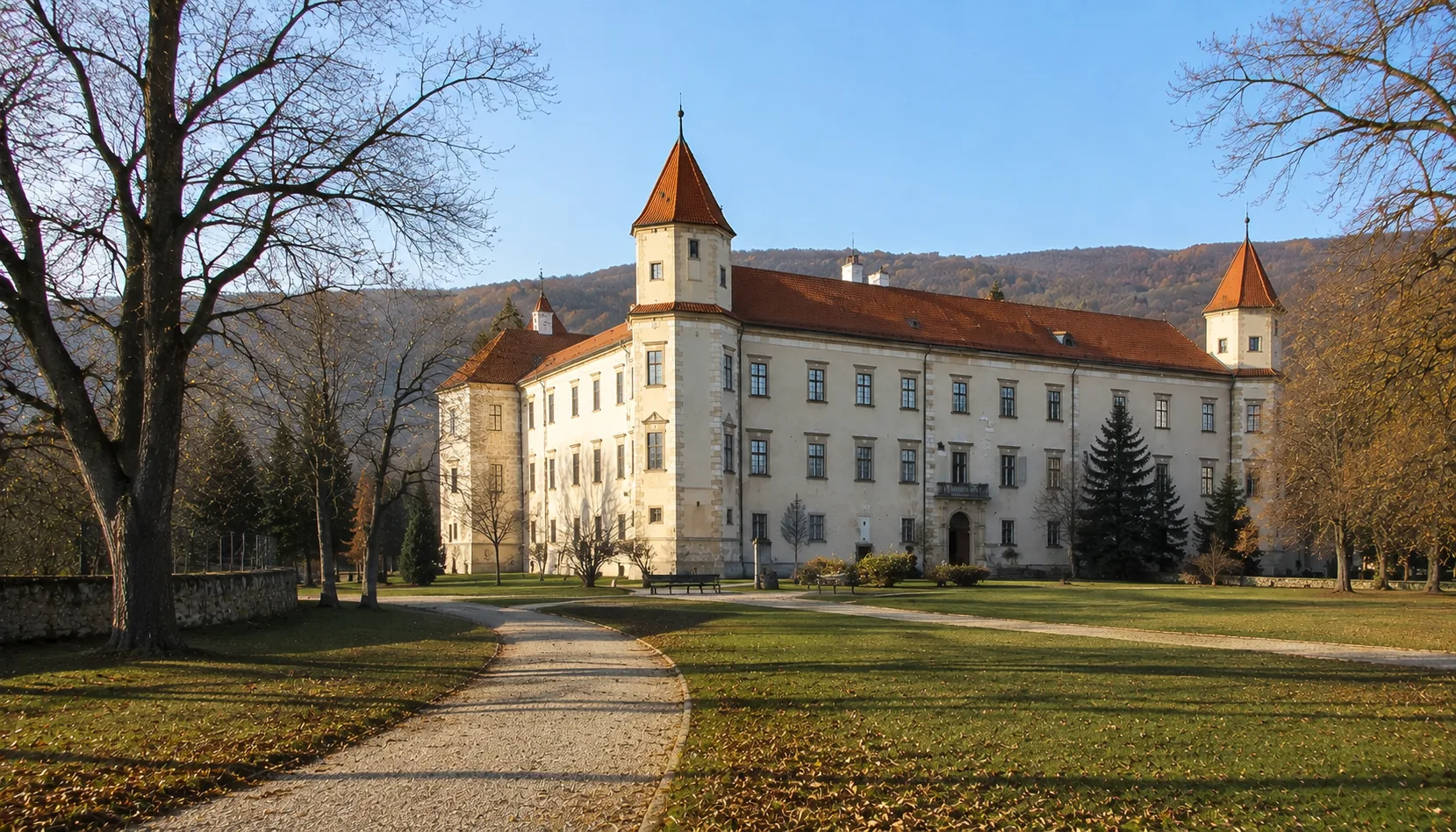
Pezinok Castle, the four-winged Renaissance building at the edge of the old townPezinský zámok, štvorkrídlová renesančná stavba na okraji starého mesta
Where it standsKde leží
Pezinok stands at the foot of the Little Carpathians about 20 kilometres north-east of Bratislava, on the old road that runs along the bottom of the hills from Svätý Jur through Modra and on towards Trnava. Vineyards climb the slope directly behind the houses; in front of the town the ground flattens out into the plain.Pezinok leží na úpätí Malých Karpát asi 20 kilometrov severovýchodne od Bratislavy, pri starej ceste, ktorá vedie popod kopce zo Svätého Jura cez Modru ďalej na Trnavu. Vinice stúpajú po svahu priamo za domami, pred mestom sa krajina vyrovnáva do roviny.
It is the seat of one of the three districts the region has outside the capital, which gives a town of this size a hospital, a court and a good deal of administration.Je sídlom jedného z troch okresov, ktoré má kraj mimo hlavného mesta, a tak má mesto tejto veľkosti nemocnicu, súd aj poriadny kus administratívy.
The storyHistória
A settlement here is documented from the thirteenth century, on an estate held by the counts of Svätý Jur and Pezinok. Two things paid for the town: the vineyards, and the ore in the hills behind them. Gold was worked above Pezinok in the Middle Ages, and mining of a less romantic kind — antimony and pyrite — continued in the same hills until the closing years of the twentieth century.Osada je tu doložená od 13. storočia, na panstve grófov zo Svätého Jura a Pezinka. Mesto živili dve veci: vinice a ruda v kopcoch za nimi. Nad Pezinkom sa v stredoveku dobývalo zlato a menej romantická ťažba — antimónu a pyritu — pokračovala v tých istých kopcoch až do posledných rokov 20. storočia.
In 1647 Pezinok won the charter of a free royal town, which took it out of the hands of its landlords and left its burghers — for centuries largely German-speaking — in control of their own wine trade. The long main square with its town hall and its low, deep houses is what that money built.V roku 1647 získal Pezinok výsady slobodného kráľovského mesta, čím sa vymanil spod moci zemepánov a jeho mešťania — po stáročia prevažne nemecky hovoriaci — dostali vlastný obchod s vínom do svojich rúk. Dlhé hlavné námestie s radnicou a nízkymi, do hĺbky stavanými domami je tým, čo tie peniaze postavili.
Those German-speaking families were gone by the end of the Second World War, evacuated or expelled, and the town that carried on the vineyards afterwards was a different one. Socialist-era industry and, since the 1990s, the spread of Bratislava's commuter belt have each added a ring of building around the old core.Tieto nemecky hovoriace rodiny boli koncom druhej svetovej vojny preč, evakuované alebo vysídlené, a mesto, ktoré vo vinohradoch pokračovalo, už bolo iné. Socialistický priemysel a od 90. rokov rozpínanie bratislavského zázemia pridali okolo starého jadra po jednom prstenci zástavby.
What to seeČo vidieť
The castle at the edge of the old town is the town's set piece: a four-winged Renaissance building with a park, grown out of a medieval water castle. Its cellars hold the national wine salon, the standing selection of the hundred Slovak wines judged best each year, which can be tasted on the spot.Zámok na okraji starého mesta je jeho hlavnou stavbou: štvorkrídlová renesančná budova s parkom, ktorá vyrástla zo stredovekého vodného hradu. V jeho pivniciach sídli národný salón vín — stála kolekcia stovky slovenských vín ocenených v danom roku, ktoré sa dajú priamo na mieste ochutnať.
The Small Carpathian Museum keeps the other half of the story: one of the largest collections of historic wine presses in the country, huge beam-and-screw machines that once stood in the yards along the main street, together with the town's mining and guild history. The parish church and the burgher houses on the square fill the rest of an afternoon.Malokarpatské múzeum uchováva druhú polovicu príbehu: jednu z najväčších zbierok historických vínnych lisov v krajine — obrovské trámové a vretenové stroje, ktoré kedysi stáli vo dvoroch pozdĺž hlavnej ulice — spolu s baníckymi a cechovými dejinami mesta. Farský kostol a meštianske domy na námestí zaplnia zvyšok popoludnia.
The September grape-harvest festival is the busiest weekend of the Pezinok year, and the open-cellar days of the Small Carpathians wine route bring their own crowds. Above the town the road climbs to the Baba saddle, a walking and small ski centre on the ridge, with marked trails running along it in both directions.Septembrové vinobranie je najrušnejším víkendom pezinského roka a svoje davy prinášajú aj dni otvorených pivníc na Malokarpatskej vínnej ceste. Nad mestom stúpa cesta na sedlo Baba, turistické a malé lyžiarske stredisko na hrebeni, odkiaľ vedú značené chodníky na obe strany.
Work and industryPráca a priemysel
Wine is still a real trade here rather than a decoration: dozens of family cellars, several larger producers, and the vineyards themselves, which are worked and replanted. Around them are light manufacturing, building trades and services, and the administrative jobs a district seat carries.Vinárstvo je tu stále skutočným remeslom, nie ozdobou: desiatky rodinných pivníc, niekoľko väčších výrobcov a samotné vinice, ktoré sa obrábajú a obnovujú. Okolo nich stojí ľahká výroba, stavebníctvo a služby a úradnícke miesta, ktoré so sebou nesie okresné sídlo.
The mines are finished, and the largest single change to the local economy since 1989 has been the commute: a substantial share of the town works in Bratislava and comes home in the evening.Bane sú dohrané a najväčšou zmenou miestneho hospodárstva po roku 1989 je dochádzanie: podstatná časť mesta pracuje v Bratislave a večer sa vracia domov.
Getting thereAko sa tam dostať
Regional trains from Bratislava reach Pezinok in around half an hour on the line to Trnava, calling at Svätý Jur on the way, and run frequently enough to be the obvious choice. By car the old wine road runs from the capital through Svätý Jur; the motorway passes a few kilometres out on the plain.Regionálne vlaky z Bratislavy prídu do Pezinka na trati do Trnavy asi za pol hodiny, cestou zastavujú vo Svätom Jure, a chodia dosť často na to, aby boli prvou voľbou. Autom vedie z hlavného mesta stará vínna cesta cez Svätý Jur, diaľnica prechádza pár kilometrov od mesta po rovine.
Explore PezinokObjavujte Pezinok
Every part of this place with a page of its own.Každá časť tohto miesta, ktorá má vlastnú stránku.