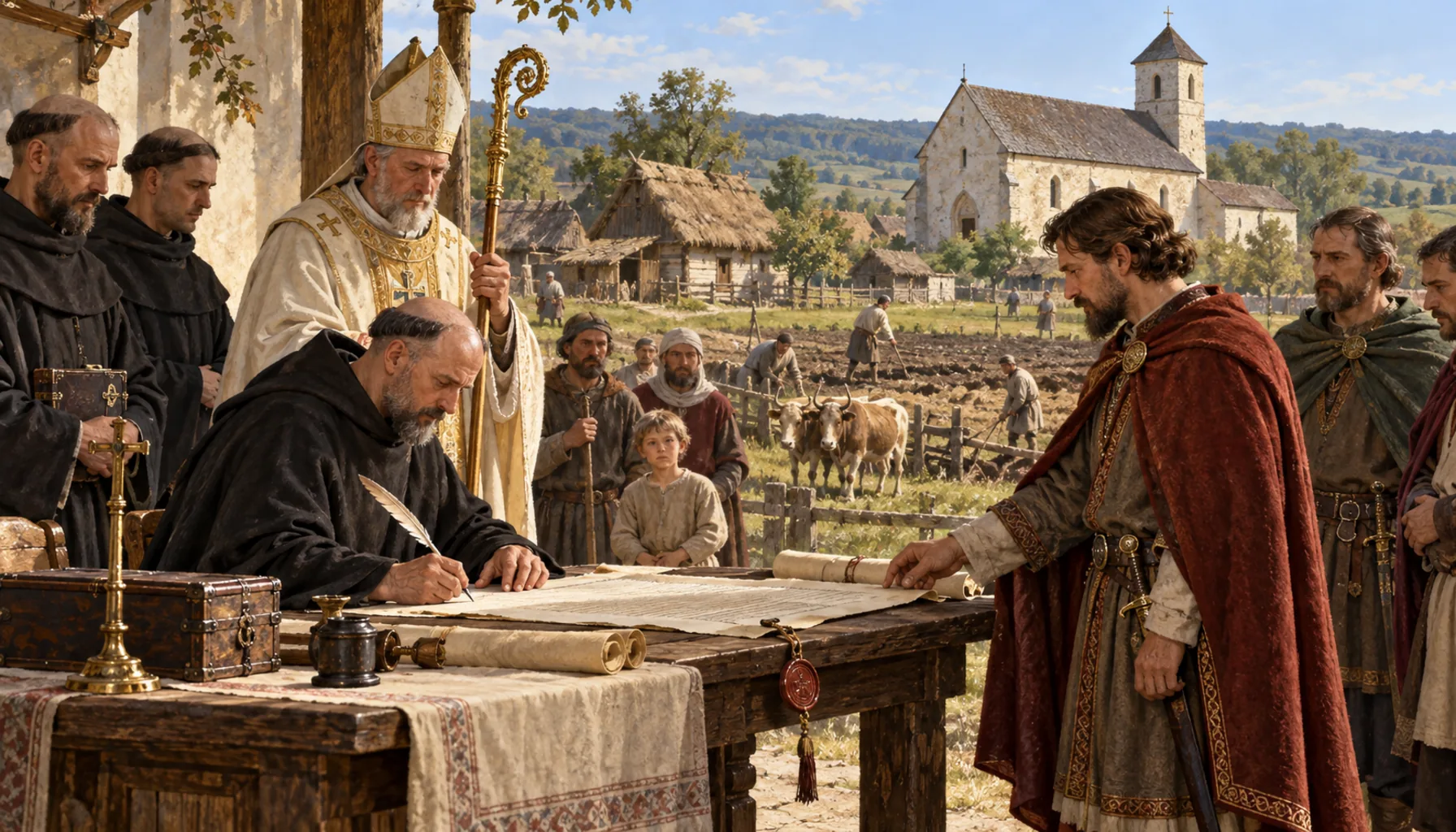
Sebechleby is first mentioned in writing in 1135, spelled Zebehgleb — which is a fact about a document, not about when people first settled here. Later records write the name Scebechleb (1156), Zebehlep (1222) and Scebehlyb (1285). In 1156 the village tithe — a tenth of everything it grew — was granted to the chapter of Esztergom, the college of priests who ran the archbishop's cathedral, and in 1222 the county's ispán, the king's officer over the county, a man named Detre, sold them the whole village outright. From then on Sebechleby had a church landlord rather than a noble one, and kept it for centuries. Its Hungarian name was Szebeléb and its German one Siebenbrot, which in German reads literally as “seven loaves”.Prvýkrát sa obec spomína v písomnostiach roku 1135, a to v tvare Zebehgleb — prvá zmienka je však údaj o listine, nie o tom, odkedy tu ľudia žijú. Neskôr sa meno zapisuje ako Scebechleb (1156), Zebehlep (1222) či Scebehlyb (1285). Roku 1156 získala desiatok z obce — desatinu všetkého, čo dopestovala — ostrihomská kapitula, zbor kňazov pri arcibiskupskej katedrále, a roku 1222 jej celú dedinu predal župan Detre, teda kráľov správca stolice. Sebechleby tak nemali zemepána zo šľachty, ale z cirkvi, a zostalo to tak na stáročia. Po maďarsky sa obec volala Szebeléb, po nemecky Siebenbrot — čo doslova znamená „sedem chlebov“.