Banská Bystrica region · VillagesBanskobystrický kraj · Obce
SebechlebySebechleby
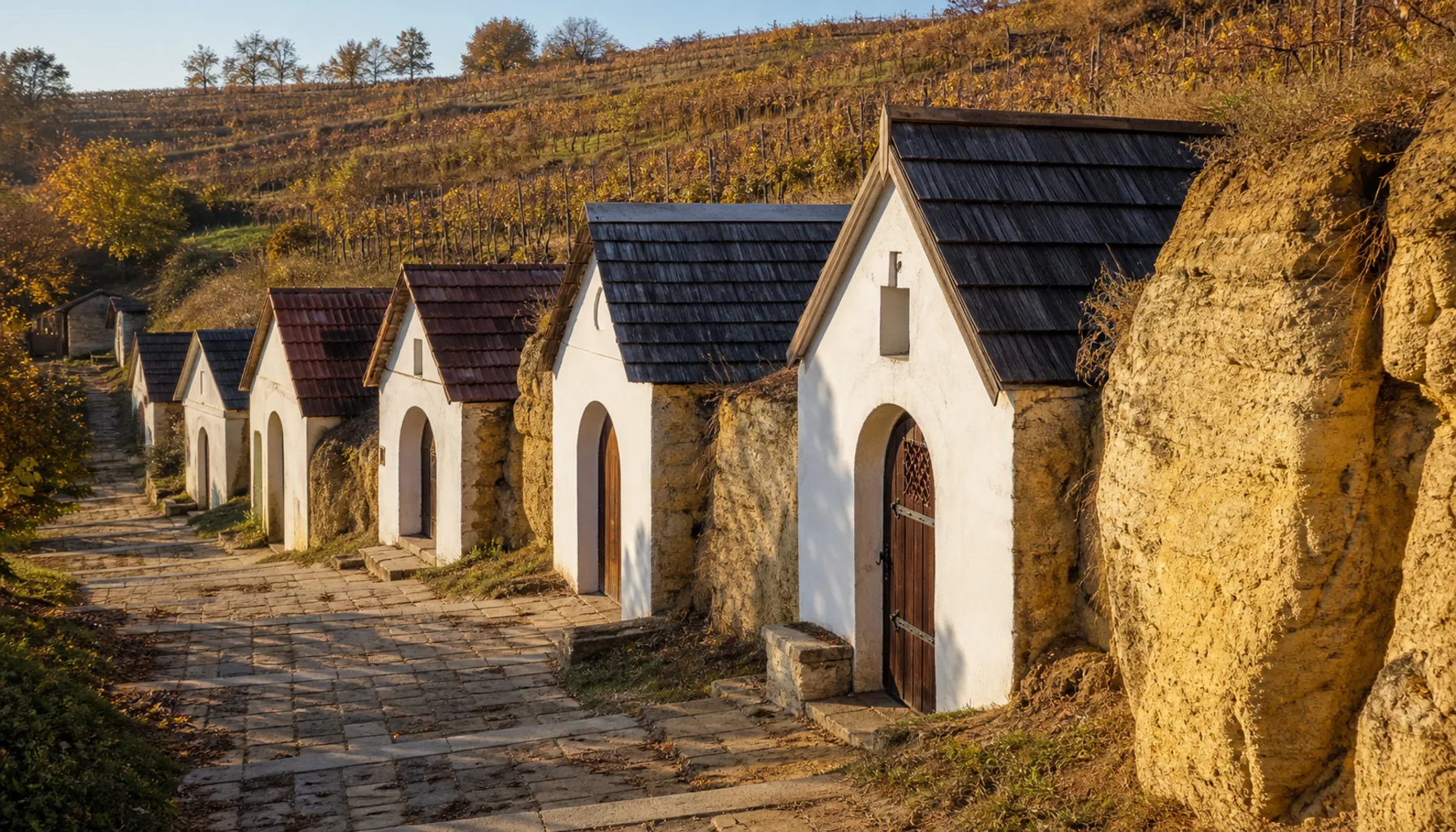
The village sits down among its fields; what made it famous stands on the hill above. Stará Hora is a whole settlement of wine cellars cut into volcanic tuff with press houses built over their mouths, and not one farm among them.Obec leží dolu medzi poľami, no slávnym ju urobilo to, čo stojí na kopci nad ňou. Stará Hora je celá osada vínnych pivníc vytesaných do sopečného tufu, s lisovňami postavenými nad ich ústiami — a bez jediného gazdovstva medzi nimi.
A lane of whitewashed press houses and cellar doors at Stará Hora above SebechlebyUlička obielených lisovní a pivničných dverí na Starej Hore nad Sebechlebmi
Where it standsKde leží
Sebechleby lie in Hont, the warm dry country south of Banská Štiavnica where the volcanic hills run down towards the Ipeľ and the Hungarian border. The rock underfoot is tuff — compacted volcanic ash — under a cap of loess and vineyards. The village is in the valley; the cellar settlement of Stará Hora is a short climb above it.Sebechleby ležia v Honte, v teplej suchej krajine južne od Banskej Štiavnice, kde sa vulkanické kopce zvažujú k Ipľu a k maďarskej hranici. Skalou pod nohami je tuf — spevnený sopečný popol — pod čiapkou spraše a viníc. Obec je v doline, pivničná osada Stará Hora kúsok nad ňou.
The nearest towns are Krupina and, over the hills to the north, Banská Štiavnica. This is a landscape of long open views, wide fields and wooded ridges — nothing dramatic, and very little of it visited.Najbližšími mestami sú Krupina a — za kopcami na severe — Banská Štiavnica. Je to krajina ďalekých výhľadov, širokých polí a zalesnených chrbtov; nič dramatické a navštevované len veľmi málo.
Why it is herePrečo práve tu
Wine, and the rock the wine is kept in. Hont has been vine country since the Middle Ages: the slopes face the sun, the summers are dry, and the tuff underneath cuts with a pick and holds a steady cool temperature the year round. The sensible answer was to put the cellar into the hill where the grapes grew, not under the house in the village.Víno a skala, v ktorej sa víno drží. Hont je vinohradníckou krajinou od stredoveku: svahy sú obrátené k slnku, letá suché a tuf pod nimi sa dá tesať čakanom a po celý rok drží stálu chladnú teplotu. Rozumnou odpoveďou bolo urobiť pivnicu v kopci, kde rástlo hrozno, a nie pod domom v dedine.
So Stará Hora grew as a second settlement with a single purpose. Each holding is a cellar driven back into the tuff with a small press house over its mouth: one or two whitewashed rooms above ground, roofed in shingle or tile, the barrel-vaulted cellar behind and below. Families came up for the pressing and went back down to the village to live; nobody grew anything here but vines.Stará Hora tak vyrástla ako druhá osada s jediným účelom. Každé hospodárstvo je pivnica vyhĺbená do tufu s malou lisovňou nad jej ústím: jedna či dve obielené izby nad zemou, šindľová alebo pálená strecha a za nimi a pod nimi valene klenutá pivnica. Rodiny sem chodili lisovať a bývať sa vracali dolu do dediny; nikto tu nepestoval nič okrem viniča.
The result is a working landscape that survived almost by accident, and it was declared a reserve of folk architecture — Slovakia has only a small number of them — to keep it from being modernised into anonymity.Výsledkom je pracovná krajina, ktorá sa zachovala takmer náhodou, a vyhlásili ju za rezerváciu ľudovej architektúry — Slovensko ich má len niekoľko —, aby ju modernizácia nezmenila na nič konkrétne.
What you actually seeČo naozaj uvidíte
Lanes of small white gable ends step up the slope, each with its cellar door, some driven straight into a cut face of honey-coloured rock. There is no square, no church and no shop: the settlement is one building type repeated with variations, and the variations are the interest — carved door frames, dates cut over lintels, hand-forged hinges.Uličky malých bielych štítov stúpajú po svahu, každý so svojimi pivničnými dverami, niektoré vyhĺbené priamo do odkopanej steny medovej skaly. Niet tu námestia, kostola ani obchodu: osada je jedným typom stavby opakovaným s obmenami — a práve obmeny sú tu zaujímavé: vyrezávané zárubne, letopočty nad prekladmi, ručne kované závesy.
Some buildings are carefully restored, some are used as they always were, and a few stand open to the sky. The village keeps one as a small museum of the vintner's year, open seasonally rather than daily, and the vineyards still work the slopes around.Niektoré stavby sú starostlivo obnovené, niektoré sa používajú tak ako vždy a zopár ich stojí bez strechy. Jednu z nich obec udržiava ako malé múzeum vinohradníckeho roka, otvorené sezónne, nie denne. Vinice na okolitých svahoch stále rodia a polovicou zážitku je otvorenosť tohto miesta.
Down in the village itself there is a parish church and the ordinary business of a Hont farming community. Most visitors go straight up the hill, which is a fair reading of what is here.Dolu v samotnej obci je farský kostol a bežný život hontianskej poľnohospodárskej dediny. Väčšina návštevníkov mieri rovno hore na kopec, čo je celkom správne pochopenie toho, čo sa tu dá vidieť.
Living village, not a museumŽivá obec, nie skanzen
Stará Hora is not a skanzen and nothing was moved here: every building stands where it was cut. The cellars are private property and in use, and many have become weekend places. An open cellar door is an invitation to the owner's guests, not to passers-by — look from the lane, and arrange a tasting through the village or with a grower who receives visitors.Stará Hora nie je skanzen a nič sem nepresťahovali: každá stavba stojí tam, kde ju vytesali. Pivnice sú súkromné a používajú sa a mnohé z nich sa stali víkendovými sídlami. Otvorené dvere pivnice sú pozvaním pre hostí majiteľa, nie pre okoloidúcich — pozerajte sa z uličky a ochutnávku si dohodnite cez obec alebo s vinohradníkom, ktorý návštevy prijíma.
Autumn is when the place is busiest and most itself, with the pressing under way and the lanes in use for the work they were built for. In midwinter it is shut and silent, and still worth the walk.Najrušnejšia a najviac sama sebou je Stará Hora na jeseň, keď sa lisuje a uličky slúžia práci, pre ktorú vznikli. Uprostred zimy je zavretá a tichá — a aj tak stojí za tú prechádzku.
Getting thereAko sa tam dostať
There is no station in the village. Buses run from Krupina and from Banská Štiavnica; by car Sebechleby lie on the back roads between the two, and Stará Hora is signposted from the village, about twenty minutes' climb on foot.V obci nie je železničná stanica. Autobusy premávajú z Krupiny a z Banskej Štiavnice, autom ležia Sebechleby na vedľajších cestách medzi nimi a Stará Hora je z obce označená — pešo asi dvadsať minút do kopca.
Explore SebechlebyObjavujte Sebechleby
Every part of this place with a page of its own.Každá časť tohto miesta, ktorá má vlastnú stránku.