Banská Bystrica region · TownsBanskobystrický kraj · Mestá
Veľký KrtíšVeľký Krtíš
A district town in the Ipeľ hills that grew out of a village when lignite was found beneath it. The mine has closed and the town is still working out what follows, in one of the warmest and least visited corners of Slovakia.Okresné mesto v ipeľských kopcoch, ktoré vyrástlo z dediny, keď pod ňou našli lignit. Baňa je zavretá a mesto stále hľadá, čo príde po nej — v jednom z najteplejších a najmenej navštevovaných kútov Slovenska.
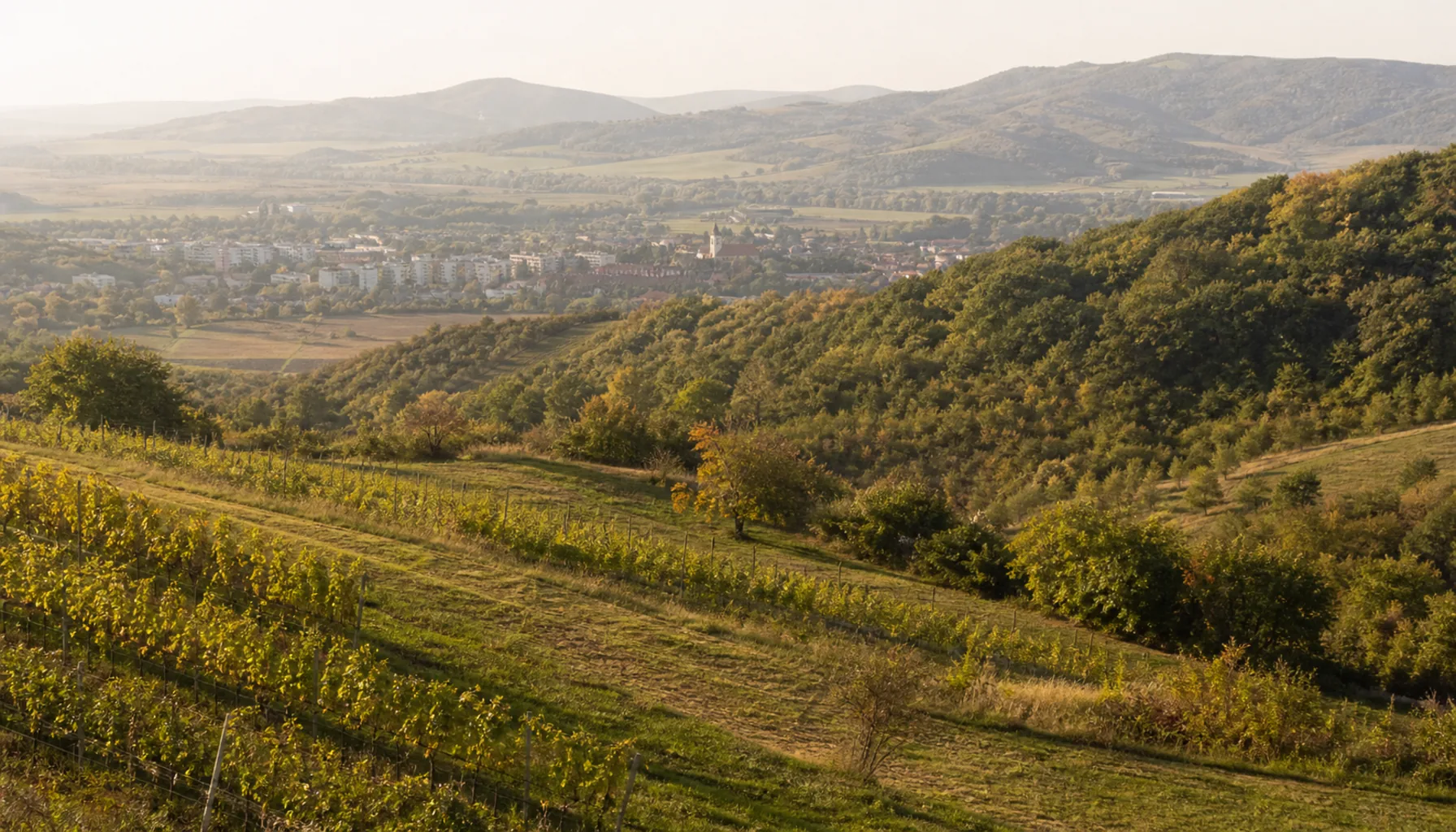
Vineyard slopes and oak ridges of the Ipeľ hills above Veľký KrtíšVinohradnícke svahy a dubové chrbty ipeľských kopcov nad Veľkým Krtíšom
Where it standsKde leží
Veľký Krtíš sits in the broken hill country between the southern edge of the Krupinská planina and the Ipeľ, which is the Hungarian border here, a dozen or so kilometres to the south. The main road from Šahy to Lučenec runs through the town, and that road is the spine of the whole district.Veľký Krtíš leží v členitej pahorkatine medzi južným okrajom Krupinskej planiny a Ipľom, ktorý tu tvorí maďarskú hranicu asi tucet kilometrov na juh. Mestom prechádza hlavná cesta zo Šiah do Lučenca a práve tá je chrbtovou kosťou celého okresu.
This is Novohrad: sunny, dry, thinly populated, with vineyards on the south-facing slopes and oak woods along the ridges. It looks nothing like the mountain Slovakia most visitors have in mind.Toto je Novohrad — slnečný, suchý a riedko osídlený, s vinicami na južných svahoch a s dubinami na chrbtoch. Na horské Slovensko, ktoré má väčšina návštevníkov v hlave, sa nepodobá ani trochu.
The storyHistória
There was a village here in the Middle Ages, on the estates run from the castle at Modrý Kameň, and a village is what it stayed for centuries — one market settlement among many in the Ipeľ basin.V stredoveku tu stála dedina na panstve spravovanom z hradu v Modrom Kameni a dedinou zostala po stáročia — jedna trhová obec z mnohých v Ipeľskej kotline.
Lignite changed that. The Novohrad coal basin was worked from the nineteenth century, but the serious development came after the Second World War, when the state sank new pits and built a town on top of them. Miners were recruited from across Slovakia, blocks of flats went up beside the old village, and in the 1960s the district seat was moved here from Modrý Kameň.Zmenil to lignit. Novohradskú uhoľnú panvu ťažili už od devätnásteho storočia, ale skutočný rozmach prišiel po druhej svetovej vojne, keď štát otvoril nové bane a nad nimi postavil mesto. Baníkov naverbovali z celého Slovenska, vedľa starej dediny vyrástli sídliská a v šesťdesiatych rokoch sa sem z Modrého Kameňa presunulo okresné sídlo.
Mining wound down in stages and the last pit closed in the 2010s. What is left is a town built for an industry that no longer exists — a familiar Central European situation, and one the district has been dealing with rather than denying.Ťažba postupne klesala a posledná baňa sa zatvorila v druhom desaťročí tohto storočia. Zostalo mesto postavené pre odvetvie, ktoré už neexistuje — v strednej Európe známa situácia, s ktorou sa okres skôr vyrovnáva, než by ju popieral.
What to seeČo vidieť
Veľký Krtíš is a working town rather than a sightseeing one and is honest about it: the centre is post-war, the older village fabric survives only in fragments, and the interest lies in the country around it.Veľký Krtíš je pracovné, nie výletné mesto a netvári sa inak: centrum je povojnové, zo starej dedinskej zástavby zostali len útržky a to zaujímavé je v okolí.
Modrý Kameň, eight kilometres north, has the castle-mansion and the puppet museum. The villages of the district keep a scatter of small medieval churches, and the hills between them are laced with field tracks that ride well outside the summer heat.Modrý Kameň osem kilometrov na sever má hradný kaštieľ a múzeum bábok. Po dedinách okresu sa zachovalo niekoľko malých stredovekých kostolov a kopce medzi nimi pretkávajú poľné cesty, po ktorých sa dobre bicykluje mimo letných horúčav.
South of the town the land falls to the Ipeľ, a slow border river with a strangely empty valley. Most of its bridges were destroyed in 1944 and went unreplaced for the rest of the century; the one at Vrbovka, rebuilt only in the past fifteen years or so, is a reminder of how firmly this border was shut.Južne od mesta sa krajina zvažuje k Ipľu, pomalej hraničnej rieke s podivne prázdnou dolinou. Väčšinu mostov cez ňu zničili v roku 1944 a do konca storočia ich nikto neobnovil; ten pri Vrbovke, postavený nanovo až v posledných pätnástich rokoch, pripomína, ako pevne bola táto hranica zavretá.
Work and industryPráca a priemysel
Since the mine closed the town has lived on smaller manufacturing, food processing, services and public administration, with a large share of the workforce commuting — to Zvolen and Banská Bystrica, to Bratislava for the working week, or abroad. Unemployment here has been well above the national average for a long time, and in the years after the mine closed it was among the worst in the country.Od zatvorenia bane žije mesto z menšej výroby, potravinárstva, služieb a verejnej správy a veľká časť ľudí dochádza za prácou — do Zvolena a Banskej Bystrice, na týždňovky do Bratislavy alebo do zahraničia. Nezamestnanosť je tu dlhodobo výrazne nad celoslovenským priemerom a v rokoch po zatvorení bane patrila k najvyšším v krajine.
Agriculture counts for more here than in most Slovak districts: this is warm, fertile hill country of arable land, orchards and vineyards. The Ipeľ slopes belong to the Southern Slovakia wine region and small growers still work them.Poľnohospodárstvo tu znamená viac než vo väčšine slovenských okresov: je to teplá a úrodná pahorkatina s ornou pôdou, sadmi a vinicami. Ipeľské svahy patria do Južnoslovenskej vinohradníckej oblasti a malí vinári ich stále obrábajú.
Getting thereAko sa tam dostať
Veľký Krtíš is one of the few district seats in Slovakia with no passenger railway, so the bus and the car are the options: the Šahy–Lučenec road passes through, and buses run to Zvolen, Banská Bystrica and Bratislava. The nearest stations with useful connections are at Lučenec and Zvolen.Veľký Krtíš patrí k nemnohým okresným sídlam na Slovensku bez osobnej železnice, takže ostáva autobus a auto: mestom prechádza cesta zo Šiah do Lučenca a autobusy jazdia do Zvolena, Banskej Bystrice aj Bratislavy. Najbližšie stanice s použiteľnými spojmi sú v Lučenci a vo Zvolene.
Explore Veľký KrtíšObjavujte Veľký Krtíš
Every part of this place with a page of its own.Každá časť tohto miesta, ktorá má vlastnú stránku.