Rimavská Sobota · Gemer-MalohontRimavská Sobota · Gemer-Malohont

Culture in Rimavská SobotaKultúra v Rimavskej Sobote

A square laid out after a fire in 1506, public buildings scaled for a county that no longer exists, and a museum on the square that still holds the county together.Námestie vymerané po požiari z roku 1506, verejné budovy postavené pre župu, ktorá už neexistuje, a múzeum na námestí, ktoré tú župu stále drží pohromade.

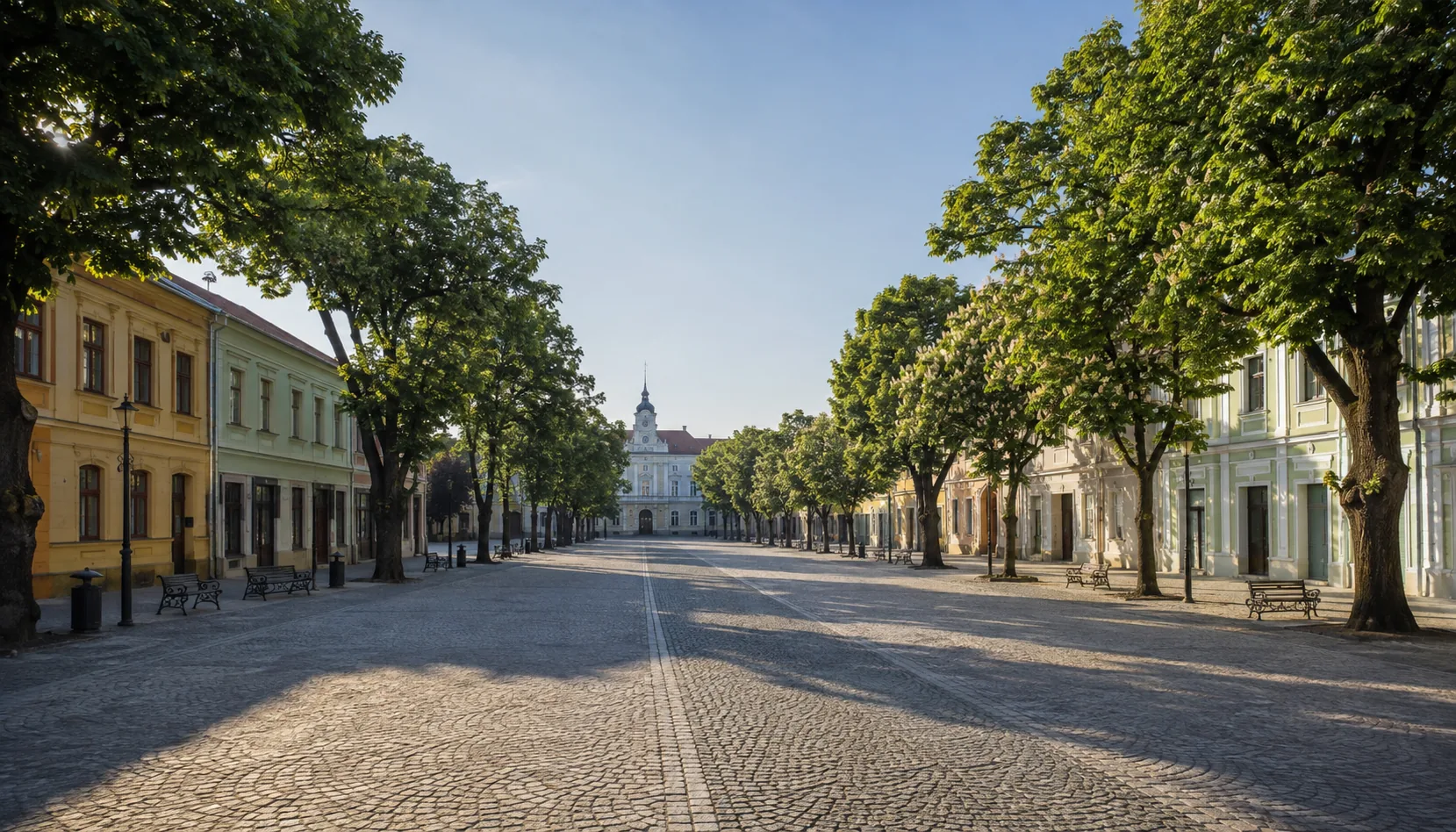
Rimavská Sobota's enormous main square, laid out to a plan after the fire of 1506 and closed at one end by the town hall
Rimavská Sobota's enormous main square, laid out to a plan after the fire of 1506 and closed at one end by the town hall.Obrovské námestie v Rimavskej Sobote, vymerané podľa plánu po požiari v roku 1506 a na jednom konci uzavreté radnicou.

The year in Rimavská SobotaRok v Rimavskej Sobote

The town's name records a market day: Sobota is Saturday, and the place grew where the roads of the Rimava valley met, serving a wide arc of villages. That is still the character of its calendar. What a district seat of this size keeps is the ordinary run of a working town: market days, church feasts, the school year, the town's commemorations, whatever the cultural centre and the museum put on. We name no festival and no date, because programmes at this scale are set a season at a time and only the town's own listings and the museum's own announcements keep up with them.Meno mesta zaznamenáva trhový deň: sobota je sobota a mesto vyrástlo tam, kde sa stretli cesty Rimavskej doliny a kde sa obsluhoval široký oblúk dedín. Taký je dodnes aj jeho kalendár. Okresné sídlo tejto veľkosti udržiava bežný chod pracujúceho mesta: trhové dni, cirkevné sviatky, školský rok, mestské spomienky a to, čo pripraví kultúrne stredisko a múzeum. Nemenujeme tu žiadny festival ani dátum, lebo program sa v tejto veľkosti dohaduje zo sezóny na sezónu a stačia mu len vlastné oznamy mesta a múzea.

The museum is the one place where the year is reliably worth checking, because a museum with collections this wide changes what it shows. Otherwise the seasonal draw is outside the town. North lies the Muránska planina national park; east and south are scattered the Gothic village churches of Gemer, whose medieval wall paintings are among the best in Central Europe and which are mostly small parish churches, generally locked and opened by a keyholder rather than open to callers; and beyond them are the caves of the Slovak Karst, which keep their own seasons. Up the Rimava valley the branch line from Jesenské runs on to Tisovec, where it carries the only standard-gauge rack-railway section in Slovakia, now worked mainly by heritage trains on announced dates rather than to a timetable.Múzeum je jediné miesto, kde sa program naozaj oplatí overiť, lebo múzeum s takto širokými zbierkami mení to, čo vystavuje. Inak je sezónnym lákadlom okolie. Na severe leží Národný park Muránska planina; na východ a na juh sú roztrúsené gotické dedinské kostolíky Gemera, ktorých stredoveké nástenné maľby patria k najlepším v strednej Európe a ktoré sú väčšinou malými farskými kostolmi, spravidla zamknutými a otváranými kľúčnikom, nie voľne prístupnými; a za nimi sú jaskyne Slovenského krasu s vlastnou sezónou. Hore Rimavskou dolinou pokračuje odbočka z Jesenského do Tisovca, kde má jediný ozubnicový úsek normálneho rozchodu na Slovensku; dnes po ňom jazdia najmä historické vlaky, a to v ohlásených termínoch, nie podľa cestovného poriadku.

Where culture livesKde žije kultúra

The Gemer-Malohont Museum stands on the main square and is the most useful hour a visitor can spend in the district. It grew out of an art and archaeology exhibition that opened on 3 September 1882 and was founded by Ján Fábry with three companions, which makes it one of the oldest museums in Slovakia. Its members collected everything they could reach: minerals, birds, prehistoric graves from the Bronze Age cemeteries of the Rimava basin, folk costume and objects from the villages, and whatever they carried home from travelling.Gemersko-malohontské múzeum stojí na hlavnom námestí a hodina strávená v ňom je pre návštevníka najužitočnejšou hodinou v celom okrese. Vyrástlo z výstavy umenia a archeológie otvorenej 3. septembra 1882 a založil ho Ján Fábry s tromi spoločníkmi, čo z neho robí jedno z najstarších múzeí na Slovensku. Jeho členovia zbierali všetko, na čo dosiahli: minerály, vtáky, praveké hroby z pohrebísk Rimavskej kotliny, kroje a predmety z dedín a čokoľvek, čo si doniesli z ciest.

That last habit produced the exhibit everyone remembers. In 1910 a local lawyer and traveller, István Süteö-Munkácsi, gave the museum the mummy of an Egyptian woman named Tasheritnetiak, from Abusir el-Meleq, and she has been its calling card ever since. The museum moved into a disused classicist barracks the same year and opened its permanent display on 18 May 1913. Egyptology in a small Gemer town sounds like an accident; it is actually the exact record of what a nineteenth-century learned society thought a museum was for. Around the museum is what a district seat this size supports: a cultural centre with a hall and a programme, a library, a school of art for children, church choirs and amateur groups. We name none of them individually, because premises and programmes change faster than a page like this does.Práve z tohto zvyku pochádza exponát, ktorý si pamätá každý. V roku 1910 daroval múzeu miestny právnik a cestovateľ István Süteö-Munkácsi múmiu Egypťanky menom Tašeritnetiak z Abúsír el-Meleku a odvtedy je vizitkou zbierky. V tom istom roku sa múzeum presťahovalo do vyprázdnenej klasicistickej kasárne a 18. mája 1913 otvorilo stálu expozíciu. Egyptológia v malom gemerskom meste znie ako náhoda; v skutočnosti je presným záznamom toho, načo podľa učenej spoločnosti 19. storočia múzeum slúžilo. Okolo múzea je to, čo okresné sídlo tejto veľkosti udrží: kultúrne stredisko so sálou a programom, knižnica, základná umelecká škola, kostolné zbory a záujmové súbory. Menovite tu neuvádzame ani jedno z nich, lebo priestory a programy sa menia rýchlejšie než takáto stránka.

The buildings that carry itBudovy, ktoré ju nesú

The main square is the town's one big set piece: long, broad, planted with trees, lined with nineteenth-century houses and closed by the town hall. Its size is a decision, not an accident of growth. A fire destroyed most of Rimavská Sobota in 1506, and the town was laid out again to a plan, said to have been drawn by an Italian architect, on a chequerboard of straight streets around this one enormous square. Very few Slovak towns were replanned in a single go like that, and standing in the middle of it is the quickest way to understand the place.Hlavné námestie je jediným veľkým gestom mesta: dlhé, široké, vysadené stromami, lemované domami z 19. storočia a uzavreté radnicou. Jeho rozmer je rozhodnutie, nie náhoda rastu. V roku 1506 zničil väčšinu Rimavskej Soboty požiar a mesto vymerali nanovo podľa plánu, ktorý mal navrhnúť taliansky architekt, na šachovnici rovných ulíc okolo tohto jediného obrovského námestia. Máloktoré slovenské mesto bolo takto preplánované naraz a postaviť sa doprostred námestia je najrýchlejší spôsob, ako miestu porozumieť.

The public buildings are out of scale with the town for a reason that is written in charters. The estate belonged to the Archbishop of Kalocsa, a landlord who wanted rents and market dues rather than a garrison, so what grew here was a market rather than a fortress; he granted municipal privileges on 14 November 1278. King Charles Robert took the estate for the crown in 1334, and the town then received a charter modelled on the law of Buda, confirmed by King Sigismund in 1387. From 1784 it served as a seat of county administration, which is why a town this size has offices built for something larger. The town also lived under Ottoman rule twice, from 1553 to 1593 and again from 1596 until the Ottomans were driven out of Hungary in 1686, administered from the sanjak seated at Fiľakovo; even so it was granted a coat of arms in 1592 and the right of the sword in 1601, because a market has to keep order to stay a market.Verejné budovy sú na mesto priveľké z dôvodu, ktorý je zapísaný v listinách. Panstvo patrilo kaloččskému arcibiskupovi, teda zemepánovi, ktorý chcel dávky a trhové poplatky, nie posádku, takže tu vyrástol trh, a nie pevnosť; mestské výsady udelil 14. novembra 1278. V roku 1334 vzal panstvo pre korunu kráľ Karol Róbert a mesto potom dostalo výsady podľa budínskeho práva, ktoré v roku 1387 potvrdil kráľ Žigmund. Od roku 1784 tu sídlila stoličná správa, a preto má mesto tejto veľkosti úrady stavané pre niečo väčšie. Mesto tiež dvakrát žilo pod osmanskou vládou, v rokoch 1553 až 1593 a znova od roku 1596 až do vytlačenia Osmanov z Uhorska v roku 1686, spravované zo sandžaku so sídlom vo Fiľakove; napriek tomu dostalo v roku 1592 erb a v roku 1601 právo meča, lebo trh musí udržiavať poriadok, ak chce zostať trhom.

A county town without a countyŽupné mesto bez župy

Rimavská Sobota was built to administer Gemer-Malohont, and the thing it administered no longer exists. Czechoslovak legionaries occupied the town in January 1919, the forces of the Hungarian Soviet Republic took it in May and Czechoslovakia had it back by July; then in 1922 the county of Gemer-Malohont was abolished in the Czechoslovak reorganisation and the offices went. The town was a county seat again from 1938 to 1944, the last time it ever ran a county, and Soviet troops of the 2nd Ukrainian Front took it on 21 December 1944.Rimavská Sobota bola postavená na to, aby spravovala Gemer-Malohont, a to, čo spravovala, už neexistuje. V januári 1919 mesto obsadili československí legionári, v máji ho prevzali sily Maďarskej republiky rád a do júla ho malo znova Československo; v roku 1922 potom pri československej reorganizácii Gemersko-malohontskú župu zrušili a úrady odišli. Mesto bolo župným sídlom ešte raz v rokoch 1938 až 1944, naposledy vo svojich dejinách, a 21. decembra 1944 ho obsadili sovietske vojská 2. ukrajinského frontu.

What was put in place of the county was industry, and it was placed rather than grown. Between 1948 and 1976 the town absorbed one neighbouring village after another and swelled from about 28 to nearly 78 square kilometres; a sugar factory came in 1966, a large meat-processing plant in 1977, engineering and building materials beside them, and the population rose from under five thousand in the nineteenth century to nearly twenty thousand by 1980. All of it rested on decisions taken in Bratislava and Prague rather than on anything the town owned, which is exactly why it proved fragile when the planning stopped after 1989. It is worth being blunt about the rest: nothing about the land or the people here caused the collapse. The town was given an economy it did not choose, and then the economy was taken away.Namiesto župy prišiel priemysel, a to priemysel umiestnený, nie vyrastený. V rokoch 1948 až 1976 mesto pripojilo jednu susednú obec za druhou a rozrástlo sa z približne 28 na takmer 78 štvorcových kilometrov; v roku 1966 pribudol cukrovar, v roku 1977 veľký mäsokombinát, popri nich strojárstvo a stavebné materiály, a počet obyvateľov stúpol z necelých piatich tisíc v 19. storočí na takmer dvadsaťtisíc do roku 1980. Všetko to stálo na rozhodnutiach z Bratislavy a Prahy, nie na niečom, čo mesto vlastnilo, a preto sa to po roku 1989 ukázalo ako krehké. O zvyšku sa oplatí hovoriť priamo: krajina ani ľudia tu úpadok nespôsobili. Mesto dostalo hospodárstvo, ktoré si nevybralo, a potom mu ho vzali.

← Rimavská Sobota← Rimavská Sobota

WatchPozrite si

Sixteen videos for Culture in Rimavská Sobota.Šestnásť videí — Kultúra v Rimavskej Sobote.