Modrý Kameň · NovohradModrý Kameň · Novohrad
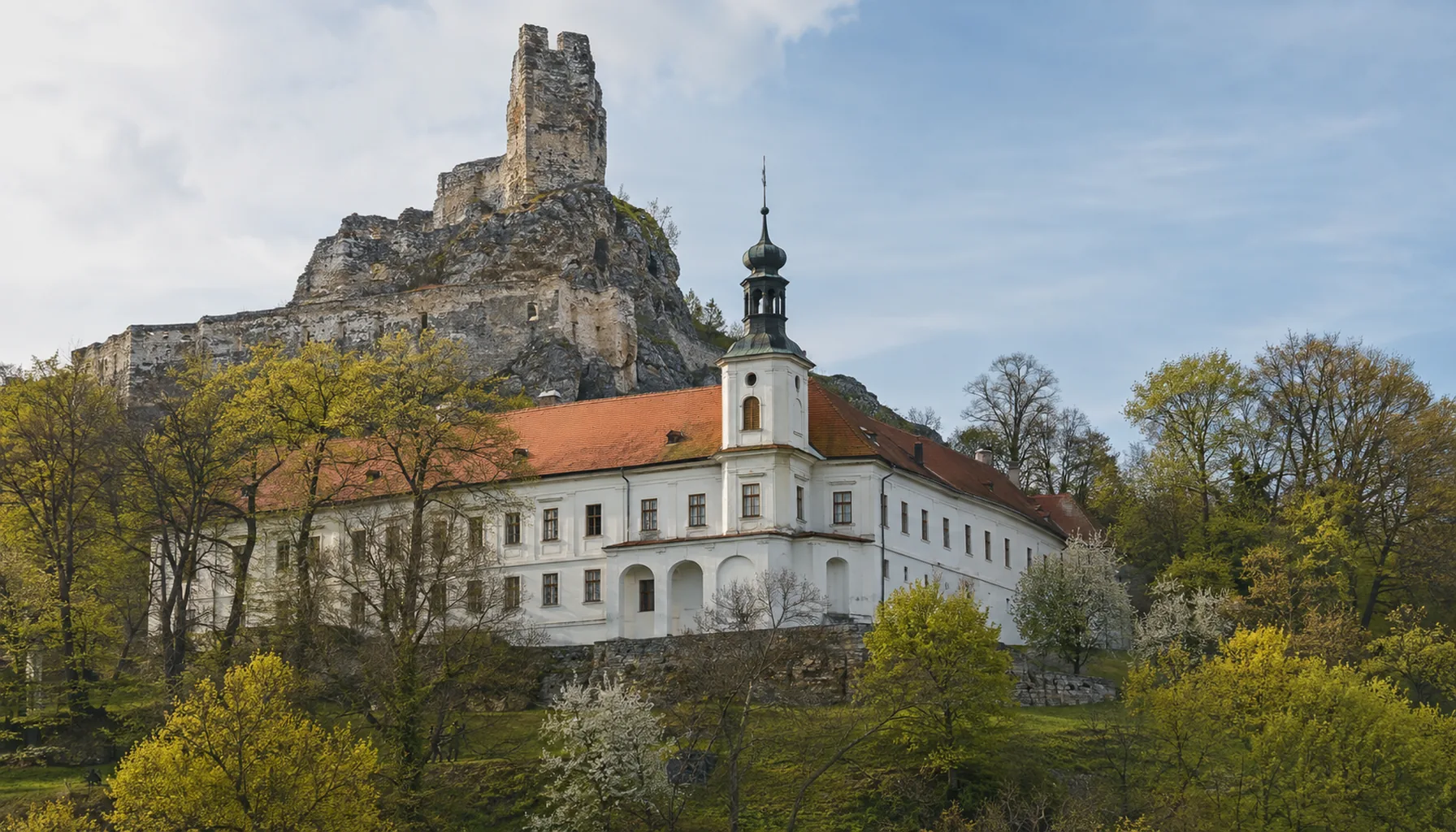
One of the smallest towns in Slovakia, and effectively all of it is the castle hill: a baroque house built inside the shell of a fortress the Ottomans took in 1575, holding the only museum of puppetry and toys in the country.Jedno z najmenších miest na Slovensku a prakticky celé je to hradný kopec: barokový kaštieľ postavený vo vnútri škrupiny pevnosti, ktorú Osmani dobyli v roku 1575, a v ňom jediné múzeum bábkarských kultúr a hračiek na Slovensku.
The 2021 census counted 1,620 people here, and a town that size does not keep a festival calendar of its own. What it has instead is a museum, a castle park and a church, and its year is made of what those three put on plus the ordinary feasts. Saying that plainly is more use than listing events we cannot vouch for.Sčítanie v roku 2021 tu napočítalo 1 620 ľudí a mesto tejto veľkosti si vlastný festivalový kalendár nedrží. Namiesto toho má múzeum, hradný park a kostol a jeho rok sa skladá z toho, čo tieto tri pripravia, plus z obyčajných sviatkov. Povedať to priamo je užitočnejšie než vymenúvať podujatia, za ktoré nemôžeme ručiť.
The museum is the closest thing to a programme, and since its subject is performance, the puppets are put to work now and again. What is on and when is announced by the museum and by the town and by nobody further away, so check before you travel: in a place this small, opening hours depend on how many people are on duty.Najbližšie k programu má múzeum, a keďže jeho predmetom je predstavenie, bábky sa občas dostanú do práce. Čo a kedy sa hrá, oznamuje múzeum a mesto a nikto ďalej, takže si to pred cestou overte: v takomto malom meste otváracie hodiny závisia od toho, koľko ľudí je v službe.
There is always something to do here even when the house is shut. The ruins of the upper castle can be walked freely — the line of the curtain wall, the stump of a tower, a terrace looking south over long ridges towards the Hungarian border — and the park on the slope is open ground with old trees and benches. The town below takes five minutes to walk end to end.Aj keď je kaštieľ zatvorený, dá sa tu vždy niečo robiť. Zrúcaniny horného hradu sú voľne prístupné — línia hradby, pahýľ veže, terasa s výhľadom na juh cez dlhé chrbty smerom k maďarskej hranici — a park na svahu je otvorená plocha so starými stromami a lavičkami. Mesto pod ním prejdete od konca po koniec za päť minút.
The baroque mansion holds the Slovak National Museum's Museum of Puppetry Cultures and Toys, the only collection of its kind in the country: marionettes, rod and glove puppets, whole travelling stages, and cabinets of historic toys. Children hauled round castles all summer tend to ask to come back to this one. The chapel built into the residence — the reason for the slender turret visible from the park — is part of the museum route.Barokový kaštieľ ukrýva Múzeum bábkarských kultúr a hračiek Slovenského národného múzea, jedinú zbierku svojho druhu na Slovensku: marionety, javajky a maňušky, celé kočovné javiská a vitríny historických hračiek. Deti, ktoré celé leto ťaháte po hradoch, sa spravidla pýtajú, či sa sem môžu vrátiť. Kaplnka zabudovaná do sídla — dôvod štíhlej vežičky viditeľnej z parku — je súčasťou prehliadkovej trasy.
The museum arrived late and when it was needed. The census of 1991 found 1,374 people here, the fewest on record: the state jobs of the communist decades were ending and nothing local replaced them. What the town had was the castle, and in the closing years of that century the mansion became the museum's home — a small thing to build a future on, and the reason coaches come up the hill at all.Múzeum prišlo neskoro a prišlo vtedy, keď bolo treba. Sčítanie v roku 1991 tu našlo 1 374 ľudí, najmenej v histórii: štátne pracovné miesta socialistických desaťročí sa končili a nič miestne ich nenahradilo. Čo mesto malo, bol hrad, a v posledných rokoch toho storočia sa kaštieľ stal domovom múzea — málo na to, aby sa na tom staval celý ďalší život mesta, a zároveň dôvod, prečo sem hore vôbec chodia autobusy.
Everything else is what a town of sixteen hundred people can keep: a library, a school, a hall, and whatever the parish and a handful of volunteers organise between them. We do not name any of it individually, because at this size the arrangements change with the people who make them.Všetko ostatné je to, čo si mesto so šestnástimi stovkami obyvateľov dokáže udržať: knižnica, škola, sála a to, čo medzi sebou zorganizuje farnosť a hŕstka dobrovoľníkov. Jednotlivo to tu nemenujeme, lebo pri takejto veľkosti sa usporiadanie mení spolu s ľuďmi, ktorí ho robia.
The settlement that became Modrý Kameň is a podhradie — the village that grows under a castle, housing the people who serve it, supply it and shelter behind it. It is first recorded in writing in 1290, spelled Keykkw, the same year the castle above it changed hands. From the start the two were one thing: no castle, no town, and the geography of the place has never stopped saying so.Sídlo, z ktorého vyrástol Modrý Kameň, je podhradie — dedina, ktorá rastie pod hradom a v ktorej bývajú ľudia, čo mu slúžia, zásobujú ho a schovávajú sa zaň. Prvý raz je písomne doložené v roku 1290 v podobe Keykkw, v tom istom roku, keď hrad nad ním zmenil majiteľa. Od začiatku boli tie dve veci jedným: bez hradu niet mesta, a geografia toho miesta to nikdy neprestala hovoriť.
In 1575 an Ottoman campaign out of Buda took the castle after a three-day fight, and the village below, which had no defences worth the name, was destroyed in the same war. There was a garrison on the hill and effectively no town underneath it until the early 1590s: a fortress can be recaptured, but the households that made up a village mostly do not come back. The Balassa rebuilt the castle and refilled the village between about 1609 and 1612, and in 1658 the emperor granted market rights, which made the place an oppidum, a market town.V roku 1575 osmanská výprava z Budína dobyla hrad po trojdňovom boji a dedina pod ním, ktorá nemala obranu hodnú toho mena, bola v tej istej vojne zničená. Na kopci sedela posádka a pod ňou prakticky nijaké mesto až do začiatku deväťdesiatych rokov šestnásteho storočia: pevnosť sa dá dobyť späť, no domácnosti, z ktorých sa skladala dedina, sa väčšinou nevrátia. Balassovci hrad obnovili a dedinu znovu zaľudnili približne v rokoch 1609 až 1612 a v roku 1658 cisár udelil trhové právo, ktoré z miesta urobilo oppidum — mestečko s jarmokmi.
When Gabriel Balassa built the baroque mansion across the castle's lower ward in 1730, using the old walls as its platform, the town's job changed. It no longer supplied a garrison; it supplied a household — grooms, gardeners, carters, a smith, a tailor — and the estate's fields, forests and mills. That is a quieter existence and a poorer one, and it explains why Modrý Kameň never grew. In 1923 the castle and estate were sold to the Czechoslovak state under the land reform, and the hill no longer belonged to a family.Keď Gabriel Balassa v roku 1730 postavil naprieč dolným nádvorím barokový kaštieľ a použil staré múry ako jeho podstavec, zmenila sa práca mesta. Už nezásobovalo posádku, ale domácnosť — pohoničov, záhradníkov, furmanov, kováča, krajčíra — a k tomu panské polia, lesy a mlyny. Je to pokojnejšia existencia a chudobnejšia a vysvetľuje, prečo Modrý Kameň nikdy nevyrástol. V roku 1923 hrad aj panstvo predali československému štátu v rámci pozemkovej reformy a kopec nad mestom už nepatril nijakej rodine.
The Balassa held this castle for most of three hundred years, and the family produced Bálint Balassi, born at Zvolen castle in 1554 and now reckoned the first great lyric poet in Hungarian. He was not born here and it would be wrong to say he was — but Kékkő, the Hungarian name of Modrý Kameň, was one of his family's seats, and the hill you climb is the ground his people held.Balassovci držali tento hrad väčšinu troch storočí a z rodiny vzišiel Bálint Balassi, narodený na Zvolenskom zámku v roku 1554 a dnes pokladaný za prvého veľkého lyrického básnika písaného po maďarsky. Nenarodil sa tu a bolo by nesprávne to tvrdiť — ale Kékkő, maďarský názov Modrého Kameňa, bolo jedno zo sídel jeho rodu a kopec, na ktorý vystupujete, je pôda, ktorú jeho ľudia držali.
The line died out in 1899 after more than five hundred years and the estate passed to the Almássy family; the town got something more useful in exchange, a district seat in 1913, which it kept until the reorganisation of 1960 moved the offices to Veľký Krtíš. It was formally declared a town in 1969. The house outlived the family that built it and is now full of puppets, which is a stranger and better ending than most castles get.Rod vymrel v roku 1899 po viac než piatich storočiach a panstvo prešlo na Almássyovcov; mesto dostalo výmenou niečo užitočnejšie — v roku 1913 sídlo okresu, ktoré si udržalo, kým reorganizácia v roku 1960 nepresťahovala úrady do Veľkého Krtíša. Za mesto bol Modrý Kameň formálne vyhlásený v roku 1969. Kaštieľ prežil rodinu, ktorá ho postavila, a dnes je plný bábok — čo je zvláštnejší a lepší koniec, než aký dostane väčšina hradov.
Sixteen videos for Culture in Modrý Kameň.Šestnásť videí — Kultúra v Modrom Kameni.