Lučenec · NovohradLučenec · Novohrad
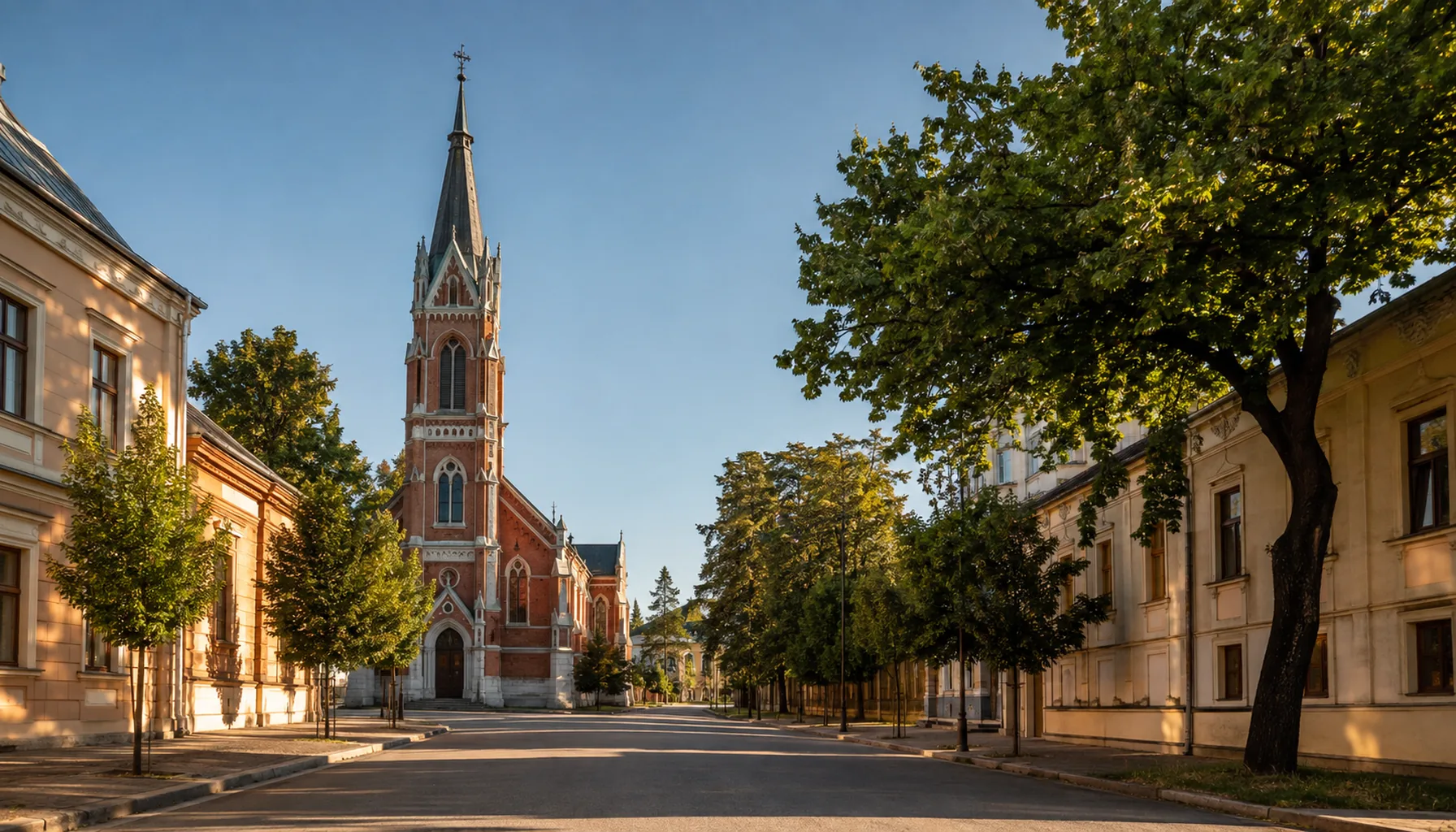
A town rebuilt in one push after it burned in 1849, so its centre is wide-streeted and of a piece: the county's museum and gallery, a neo-Gothic church with a tall tower, and the memory of an enamelware works that carried the town's name across an empire.Mesto obnovené jedným ťahom po požiari v roku 1849, a preto je jeho centrum široké a jednoliate: župné múzeum a galéria, neogotický kostol s vysokou vežou a pamäť na smaltovňu, ktorá roznášala meno Lučenca po celej monarchii.
The oldest thing in the Lučenec calendar is the fair. The emperor Leopold I granted the town market rights in 1695, once the frontier had moved south and a place whose only asset was a crossroads could finally use it, and markets on the square have been its public occasion ever since. What runs today is what a district seat this size runs, and dates are announced locally rather than nationally.Najstaršou vecou v lučeneckom kalendári je jarmok. Cisár Leopold I. udelil mestu trhové právo v roku 1695, keď sa hranica posunula na juh a miesto, ktorého jediným majetkom bola križovatka, ho konečne mohlo využiť — a trhy na námestí sú odvtedy jeho verejnou udalosťou. Dnes tu beží to, čo beží v okresnom sídle tejto veľkosti, a termíny sa oznamujú miestne, nie celoštátne.
Cultural life here happens in two languages. Slovak and Hungarian are both everyday speech in the town and in the villages around it, and that is an ordinary fact of the place rather than something remarked on — it shows up in what gets sung, staged and printed without anyone making a point of it.Kultúrny život sa tu odohráva v dvoch jazykoch. Slovenčina aj maďarčina sú v meste i v okolitých dedinách bežnou rečou a je to obyčajná skutočnosť tohto kraja, nie niečo, čo by sa zvlášť komentovalo — prejavuje sa v tom, čo sa spieva, hrá a tlačí, bez toho, aby na to niekto upozorňoval.
The summer half of the year happens outside the town. The Ružiná reservoir with its beaches, the ruin of Divín on the hill above it and the frontier castles of Fiľakovo and Šomoška are all within half an hour, with the volcanic hills of the Cerová vrchovina on the southern horizon. Lučenec is a base for that country as much as a destination itself.Letná polovica roka sa odohráva mimo mesta. Priehrada Ružiná s plážami, zrúcanina Divína na kopci nad ňou a pohraničné hrady Fiľakovo a Šomoška sú do pol hodiny a na južnom obzore stoja sopečné kopce Cerovej vrchoviny. Lučenec je pre tento kraj rovnako východiskom ako cieľom sám osebe.
The Novohrad museum and gallery, a short walk from the main square, is the place to understand the county rather than just the town: archaeology out of the basin, and folk collections from the villages around it. A regional museum in a regional seat does the job nobody else does, which is to hold the material of a whole district in one building.Novohradské múzeum a galéria neďaleko hlavného námestia je miestom, kde pochopíte skôr celý región než len mesto: archeológiu z kotliny a národopisné zbierky z okolitých dedín. Regionálne múzeum v regionálnom sídle robí prácu, ktorú nikto iný neurobí — drží materiál celého okresu pod jednou strechou.
Lučenec acquired its institutions in a nineteenth-century burst and has lived off them since. A bank and a newspaper were founded in 1846 and a Calvinist grammar school in 1847; the telegraph arrived in 1865 and the railway in 1871; a new town hall went up in the 1890s and the first permanent cinema opened in 1910. Most of what the town does culturally still happens in buildings from that stretch.Lučenec získal svoje inštitúcie v jednom devätnástostoročnom nápore a žije z nich dodnes. Banka a noviny vznikli v roku 1846, kalvínske gymnázium v roku 1847; telegraf prišiel v roku 1865 a železnica v roku 1871; nová radnica vyrástla v deväťdesiatych rokoch a prvé stále kino sa otvorilo v roku 1910. Väčšina toho, čo sa tu kultúrne deje, sa dodnes odohráva v budovách z tohto obdobia.
Some of it is gone. The Art Nouveau Café Corso was pulled down in the communist decades and older residents still mention it with regret; a page like this ought to say that as plainly as it lists what survives. The rest is the ordinary equipment of a district town — a cultural centre, a library, amateur groups and a school of art — which we do not name individually, because programmes and premises change faster than a page like this does.Časť z toho je preč. Secesná kaviareň Corso padla počas socialistických desaťročí a starší obyvatelia na ňu dodnes spomínajú s ľútosťou; takáto stránka by to mala povedať rovnako jasne, ako vymenúva to, čo prežilo. Zvyšok je bežné vybavenie okresného mesta — kultúrne stredisko, knižnica, amatérske súbory a základná umelecká škola — ktoré tu jednotlivo nemenujeme, lebo programy a priestory sa menia rýchlejšie než takáto stránka.
Everything in the centre of Lučenec is younger than one day. The town backed the Hungarian revolution, and on 24 March 1849 a revolutionary force under Lajos Beniczky beat an imperial detachment here. The bill came in August: Russian armies, called in by the emperor, burned Lučenec in reprisal on 9 August 1849. Almost the whole town went, the Calvinist church with it, rebuilt in neo-Gothic form in 1853. That is why the streets are wide and the public buildings all look like brothers.Všetko v centre Lučenca je mladšie než jeden jediný deň. Mesto sa postavilo za uhorskú revolúciu a 24. marca 1849 tu revolučný oddiel Lajosa Beniczkého porazil cisársky útvar. Účet prišiel v auguste: ruské vojská, ktoré si privolal cisár, mesto 9. augusta 1849 v odvete vypálili. Zhorelo takmer celé, s ním aj kalvínsky kostol, ktorý postavili nanovo v neogotickej podobe v roku 1853. Preto sú tu ulice široké a verejné budovy vyzerajú ako súrodenci.
Under that layer is an older lesson: Lučenec never had a castle. The lords of Novohrad sat on rocks — at Fiľakovo, at Divín, at Modrý Kameň — while the market town sat in the open, and that single fact decided a great deal. In 1622 the army of Gabriel Bethlen, the Protestant prince of Transylvania, burned the town and its charters with it, so the townspeople later had to ask for their rights all over again; in 1640 they walled the church, the only thing they could realistically defend.Pod touto vrstvou je staršie poučenie: Lučenec nikdy nemal hrad. Novohradskí páni sedeli na skalách — vo Fiľakove, v Divíne, v Modrom Kameni — kým trhové mesto sedelo na otvorenom, a táto jediná skutočnosť rozhodla o veľmi mnohom. V roku 1622 vojsko Gabriela Bethlena, protestantského sedmohradského kniežaťa, mesto vypálilo aj s jeho listinami, takže si mešťania museli o svoje práva neskôr žiadať odznova; v roku 1640 obohnali múrom kostol, jediné, čo sa dalo reálne brániť.
The town's rise begins where the danger ends. In 1682 the fortress at Fiľakovo was blown up and never rebuilt, and the business of Novohrad county came down off the rock to the towns of the plain — Slovak sources say Lučenec became the county's new seat, Hungarian ones name Balassagyarmat further south, and the safe statement is that the offices came down and never went back up.Vzostup mesta sa začína tam, kde končí nebezpečenstvo. V roku 1682 fiľakovskú pevnosť vyhodili do vzduchu a už ju neobnovili a úradovanie Novohradskej stolice zišlo zo skaly do miest na rovine — slovenské pramene hovoria, že novým sídlom stolice sa stal Lučenec, maďarské uvádzajú Balassagyarmat ďalej na juh, a bezpečné je povedať, že úrady zišli dolu a späť hore sa už nevrátili.
The railway of 1871 ran from Budapest through the town to Žilina and on to Ostrava, and a market town on a railway becomes an industrial one. Lučenec did: tanneries, a brickworks, an agricultural machinery works, and above all the enamelware factory whose pots and basins carried the name of the town across the monarchy. For a great many households in central Europe, Lučenec was a word stamped on the bottom of a bowl.Železnica z roku 1871 viedla z Budapešti cez mesto do Žiliny a ďalej do Ostravy — a z trhového mesta na železnici sa stáva priemyselné. Z Lučenca sa stalo: garbiarne, tehelňa, továreň na poľnohospodárske stroje a predovšetkým smaltovňa, ktorej hrnce a misy roznášali meno mesta po celej monarchii. Pre veľmi mnoho domácností v strednej Európe bol Lučenec slovom vyrazeným na dne misy.
Most of it did not survive the 1990s. The enamelware works, the machinery plants and the building-materials firms shrank or shut when the state factories lost their guaranteed customers, and the honest way to describe that decade here is that the town kept its people and lost their jobs. The ware itself survives in kitchens and collections around the region — light enough to be carried away, durable enough to still be in use.Väčšina z toho neprežila deväťdesiate roky. Smaltovňa, strojárske závody i firmy na stavebné materiály sa zmenšili alebo skončili, keď štátne podniky prišli o zaručených odberateľov, a poctivo sa to desaťročie dá opísať tak, že mesto si ľudí udržalo a prišlo o ich prácu. Samotný riad prežíva v kuchyniach a zbierkach po celom regióne — dosť ľahký na to, aby sa dal odniesť, a dosť odolný na to, aby sa ešte používal.
Sixteen videos for Culture in Lučenec.Šestnásť videí — Kultúra v Lučenci.