Jelšava · Gemer and the Muráň valleyJelšava · Gemer a Muránska dolina
Culture in JelšavaKultúra v Jelšave
A market square built for a bigger town, a derelict manor house at its edge and a magnesite works whose dust settles on both: what culture Jelšava keeps, it keeps in the gaps between them.Trhové námestie vymerané pre väčšie mesto, schátraný kaštieľ na jeho okraji a magnezitový závod, ktorého prach sadá na oboje: kultúra Jelšavy žije v medzerách medzi nimi.
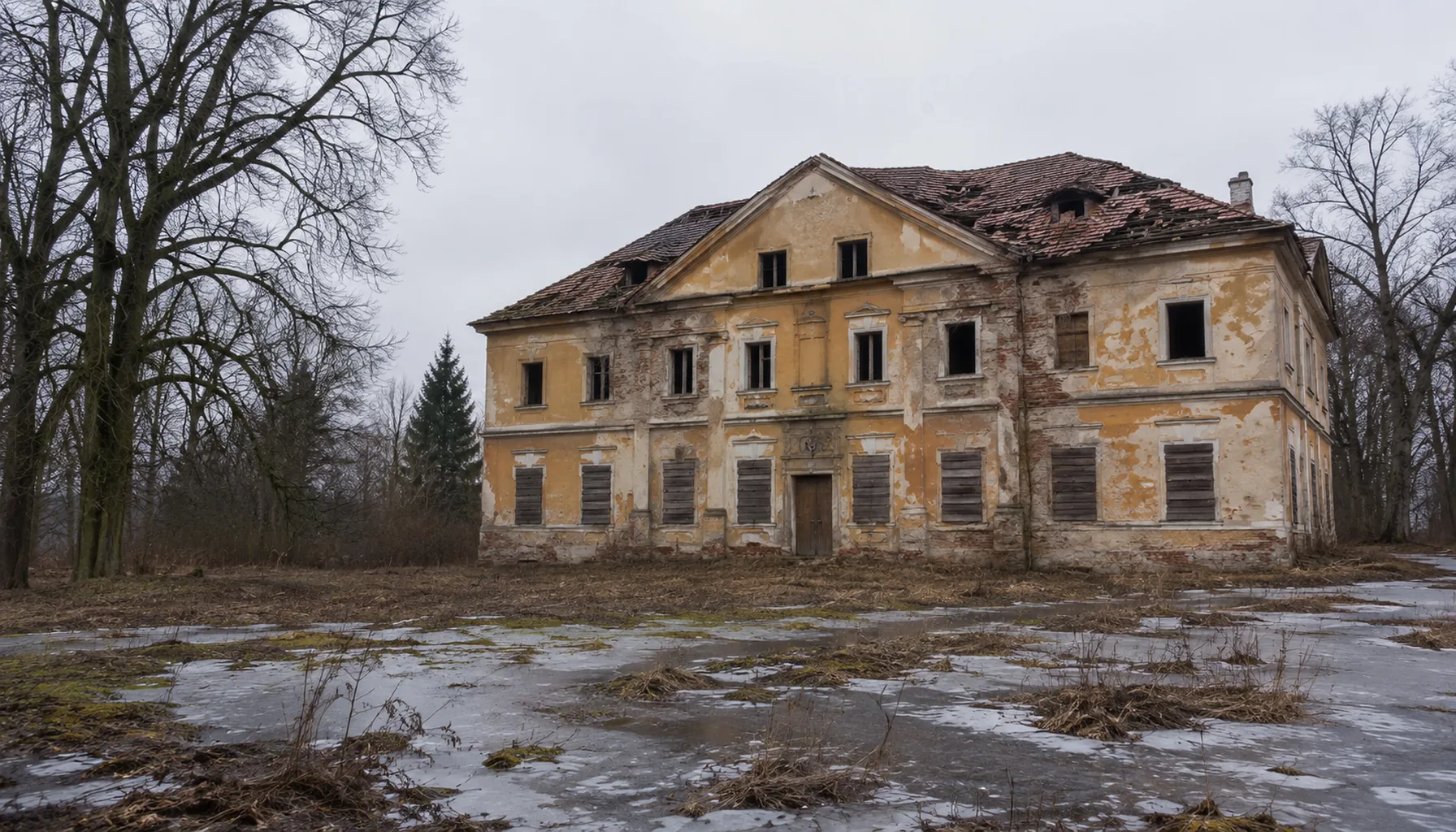
The Koháry manor house on the edge of Jelšava, built at the turn of the nineteenth century and standing empty, its roof and windows failing.Koháryovský kaštieľ na okraji Jelšavy, postavený na prelome devätnásteho storočia, dnes prázdny a s dožívajúcou strechou i oknami.
The year in JelšavaRok v Jelšave
Jelšava keeps the calendar of a small district town, not of a resort. The fixed points are the church feasts, the school year, the town's own commemorations and the seasonal markets a square this size was laid out to hold. We name no festival and no date here: in a town this size the programme is agreed a season at a time between the town office and the cultural centre and published on the town's noticeboard and website, and a page printing last year's dates would be sending you to something that no longer runs.Jelšava má kalendár malého okresného mesta, nie kúpeľného strediska. Pevnými bodmi roka sú cirkevné sviatky, školský rok, mestské spomienkové dni a sezónne trhy, na ktoré bolo také námestie kedysi vymerané. Nemenujeme tu žiadny festival ani dátum: v meste tejto veľkosti sa program dohaduje zo sezóny na sezónu medzi mestským úradom a kultúrnym strediskom a zverejňuje sa na mestskej tabuli a na webe mesta. Stránka s vlaňajšími termínmi by vás poslala na podujatie, ktoré sa už nekoná.
What is worth planning around lies mostly outside the town. Up the valley the Muránska planina national park holds Muráň castle on its rock and the half-wild Norik horses on the plateau. South and east stand the Gothic village churches of Gemer, whose medieval wall paintings are among the best in Central Europe; they are small parish churches, generally locked and opened by a keyholder. Beyond them the caves of the Slovak Karst keep their own seasons. The other rhythm is the works: magnesite has been burned here since 1894, and shift patterns have set the shape of the town's week for a century.Plánovať sa oplatí skôr okolie než samotné mesto. Hore dolinou leží Národný park Muránska planina s Muránskym hradom na skale a polodivokými koňmi norik muránskeho typu na planine. Južne a východne stoja gotické dedinské kostolíky Gemera, ktorých stredoveké nástenné maľby patria k najlepším v strednej Európe. Sú to malé farské kostoly, nie múzeá, spravidla zamknuté a otvárané kľúčnikom. Za nimi sú jaskyne Slovenského krasu s vlastnou sezónou. Druhý rytmus mesta udáva závod: magnezit sa tu páli od roku 1894 a zmenový režim už storočie určuje podobu týždňa v meste.
Where culture livesKde žije kultúra
Jelšava has what a town of its size in this district can have: a cultural centre with a hall and a programme, a library, singing and folk groups, the schools and the churches. We name none of them individually, because premises, programmes and the people who run them change faster than a page like this does, and in a district that has carried some of the highest unemployment in Slovakia for three decades they change under pressure.Jelšava má to, čo mesto jej veľkosti v tomto okrese mať môže: kultúrne stredisko so sálou a programom, knižnicu, spevácke a folklórne skupiny, školy a kostoly. Menovite tu neuvádzame ani jedno z nich, lebo priestory, programy aj ľudia, ktorí ich vedú, sa menia rýchlejšie než takáto stránka, a v okrese, ktorý už tri desaťročia patrí k tým s najvyššou nezamestnanosťou na Slovensku, sa menia pod tlakom.
There is no large museum here. The collections and the regular opening hours are in the bigger towns: Revúca, ten kilometres up the valley, and Rimavská Sobota, which took over the county business Jelšava once did. Visitors come for the square and the manor house, and both are looked at from the street. A town that has been a market centre since the thirteenth century and held the right of the sword from 1552 keeps its culture in habits rather than in a building with a ticket desk.Veľké múzeum tu nie je. Zbierky a pravidelné otváracie hodiny nájdete vo väčších mestách: v Revúcej desať kilometrov proti prúdu a v Rimavskej Sobote, ktorá prevzala župnú agendu, akú kedysi vybavovala Jelšava. Prichádza sa sem za námestím a za kaštieľom, a oboje sa obzerá z ulice. Mesto, ktoré je trhovým strediskom od trinásteho storočia a od roku 1552 malo právo meča, má kultúru skôr vo zvykoch než v budove s pokladnicou.
The buildings that carry itBudovy, ktoré ju nesú
The centre of Jelšava is one long open square with the town hall on it and low plastered burgher houses down both sides. It is a genuine market-town plan, protected as a conservation area and in visibly mixed repair; nothing has been tidied up for visitors. The scale is the tell: it was laid out for a town that did the county's business, sat on the iron trade of the Muráň valley and, from 1552, tried its own capital cases under a royal grant of the sword right. The churches on it went up for the same town and for more than one confession: the Reformation took hold as the Ottoman frontier arrived, Fiľakovo fell in 1554 and Jelšava was stormed and burned in 1556, spending the century that followed inside the Ottoman sanjak of Fiľakovo while still paying the Hungarian king.Stred Jelšavy tvorí jedno dlhé otvorené námestie s radnicou a nízkymi omietanými meštianskymi domami po oboch stranách. Je to skutočný trhový pôdorys, chránený ako pamiatková zóna a v očividne rôznom stave; nič tu nebolo upravené pre návštevníkov. Prezradí to mierka: námestie bolo vymerané pre mesto, ktoré vybavovalo župné veci, sedelo na železiarskom obchode Muránskej doliny a od roku 1552 súdilo hrdelné zločiny na základe kráľovského práva meča. Kostoly na ňom vyrástli pre to isté mesto a pre viac než jedno vyznanie: reformácia sa presadila, keď dorazila osmanská hranica, v roku 1554 padlo Fiľakovo, v roku 1556 bola Jelšava dobytá a vypálená a storočie potom ju spravovali v rámci osmanského fiľakovského sandžaku, hoci naďalej platila aj uhorskému kráľovi.
The building people photograph stands at the edge of the town. Mikuláš Koháry built it between 1796 and 1801, four wings and three storeys with allegorical painting inside and far larger than Jelšava required, because the lordship above the town no longer had a castle to be run from: Muráň had burned in 1702 and was never rebuilt, and in 1720 the royal chamber sold the estate to the Koháry family. It passed by marriage to the Saxe-Coburg family in the following century. Today its roof and windows are failing and its restoration has been discussed for years without result. Look at it from outside. It is a derelict building, not a museum.Budova, ktorú si ľudia fotografujú, stojí na okraji mesta. Mikuláš Koháry ju dal postaviť v rokoch 1796 až 1801, štyri krídla a tri podlažia s alegorickými maľbami vnútri a oveľa väčšia, než Jelšava potrebovala, pretože panstvo nad mestom už nemalo hrad, odkiaľ by sa dalo spravovať: Muráň v roku 1702 vyhorel a nikdy ho neobnovili a v roku 1720 kráľovská komora predala panstvo Koháryovcom. V nasledujúcom storočí prešiel kaštieľ sobášom na sasko-coburskú rodinu. Dnes mu padá strecha aj okná a o jeho obnove sa roky hovorí bez výsledku. Obzerajte si ho zvonku. Je to schátraná budova, nie múzeum.
Bells, iron and dustZvony, železo a prach
German settlers arrived in the fourteenth century, as they did across the mining districts, and the crafts they brought are the reason the square is the size it is. Iron was the business, with ore out of the hills, charcoal out of the forests and hammer mills on the Muráň, and among the guilds were bell-casters whose work carried the town's name into churches far beyond Gemer. It is a quiet kind of fame, and it outlasted every lord who ever taxed the place.Nemeckí osadníci prišli v štrnástom storočí, tak ako do celej banskej oblasti, a remeslá, ktoré priniesli, sú dôvodom, prečo je námestie také veľké. Živilo sa železo: ruda z kopcov, drevené uhlie z lesov a hámre na Muráni. Medzi cechmi boli aj zvonolejári, ktorých práca zaniesla meno mesta do kostolov ďaleko za Gemerom. Je to tichá sláva a prežila každého pána, ktorý toto mesto zdaňoval.
Magnesite was identified in the hills in 1880, and in 1894 the first magnesite works on the territory of present-day Slovakia was built here, at Teplá voda. Burned at high temperature it makes magnesia, the refractory lining that steel furnaces and cement kilns cannot work without. By 1923 the plant was in full production with eight kilns and its own rail sidings, and after 1948 it was nationalised, enlarged and ringed with blocks of flats until it was the reason the town existed. A Soviet garrison sat here from 1968 until 1990; after 1989 the works survived and very little else did. What is left is a company town with a medieval square, and both halves are real.Magnezit našli v okolitých kopcoch v roku 1880 a v roku 1894 tu postavili prvý magnezitový závod na území dnešného Slovenska, na mieste zvanom Teplá voda. Pálením pri vysokej teplote z neho vzniká magnézia, žiaruvzdorná vymurovka, bez ktorej nemôžu pracovať oceliarske pece ani cementárne. V roku 1923 bol závod v plnej prevádzke s ôsmimi pecami a vlastnou vlečkou a po roku 1948 ho znárodnili, rozšírili a obostavali panelákmi, až sa stal dôvodom existencie mesta. Od roku 1968 do roku 1990 tu sídlila sovietska posádka; po roku 1989 závod prežil a takmer nič iné nie. Zostalo závodné mesto so stredovekým námestím a obe polovice sú skutočné.