Hriňová · Under PoľanaHriňová · Podpoľanie
A town of 126 square kilometres with hardly any town in it: the culture of Hriňová is out on the lazy, the scattered farmsteads, in the hay meadows and in what it shares with Detva.Mesto so 126 kilometrami štvorcovými územia a takmer bez mesta: kultúra Hriňovej je vonku na lazoch, na kosných lúkach a v tom, čo má spoločné s Detvou.
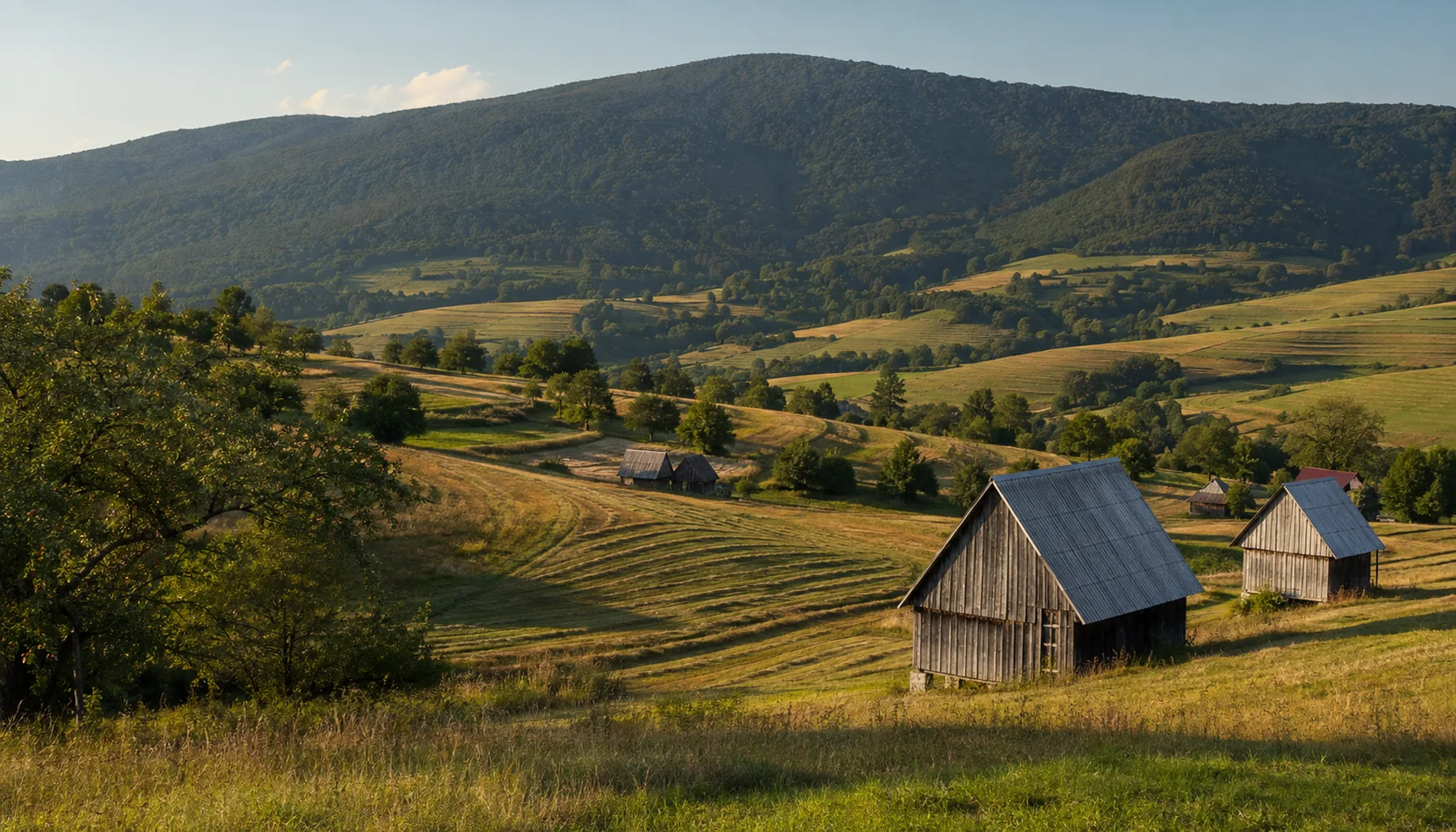
The calendar that actually governs this place is the farming one. Cattle and sheep go out onto the slopes in spring, and hay is cut in high summer off ground no large machine can take, by hand or by the smallest tractors. None of that is heritage programming. It is the work, and it is the reason the hay meadows of the Podpoľanie are still meadows.Kalendár, ktorý toto miesto naozaj riadi, je poľnohospodársky. Dobytok a ovce idú na jar na svahy a seno sa kosí vo vrcholnom lete z pozemkov, na ktoré veľký stroj nevojde, ručne alebo najmenšími traktormi. Nič z toho nie je program pre návštevníkov. Je to práca a je to dôvod, prečo sú kosné lúky Podpoľania stále lúkami.
The largest folklore gathering of the Podpoľanie is held each summer down the valley at Detva, and people from Hriňová are in it, because the two places share one folk culture rather than two neighbouring ones. What Hriňová keeps is smaller and more local: hamlet feasts, church holidays, school events, and whatever the town's own cultural centre puts on. We name none of them, because a programme of this size changes from year to year.Najväčšie folklórne slávnosti Podpoľania sa konajú každé leto dole v doline v Detve a ľudia z Hriňovej sú ich súčasťou, pretože obe miesta majú jednu spoločnú ľudovú kultúru, nie dve susedné. Hriňová si drží niečo menšie a miestnejšie: lazovské hody, cirkevné sviatky, školské podujatia a to, čo pripraví mestské kultúrne stredisko. Menovite tu neuvádzame nič, lebo program takejto veľkosti sa mení z roka na rok.
The rest of the year is the landscape. Marked trails climb from here into the inner basin of Poľana, the eroded volcano that fills the northern skyline and is a UNESCO biosphere reserve. The reservoir on the Slatina above the town is not a leisure lake: it supplies drinking water to a wide area, so bathing and boating are prohibited.Zvyšok roka je krajina. Značené chodníky odtiaľto vystupujú do vnútornej kotliny Poľany, rozrušenej sopky, ktorá vypĺňa severný obzor a je biosférickou rezerváciou UNESCO. Vodná nádrž na Slatine nad mestom nie je rekreačným jazerom: zásobuje pitnou vodou širokú oblasť, takže kúpanie a člnkovanie sú zakázané.
The town has a cultural centre with a hall and a programme, a library and a school of art for children. We name none of them individually, because programmes and premises change faster than a page like this does. The centre of Hriňová is plain and mostly modern, and nobody comes to the town for it.Mesto má kultúrne stredisko so sálou a programom, knižnicu a základnú umeleckú školu. Menovite tu neuvádzame ani jedno, lebo programy a priestory sa menia rýchlejšie než takáto stránka. Centrum Hriňovej je jednoduché a prevažne moderné a nikto sem kvôli nemu neprichádza.
The geography makes the usual answer to this question wrong. The town's territory covers 126.46 square kilometres, one of the largest of any Slovak municipality, and at the end of 2025 there were 6,867 people on it. A large share still live in dozens of named hamlets and single farmsteads, so a good deal of the cultural life happens in a hall borrowed for a dance and at a hamlet's own feast. For collections and big stages the valley looks downstream to Detva, Zvolen and Banská Bystrica.Zemepis tu robí obvyklú odpoveď na túto otázku nesprávnou. Územie mesta má 126,46 kilometra štvorcového, patrí k najväčším spomedzi slovenských obcí, a na konci roka 2025 na ňom žilo 6 867 ľudí. Veľká časť z nich stále býva v desiatkach pomenovaných osád a samôt, takže značná časť kultúrneho života sa deje v sále požičanej na zábavu a na hodoch jednotlivej osady. Za zbierkami a veľkými javiskami sa dolina pozerá po prúde do Detvy, Zvolena a Banskej Bystrice.
The built heritage here is not monumental and it is not in the centre. It is domestic and agricultural: timber barns, single farmsteads, orchards, and the lanes that climb to them. The slopes above the Slatina were cleared from the seventeenth century onwards by families working outwards from Detva under the Vígľaš estate, each new household felling a patch of forest and building one farm on it. Every clearing became a laz, every group of them a hamlet with a name.Stavebné dedičstvo tu nie je monumentálne a nie je v centre. Je domácke a hospodárske: drevené humná, samoty, sady a cesty, ktoré k nim stúpajú. Svahy nad Slatinou klčovali od 17. storočia rodiny postupujúce smerom von z Detvy pod vígľašským panstvom, pričom každá nová domácnosť vyrúbala kus lesa a postavila na ňom jednu usadlosť. Z každej čistiny sa stal laz, z každej skupiny lazov osada s vlastným menom.
The public buildings come from later, and each marks a decision. The scattered settlements asked to be separated from Detva in 1890; the Hungarian Ministry of the Interior gave permission on 21 October 1890, and the county assembly of Zvolen approved the founding charter on 5 September 1891 as document number 322/1891. Town status came on 1 January 1989, under a government with eleven months left to live.Verejné budovy pochádzajú z neskorších čias a každá označuje nejaké rozhodnutie. Rozptýlené osady požiadali v roku 1890 o odčlenenie od Detvy; uhorské ministerstvo vnútra dalo povolenie 21. októbra 1890 a zvolenský stoličný výbor schválil zakladaciu listinu 5. septembra 1891 ako dokument číslo 322/1891. Štatút mesta prišiel 1. januára 1989, za vlády, ktorej ostávalo jedenásť mesiacov.
Glass was the one trade these forests could support: the first furnace was built at Horná Hriňová in 1802–1803 and a second at Skalisko in 1824. Rising rents and timber prices killed the business, and the furnaces went cold for the last time on 15 February 1914. Then came timber, a heavy engineering works on the valley floor, and the reservoir of 1964 — which together gave people wages and running water, and pulled them off the lazy and down into the valley.Jedinou výrobou, ktorú tieto lesy uniesli, bolo sklo: prvú pec postavili v Hornej Hriňovej v rokoch 1802 – 1803 a druhú v roku 1824 na Skalisku. Rastúce nájmy a ceny dreva podnikanie zabili a pece vychladli naposledy 15. februára 1914. Potom prišlo drevo, ťažký strojársky závod na dne doliny a vodná nádrž z roku 1964 — a tie spolu dali ľuďom mzdy a tečúcu vodu a stiahli ich z lazov dole do doliny.
Isolation preserved the costume, the carving and the shepherds' music of the Podpoľanie here for the same reasons it preserved them at Detva. Steep lanes, scattered farms and a long walk to anywhere are not usually thought of as cultural infrastructure, but that is what they were: a tradition survives where nothing cheap and fashionable arrives every week to replace it.Odlúčenosť tu uchovala kroj, rezbárstvo a pastiersku hudbu Podpoľania z tých istých dôvodov ako v Detve. Strmé cesty, rozptýlené usadlosti a dlhá chôdza kamkoľvek sa zvyčajne nepovažujú za kultúrnu infraštruktúru, ale presne tým boli: tradícia prežije tam, kde každý týždeň neprichádza niečo lacné a módne, čo by ju nahradilo.
It is not a settled picture. A large share of the outlying farmsteads are now weekend houses or standing empty. Farming on the lazy is still work rather than heritage, and the sheep's-milk cheeses of this country — bryndza and smoked oštiepok — are a local trade and not a souvenir. The hay meadows survive because someone is still mowing them, and the number of people willing to mow a slope by hand is the real measure of how much of this culture is left.Nie je to ustálený obraz. Veľká časť odľahlých usadlostí sú dnes chalupy alebo stoja prázdne. Hospodárenie na lazoch je stále práca, nie dedičstvo, a ovčie syry tohto kraja — bryndza a údený oštiepok — sú miestnym remeslom, nie suvenírom. Kosné lúky prežívajú preto, že ich niekto stále kosí, a počet ľudí ochotných pokosiť svah ručne je skutočnou mierou toho, koľko z tejto kultúry zostalo.
Sixteen videos for Culture in Hriňová.Šestnásť videí — Kultúra v Hriňovej.