Copper Money Built the Square Up the StreetNámestie hore ulicou postavili peniaze z medi
Banská Bystrica was one of the great medieval copper-mining towns of the Kingdom of Hungary. In the late fifteenth and sixteenth centuries the Thurzo–Fugger copper company ran its trade from here, and that wealth is what paid for the square you reach a few minutes up the pedestrian street from Point's door. This is the real argument for being on this side of the city: the centre is close, compact, entirely walkable, and worth an afternoon on its own terms.Banská Bystrica bola jedným z veľkých stredovekých banských miest Uhorského kráľovstva, ktoré ťažili meď. Koncom pätnásteho a v šestnástom storočí odtiaľto riadil svoj obchod Thurzovsko-fuggerovský medený podnik a práve toto bohatstvo zaplatilo námestie, na ktoré sa od dverí Pointu dostanete za pár minút hore pešou zónou. To je skutočný dôvod, prečo byť na tejto strane mesta: centrum je blízko, kompaktné, celé prejdete pešo a zaslúži si popoludnie samo osebe.
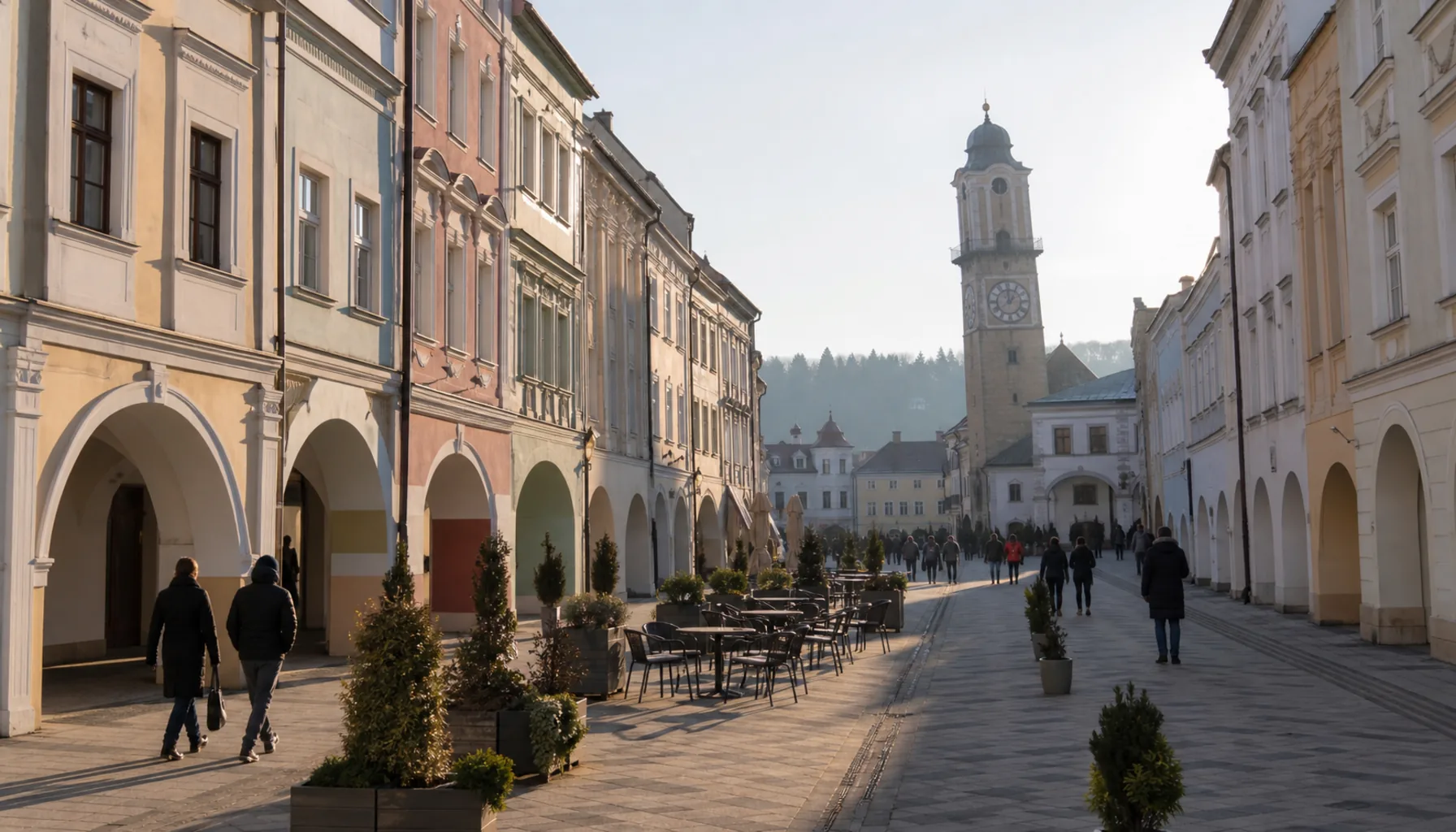
Námestie SNP is a long sloping square of pastel burgher houses, with a free-standing stone clock tower that visibly leans, a baroque plague column, and the Thurzo House — now the Central Slovak Museum — among its finest fronts. At the head of the square the fortified church precinct survives: the barbican, the Church of the Assumption and the Matej House, the standing core of the old town castle. Above it all is Urpín, the wooded hill the town sits under; and if you have a car and half a day, the castle at Slovenská Ľupča is a short run up the Hron valley.Námestie SNP je dlhé, mierne sa zvažujúce námestie pastelových meštianskych domov, na ktorom stojí voľne stojaca kamenná hodinová veža, ktorá je viditeľne naklonená, barokový morový stĺp a medzi najkrajšími fasádami Thurzov dom — dnes Stredoslovenské múzeum. Na čele námestia sa zachoval opevnený mestský hrad: barbakan, Kostol Nanebovzatia Panny Márie a Matejov dom, stojace jadro starého mestského opevnenia. Nad všetkým je Urpín, zalesnený vrch, pod ktorým mesto leží; a ak máte auto a pol dňa, hrad Slovenská Ľupča je kúsok cesty hore údolím Hrona.
Námestie SNP and the old townNámestie SNP a staré mesto
One of the finest squares in Slovakia, and unusual for sloping — the ground falls away as you look down it, so the whole composition reads at once. Pastel burgher houses on both sides, a baroque plague column, the leaning clock tower standing free of everything else, and at the top the barbican and the fortified church precinct with the Church of the Assumption and the Matej House. The Thurzo House, once the copper company's own, is now the Central Slovak Museum.Jedno z najkrajších námestí na Slovensku a nezvyčajné tým, že sa zvažuje — terén klesá, takže celá kompozícia sa dá prečítať naraz. Pastelové meštianske domy po oboch stranách, barokový morový stĺp, naklonená hodinová veža stojaca voľne mimo všetkého ostatného a na hornom konci barbakan s opevneným mestským hradom, Kostolom Nanebovzatia Panny Márie a Matejovým domom. Thurzov dom, kedysi sídlo medeného podniku, je dnes Stredoslovenským múzeom.
Skutecký's villa and the Central Slovak GallerySkuteckého vila a Stredoslovenská galéria
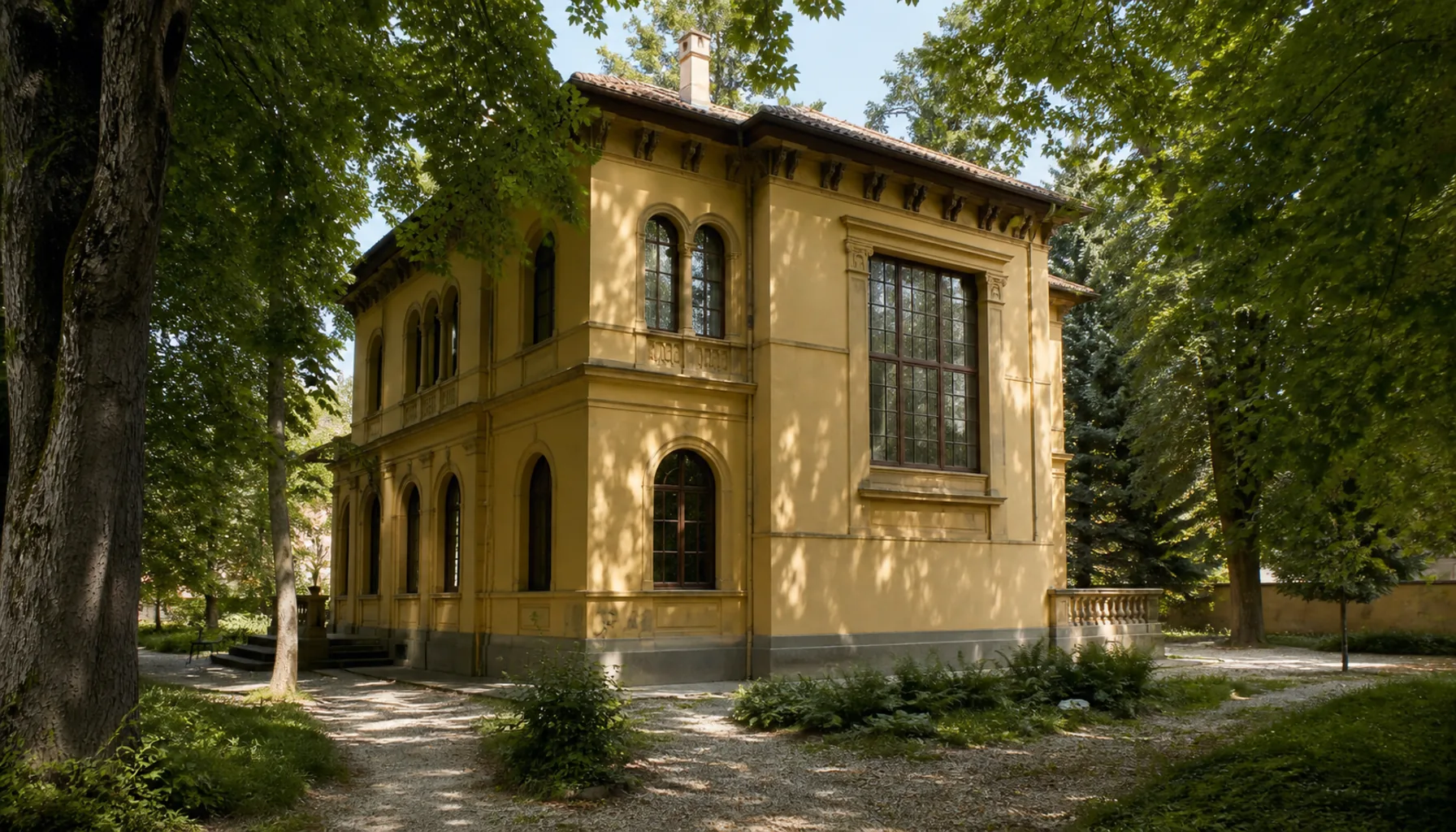
This is the visit that closes the loop with the façade. Dominik Skutecký settled in Banská Bystrica in 1889 and had this Italianate house on Horná street built to his own design, with a studio in it. It now holds the Central Slovak Gallery's permanent exhibition of his work, and a protected mature city garden stands beside it. The market scene abstracted across Point's wall was painted by the man who lived here — see his world first, then walk back down and look at the mosaic again.Toto je návšteva, ktorá uzatvára kruh s fasádou. Dominik Skutecký sa v roku 1889 usadil v Banskej Bystrici a dal si na Hornej ulici postaviť tento dom v talianskom duchu podľa vlastného návrhu, aj s ateliérom. Dnes v ňom sídli stála expozícia jeho diela v správe Stredoslovenskej galérie a vedľa neho stojí chránená vzrastlá mestská záhrada. Trhovú scénu abstrahovanú na stene Pointu namaľoval človek, ktorý tu býval — pozrite si najprv jeho svet a potom sa vráťte dolu a pozrite sa na mozaiku ešte raz.
Museum of the Slovak National UprisingMúzeum Slovenského národného povstania
Two curved concrete shells leaning apart, with a paved way running between them — designed by Dušan Kuzma and opened at the end of the 1960s. It is one of the strongest pieces of modern architecture in the country, and it works on you before you have read a single caption. Banská Bystrica was the centre of the 1944 Slovak National Uprising, and this is where the city explains that to itself and to everyone else.Dve zakrivené betónové škrupiny naklonené od seba, medzi ktorými vedie dláždená cesta — návrh Dušana Kuzmu, otvorené na konci šesťdesiatych rokov. Patrí k najsilnejším dielam modernej architektúry v krajine a zapôsobí na vás skôr, než prečítate jediný popisok. Banská Bystrica bola centrom Slovenského národného povstania v roku 1944 a práve tu si to mesto vysvetľuje sebe aj všetkým ostatným.