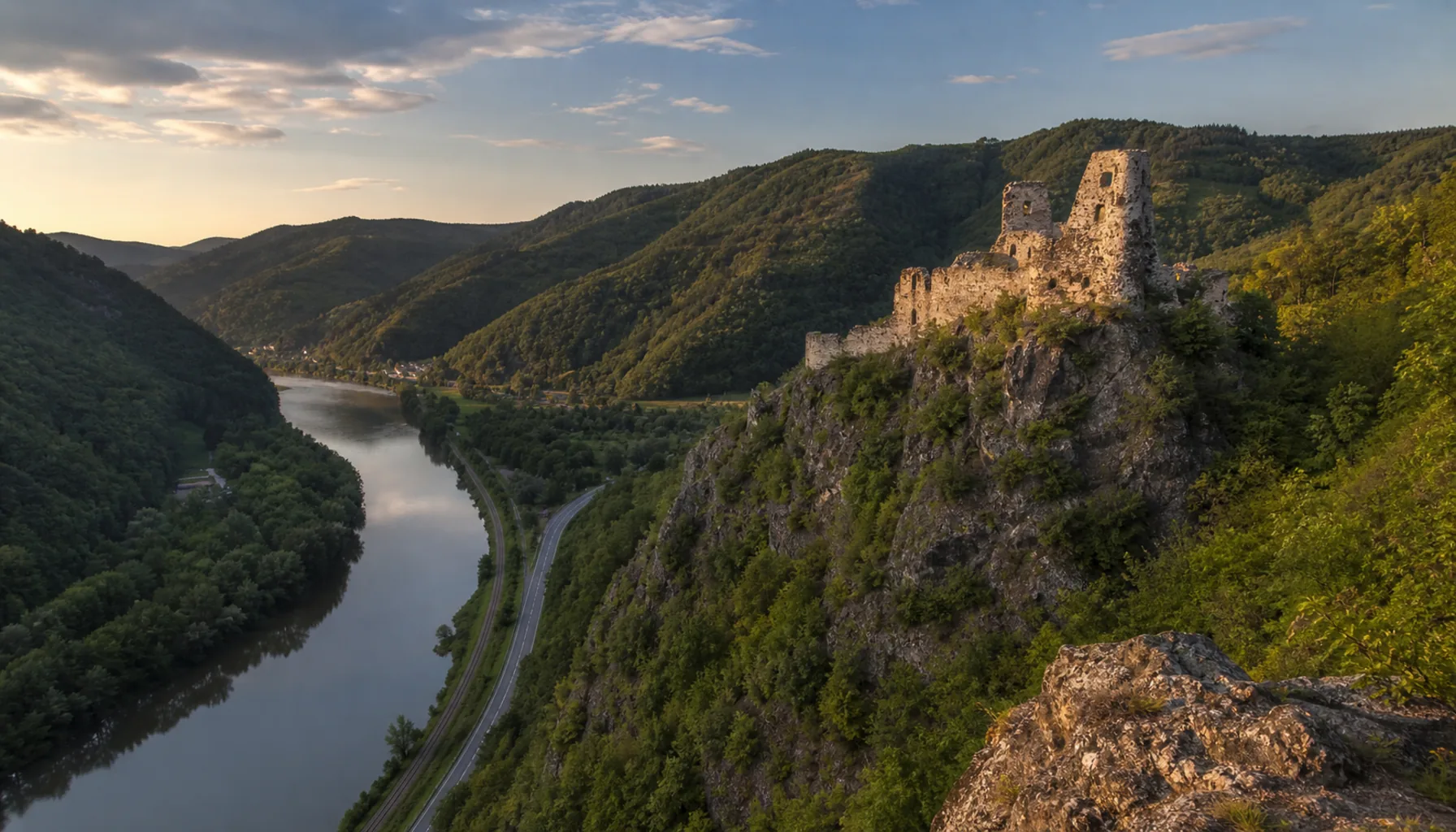
A Castle Built on TrafficHrad postavený na doprave
Revište was raised in the thirteenth century as a royal castle on a rock knuckle above the Hron. Its job was the road: the valley of the Hron was the main artery between the mining towns of central Slovakia and the plain, and everything that mattered — ore, refined metal, salt, timber, tax collectors, armies — came past this rock. A castle here did not need to be enormous. It needed to be unavoidable.Revište vzniklo v trinástom storočí ako kráľovský hrad na skalnom výbežku nad Hronom. Jeho úlohou bola cesta: údolie Hrona bolo hlavnou tepnou medzi stredoslovenskými banskými mestami a rovinou a všetko podstatné — ruda, spracovaný kov, soľ, drevo, vyberači daní, vojská — prechádzalo popri tejto skale. Hrad tu nemusel byť obrovský. Musel byť neobíditeľný.
It passed from the crown into noble hands in the later Middle Ages and was rebuilt more than once: a Gothic core, then Renaissance work that thickened the defences when the Ottoman frontier came close enough to matter. Raiding parties reached deep into this country in the sixteenth and seventeenth centuries, and the mining towns — whose silver the kingdom genuinely could not afford to lose — paid for a screen of strengthened castles across the approaches. Revište was one of them, watching the Hron corridor from the south.V neskoršom stredoveku prešlo z rúk koruny do šľachtických rúk a viackrát ho prestavali: gotické jadro a potom renesančné úpravy, ktoré zosilnili obranu, keď sa osmanská hranica priblížila natoľko, že to začalo byť dôležité. Nájazdné oddiely prenikali v šestnástom a sedemnástom storočí hlboko do tohto kraja a banské mestá — o ktorých striebro si kráľovstvo naozaj nemohlo dovoliť prísť — zaplatili clonu zosilnených hradov na prístupoch. Revište bolo jedným z nich a strážilo pohronský koridor od juhu.
The anti-Habsburg risings of the seventeenth and early eighteenth centuries put the castle through repeated changes of hand and left it damaged. It burned in the late eighteenth century and was not rebuilt; the walls went on standing above the river, gradually losing their upper storeys, until conservation work began in our own time. Volunteers and heritage workers have been steadily capping, repointing and stabilising ever since, and the ruin is visibly better than it was a generation ago.Protihabsburské povstania sedemnásteho a začiatku osemnásteho storočia hnali hrad z rúk do rúk a zanechali ho poškodený. Koncom osemnásteho storočia vyhorel a už ho nikto neobnovil; múry ďalej stáli nad riekou a postupne strácali horné podlažia, kým sa v našej dobe nezačali konzervačné práce. Dobrovoľníci a pamiatkari odvtedy vytrvalo zakrývajú koruny, prešpárovávajú a spevňujú — a zrúcanina je viditeľne v lepšom stave než pred generáciou.