Rajec · Rajec valleyRajec · Rajecká dolina
A complete market square under the Malá Fatra, four hundred years of guild work in wood and leather, and an organ workshop that supplied parishes across the region from a side valley.Neporušené trhové námestie pod Malou Fatrou, štyri storočia cechovej práce v dreve a v koži a organárska dielňa, ktorá z bočnej doliny zásobovala farnosti po celom regióne.
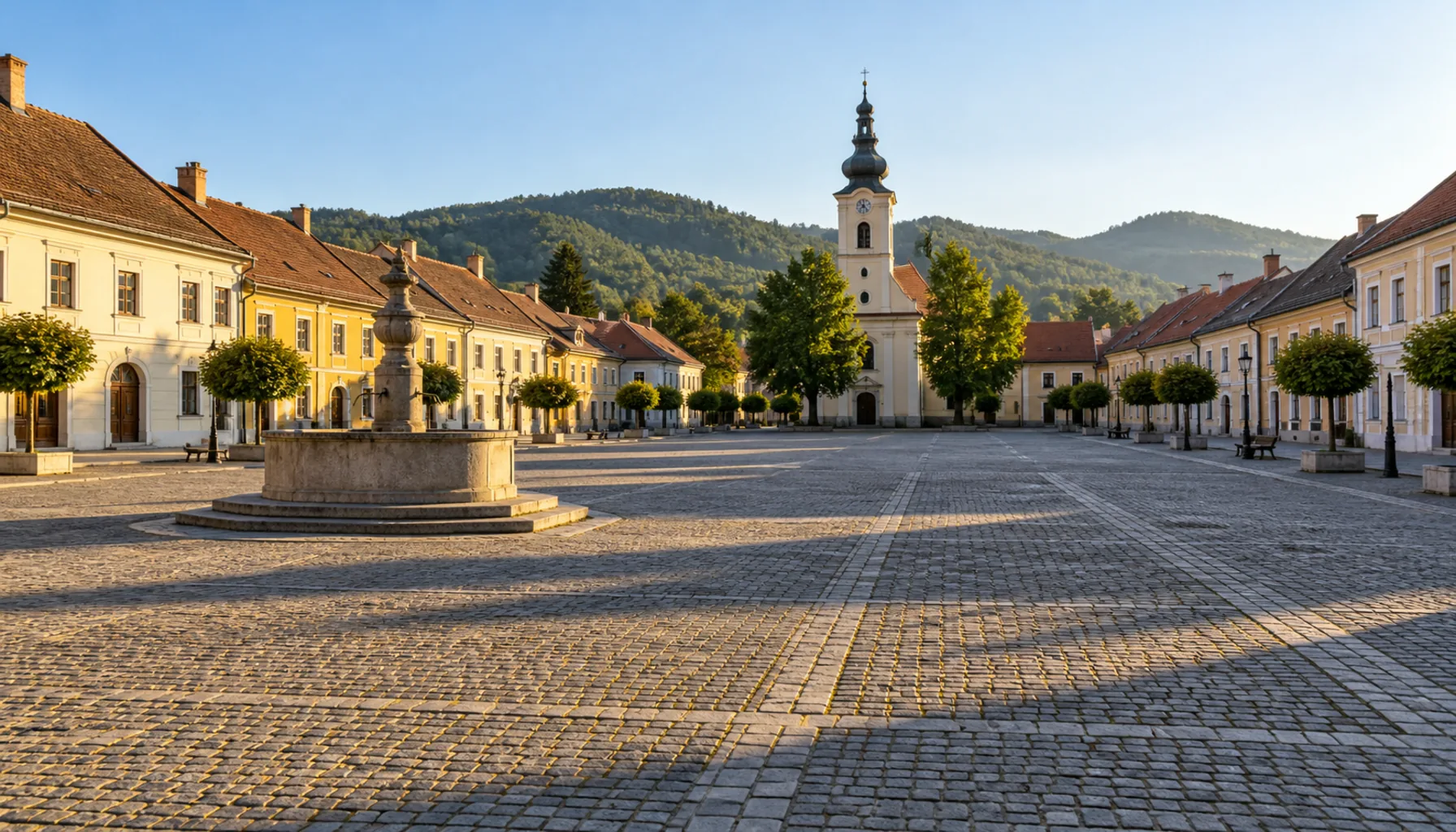
Rajec has been a market town since 1397, when it is described as a town holding markets under the law of Žilina, and it collected the paperwork to prove it: fair rights in 1604, exemption from royal tolls throughout Hungary in 1609, further market rights in 1619, and Maria Theresa's confirmation of the toll exemption in 1749. The square was laid out for exactly that, a broad rectangle with the stalls in the middle and the merchants' houses facing in on all four sides, and seasonal markets still use it.Rajec je trhovým mestom od roku 1397, keď sa uvádza ako mesto s trhmi podľa žilinského práva, a papiere na to si nazbieral: jarmočné právo v roku 1604, oslobodenie od kráľovských mýt v celom Uhorsku v roku 1609, ďalšie trhové práva v roku 1619 a potvrdenie oslobodenia od mýt Máriou Teréziou v roku 1749. Námestie je vymerané presne na to, široký obdĺžnik so stánkami v strede a s meštianskymi domami obrátenými dovnútra zo všetkých štyroch strán, a sezónne trhy ho používajú dodnes.
The public calendar today is the ordinary one of a small district town: church feasts, the school year, seasonal markets and the town's own commemorations. We print no festival names and no dates, because the programme is agreed a season at a time and published by the town, and last year's listings would send you to something that no longer runs. The valley's other rhythm is pilgrimage. Rajecká Lesná, a few kilometres up the road, is a Marian pilgrimage village and draws people to the valley through the warm half of the year.Verejný kalendár je dnes obyčajný kalendár malého okresného mesta: cirkevné sviatky, školský rok, sezónne trhy a mestské spomienkové dni. Názvy podujatí ani termíny neuvádzame, lebo program sa dohaduje zo sezóny na sezónu a zverejňuje ho mesto; vlaňajší zoznam by vás poslal na niečo, čo sa už nekoná. Druhý rytmus doliny je pútnický. Rajecká Lesná pár kilometrov hore cestou je mariánske pútnické miesto a ťahá ľudí do doliny počas celej teplej polovice roka.
The square is the town's main cultural asset and it is free: a protected historic centre, a rectangle of low burgher houses with the town hall on one side and the parish church closing the composition. The shape of a small market town preserved almost intact is rarer in northern Slovakia than in the south, and it survived because nobody drove a boulevard through the middle of it.Najväčším kultúrnym majetkom mesta je samotné námestie a je zadarmo: chránené historické jadro, obdĺžnik nízkych meštianskych domov s radnicou na jednej strane a s farským kostolom, ktorý kompozíciu uzatvára. Takto zachovaný pôdorys malého trhového mesta je na severnom Slovensku vzácnejší než na juhu a prežil preto, že cezeň nikto neprerazil bulvár.
The institutions are the ones a town of this size can carry: a cultural centre with a hall and a programme, a library, choirs and folk groups, and a school of art for children. We name none of them individually, because premises and programmes change faster than a page like this does. The one collection worth planning a journey around is up the valley at Rajecká Lesná, the Slovak Bethlehem, a carved wooden nativity the size of a room in which the Christmas story is set among Slovak landmarks and scenes from Slovak history; it was cut over more than a decade by a single wood-carver and parts of it move.Inštitúcie sú tie, ktoré mesto tejto veľkosti unesie: kultúrne stredisko so sálou a programom, knižnica, spevokoly a folklórne skupiny a základná umelecká škola pre deti. Menovite ich neuvádzame, lebo priestory a programy sa menia rýchlejšie než takáto stránka. Jediná zbierka, pre ktorú sa oplatí plánovať cestu, je hore dolinou v Rajeckej Lesnej: Slovenský betlehem, vyrezávaný drevený betlehem veľkosti miestnosti, v ktorom sa vianočný príbeh odohráva medzi slovenskými stavbami a výjavmi zo slovenských dejín; rezal ho vyše desať rokov jediný rezbár a časti sa hýbu.
The square is the monument and the parish church at the end of it is the fixed point. Saint Ladislaus is on the town's arms and was on its seal from the fourteenth century, which is when Rajec belonged to the Lietava estate whose castle ruin stands over the ridge to the north. There was something fortified in Rajec itself as well: a document of 1358 names its castellan, and in 1393 the place is written castrum Raycz. The last mention of it is from 1644, and nothing of it stands today.Pamiatkou je námestie a pevným bodom farský kostol na jeho konci. Svätý Ladislav je v mestskom erbe a od 14. storočia bol na pečati, v tom čase patril Rajec k lietavskému panstvu, ktorého hradná zrúcanina stojí za hrebeňom na severe. Aj v samotnom Rajci však čosi opevnené stálo: listina z roku 1358 menuje jeho kastelána a v roku 1393 sa miesto píše ako castrum Raycz. Posledná zmienka je z roku 1644 a dnes z neho nestojí nič.
The scale of the old town can be read off the tax records. In 1598 there were 138 houses; by 1720 there were 145 craftsmen and 215 taxpayers; by 1784, 475 houses and 2,803 people. That is a real town by the standards of northern Hungary, and the houses on the square are what it built with the money. The other structure the town depends on is the branch railway that opened on 10 October 1899, twenty-one kilometres up the valley from Žilina, paid for by the county and the villages along it. Passenger services on it were on the closure list in 2003 and survived because the region and the valley's own towns fought for them.Veľkosť starého mesta sa dá vyčítať z daňových súpisov. V roku 1598 tu bolo 138 domov, v roku 1720 už 145 remeselníkov a 215 daňovníkov a v roku 1784 475 domov a 2 803 obyvateľov. Na pomery severného Uhorska je to skutočné mesto a domy na námestí sú tým, čo si zaň postavilo. Druhou stavbou, na ktorej mesto stojí, je odbočka železnice otvorená 10. októbra 1899, dvadsaťjeden kilometrov hore dolinou zo Žiliny, zaplatená stolicou a obcami pozdĺž trate. Osobná doprava na nej bola v roku 2003 na zozname na zrušenie a prežila preto, že sa za ňu postavili kraj a mestá doliny.
Guilds are the measure of whether a market town is really a market town, and Rajec's start early: the tailors are recorded from 1408 and the shoemakers from 1478, with the butchers following by 1669. The town's boots of red cordovan leather became known well beyond the valley. A guild set the standard of the work, trained the apprentices, limited who was allowed to practise the trade and looked after its members' widows; it was closed and often unfair, and it is also why a small town in a side valley could make goods worth carrying to other people's markets.Cechy sú mierou toho, či je trhové mesto naozaj trhovým mestom, a v Rajci sa začínajú zavčasu: krajčíri sú doložení od roku 1408 a obuvníci od roku 1478, mäsiari pribudli do roku 1669. Rajecké čižmy z červeného kordovánu poznali ďaleko za dolinou. Cech určoval kvalitu práce, vychovával učňov, obmedzoval, kto smie remeslo vykonávať, a staral sa o vdovy po svojich členoch; bol uzavretý a často nespravodlivý, a zároveň je dôvodom, prečo malé mesto v bočnej doline vyrábalo tovar, ktorý sa oplatilo voziť na cudzie trhy.
The finest of the workshops belonged to the Pažický family, who built church organs in Rajec from 1757 until 1879, more than two hundred instruments over three generations, carried out from here to parishes across the region. It is the same forest the sawmills worked, held to a far finer tolerance, and it is the best short answer to what this town has actually been good at. Woodworking, joinery and furniture are still its trade, and the branch line is still what carries them out.Najjemnejšia z dielní patrila rodine Pažických, ktorá v Rajci stavala organy od roku 1757 do roku 1879, vyše dvesto nástrojov v troch generáciách, rozvezených odtiaľto do farností po celom regióne. Je to to isté drevo, aké spracúvali píly, len držané v oveľa jemnejšej tolerancii, a je to najlepšia krátka odpoveď na otázku, v čom bolo toto mesto naozaj dobré. Drevárstvo, stolárstvo a nábytok sú jeho remeslom dodnes a odbočka železnice je stále tým, čo ich odváža.
Sixteen videos for Culture in Rajec.Šestnásť videí — Kultúra v Rajci.