Liptovský Mikuláš · LiptovLiptovský Mikuláš · Liptov
A county town whose recorded history is largely courtroom history, and the town where a bookbinder printed a trial file that turned an outlaw into a legend, and where the Slovaks first wrote down what they wanted.Stoličné mesto, ktorého zapísané dejiny sú z veľkej časti dejinami súdnej siene, a mesto, kde kníhviazač vytlačil súdny spis, ktorý zo zbojníka urobil legendu, a kde si Slováci prvý raz napísali, čo chcú.
The town's calendar began in 1424, when it was granted the right to hold markets twice a year: two dates when everyone in the basin came here to buy and sell. That single permission turned a church village into a trading place, and the square it was done on is still the middle of the town. Today the year is set by tourism instead, and it runs twice, a winter season on the snow above the Demänovská valley and a second one in high summer on the reservoir and in the caves.Kalendár mesta sa začal v roku 1424, keď dostalo právo dvoch jarmokov do roka: dva dni, keď sa sem celá kotlina prišla kupovať a predávať. To jediné povolenie urobilo z kostolnej dediny obchodné miesto a námestie, na ktorom sa to dialo, je stále stredom mesta. Dnes rok určuje cestovný ruch a beží dvakrát, zimná sezóna na snehu nad Demänovskou dolinou a druhá vo vrcholnom lete pri priehrade a v jaskyniach.
Between the two seasons the town keeps the ordinary calendar of a district seat: church feasts, the school year, seasonal markets on the square and the commemorations of the dates that belong to it, above all the tenth of May. We name no festival here and print no dates, because the programme is agreed a season at a time between the town, its cultural houses and the museums, and last year's listings would send you to something that no longer runs.Medzi tými dvoma sezónami si mesto drží obyčajný kalendár okresného sídla: cirkevné sviatky, školský rok, sezónne trhy na námestí a spomienky na dátumy, ktoré mu patria, predovšetkým na desiaty máj. Nemenujeme tu žiadne podujatie a neuvádzame termíny, lebo program sa dohaduje zo sezóny na sezónu medzi mestom, jeho kultúrnymi domami a múzeami a vlaňajší zoznam by vás poslal na niečo, čo sa už nekoná.
The habit came before the institutions. Gašpar Fejérpataky-Belopotocký, a bookbinder of this town, ran a lending library from his shop and in 1830 put on the first Slovak amateur theatre: plays in Slovak, acted by townspeople, when there was no Slovak stage anywhere. In 1844 the association Tatrín, the first cultural society meant for Slovaks as a whole, was founded at the old Lutheran parsonage where Michal Miloslav Hodža was pastor. That is why the events of 1848 happened in a small Liptov town rather than a capital: the people, the printing and the meeting room were already here. On 10 May 1848 about thirty men of Štúr's circle adopted the Demands of the Slovak Nation here, the first Slovak political programme ever written down.Zvyk bol skôr než inštitúcie. Gašpar Fejérpataky-Belopotocký, kníhviazač z tohto mesta, viedol vo svojom obchode požičovňu kníh a v roku 1830 tu uviedol prvé slovenské ochotnícke divadlo: hry po slovensky, hrané mešťanmi, v čase, keď slovenská scéna nejestvovala nikde. V roku 1844 vznikol na starej evanjelickej fare, kde bol farárom Michal Miloslav Hodža, spolok Tatrín, prvá kultúrna spoločnosť určená Slovákom ako celku. Preto sa udalosti roku 1848 odohrali v malom liptovskom meste a nie v hlavnom: ľudia, tlač aj miestnosť na stretávanie tu už boli. Desiateho mája 1848 tu asi tridsať mužov zo Štúrovho okruhu prijalo Žiadosti slovenského národa, prvý napísaný slovenský politický program.
The town's museums are two and both are worth an hour. The Janko Kráľ Museum on the main square, named for the Romantic poet born here, is the town and district museum; the Slovak Museum of Nature Protection and Speleology is here as well, which makes obvious sense a few kilometres from the caves it documents. Beyond them the town has cultural houses, a library, choirs and folk groups and a school of art for children, named here as categories because programmes and premises change faster than a page like this does. The Armed Forces Academy, which trains the Slovak officer corps, keeps a permanent military presence in the town.Múzeá sú v meste dve a obe stoja za hodinu. Múzeum Janka Kráľa na hlavnom námestí, pomenované po romantickom básnikovi, ktorý sa tu narodil, je mestským a okresným múzeom; sídli tu aj Slovenské múzeum ochrany prírody a jaskyniarstva, čo pár kilometrov od jaskýň, ktoré dokumentuje, dáva zmysel. Okrem nich má mesto kultúrne domy, knižnicu, spevokoly a folklórne skupiny a základnú umeleckú školu; uvádzame ich ako kategórie, lebo programy a priestory sa menia rýchlejšie než takáto stránka. Akadémia ozbrojených síl, ktorá vychováva slovenský dôstojnícky zbor, drží v meste stálu vojenskú prítomnosť.
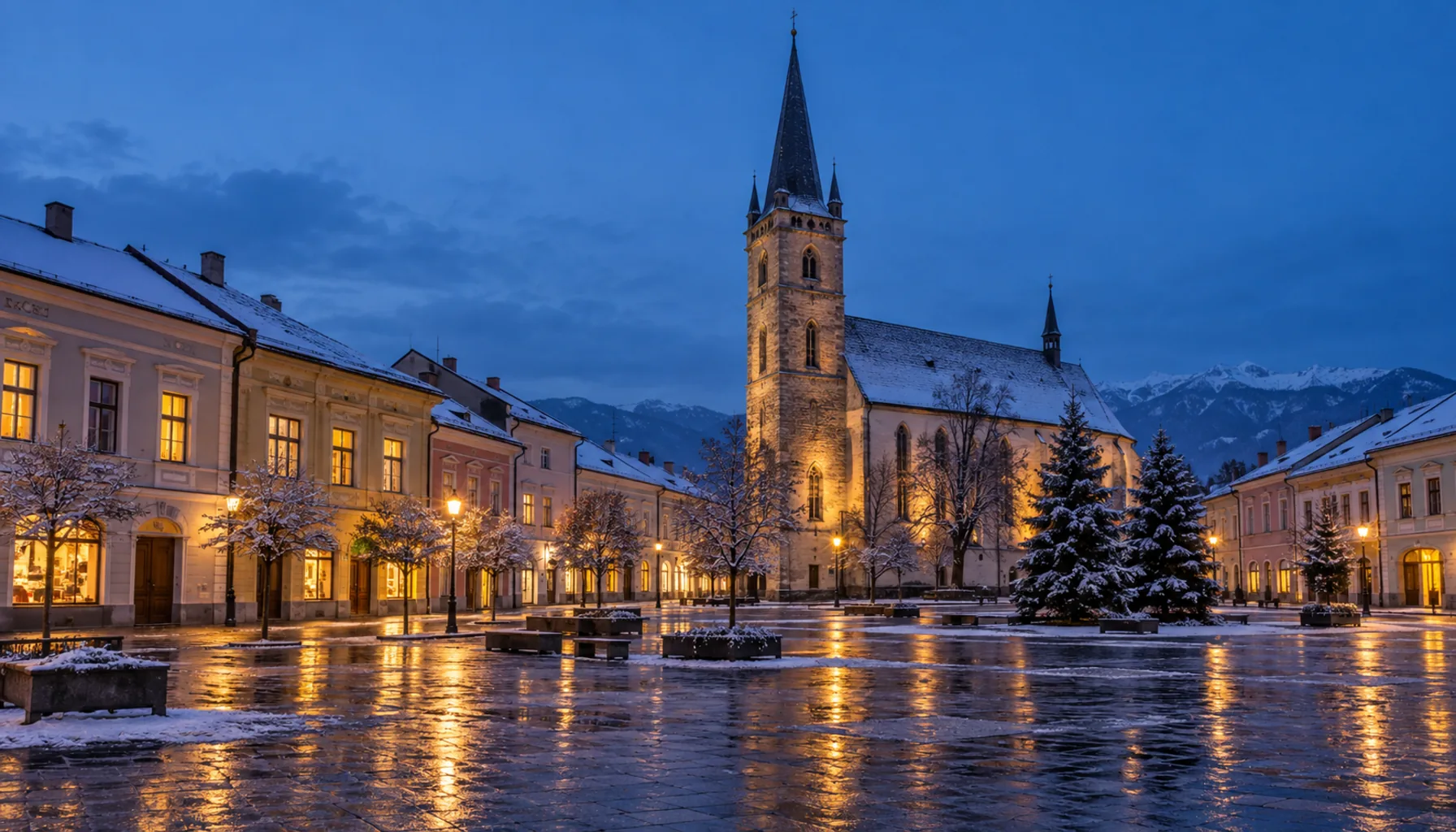
The Church of St Nicholas on the square is the oldest thing in the town and the reason it has its name: an early Gothic building of about 1280 to 1300 raised on the site of an older Romanesque one and first recorded in 1299. It was damaged in the fifteenth-century fighting with the bratríci, was Lutheran from the middle of the sixteenth century until 1685, and was Catholic again after that. From 1632 to 1637 its preacher was Juraj Tranovský, whose hymn-book Slovak Lutherans sang from for the next three hundred years. Everything else in the centre grew around it.Kostol svätého Mikuláša na námestí je najstaršia vec v meste a dôvod jeho mena: ranogotická stavba z čias okolo rokov 1280 až 1300, postavená na mieste staršieho románskeho kostola a prvý raz doložená v roku 1299. V 15. storočí ho poškodili boje s bratríkmi, od polovice 16. storočia do roku 1685 bol evanjelický a potom opäť katolícky. V rokoch 1632 až 1637 v ňom kázal Juraj Tranovský, z ktorého spevníka spievali slovenskí evanjelici nasledujúcich tristo rokov. Všetko ostatné v centre vyrástlo okolo neho.
The other buildings are civic. Liptovský Mikuláš became the seat of Liptov county in 1677, and in 1712 the county bought the Hanzely curia on the square and spent 1713 rebuilding it for county business; the museum is in it today. The old Lutheran parsonage carries Tatrín, and the Čierny orol, the Black Eagle, is where some three thousand people gathered on 1 May 1918 to hear a resolution demanding the right of self-determination for the nations of Austria-Hungary. Above the town at Háj-Nicovô lie the graves of soldiers of the 1st Czechoslovak Army Corps who died taking this ground in the winter and spring of 1945; the cemetery and its travertine pylon were built between 1950 and 1961. It is the largest Czechoslovak war cemetery in Slovakia.Ostatné budovy sú mestské a stoličné. Liptovský Mikuláš sa stal sídlom Liptovskej stolice v roku 1677 a stolica v roku 1712 kúpila na námestí Hanzeliho kúriu, ktorú celý rok 1713 prestavovala na stoličné účely; dnes v nej sídli múzeum. Stará evanjelická fara nesie pamiatku Tatrína a v Čiernom orlovi sa 1. mája 1918 zišlo asi tritisíc ľudí, aby vypočuli rezolúciu žiadajúcu právo na sebaurčenie pre národy Rakúsko-Uhorska. Nad mestom na Háji-Nicovom ležia hroby vojakov 1. československého armádneho zboru, ktorí padli pri dobýjaní tohto územia v zime a na jar 1945; cintorín a jeho travertínový pylón vznikli v rokoch 1950 až 1961. Je to najväčší československý vojnový cintorín na Slovensku.
Juraj Jánošík was tried in this town in March 1713 and executed here, and the file of that trial is the reason he is more than a folk song. It lists robberies on the roads and records one death, which the accused put on two companions. What it does not contain, anywhere, is robbing the rich to give to the poor.Juraja Jánošíka súdili v tomto meste v marci 1713 a tu ho aj popravili; spis z toho procesu je dôvod, prečo je viac než ľudovou piesňou. Vypočítava lúpeže na cestách a zaznamenáva jedno usmrtenie, ktoré obžalovaný pripísal dvom druhom. Čo v ňom nikde nie je, je bohatým brať a chudobným dávať.
You can name the men who added that. Fejérpataky-Belopotocký printed almost the whole protocol in his calendar in 1831 to 1833; the young poet Janko Kráľ, born here, helped copy it out; and the Romantics finished the job, above all Ján Botto with his poem on Jánošík's death in 1862. The original file was lost somewhere in the nineteenth century, and what survives is the copy Fejérpataky certified on 15 September 1844, now kept in Martin. Being able to tell which half of a national story is evidence and which half is what people needed to be true is the most useful thing this town has to teach.Mužov, ktorí to dopísali, vieme vymenovať. Fejérpataky-Belopotocký vytlačil takmer celý protokol vo svojom kalendári v rokoch 1831 až 1833; mladý básnik Janko Kráľ, rodák z tohto mesta, pomáhal odpisovať; a romantici to dokončili, predovšetkým Ján Botto básňou o Jánošíkovej smrti z roku 1862. Pôvodný spis sa v 19. storočí kdesi stratil a zachoval sa odpis, ktorý Fejérpataky overil 15. septembra 1844 a ktorý je dnes v Martine. Vedieť rozoznať, ktorá polovica národného príbehu je dôkaz a ktorá to, čo ľudia potrebovali, aby bola pravda, je najužitočnejšia vec, akú toto mesto učí, a lepší suvenír než čokoľvek, čo sa predáva na námestí.
Sixteen videos for Culture in Liptovský Mikuláš.Šestnásť videí — Kultúra v Liptovskom Mikuláši.