Handlová · Upper NitraHandlová · Horná Nitra
A German foundation of 1376 that spent a century digging brown coal, and now keeps its culture in a valley of miners' terraces.Nemecká osada z roku 1376, ktorá storočie kopala hnedé uhlie a dnes žije kultúrou v doline plnej baníckych kolónií.
Handlová has held a market right since 1839, when the ruler granted it the rank of a market town with four annual fairs — in practice four days a year when the valley filled with traders the village could tax. Nine years later the revolution of 1848 abolished serfdom across the kingdom, and the people of the basin became free to trade and to leave. Both changes mattered more later than at the time, and the fair weekends are the oldest thing in the town's calendar that is still recognisably itself.Trhové právo má Handlová od roku 1839, keď jej panovník udelil postavenie mestečka so štyrmi výročnými jarmokmi — v praxi štyri dni v roku, keď sa dolina zaplnila obchodníkmi, ktorých mohla obec zdaniť. O deväť rokov neskôr zrušila revolúcia roku 1848 v celom kráľovstve poddanstvo a ľudia z kotliny mohli slobodne obchodovať aj odísť. Obe zmeny znamenali viac neskôr než vtedy a jarmočné víkendy sú najstaršou vecou v kalendári mesta, ktorá je dodnes rozpoznateľne sama sebou.
The rest of the year is a working town's year: the seasons of the House of Culture, school and club programmes, and the outdoor events a valley of this size keeps going through the summer. We name none of them individually, because the programme is set year by year and a page like this cannot keep up with it. The town publishes its own listings, and they are the thing to check.Zvyšok roka je rokom pracovného mesta: sezóny v dome kultúry, školské a záujmové programy a letné podujatia vonku, ktoré si dolina tejto veľkosti drží. Menovite ich neuvádzame, lebo program sa určuje rok čo rok a takáto stránka mu nestačí. Mesto zverejňuje vlastný prehľad podujatí a práve ten treba pozrieť.
The House of Culture is the town's main indoor room and the address most of its public life passes through; it was outside that building, after a government meeting held here, that the prime minister of Slovakia was shot and badly wounded on 15 May 2024, which is how a great many people first heard the name of the town. Around it Handlová keeps what a town of its size keeps: a library, a school of art for children, amateur groups and clubs. We do not list them, because such things change faster than a page does.Dom kultúry je hlavnou vnútornou sálou mesta a adresou, cez ktorú prechádza väčšina verejného života; práve pred touto budovou, po vládnom zasadnutí konanom v Handlovej, 15. mája 2024 postrelili a ťažko zranili predsedu vlády Slovenska, a takto počulo meno mesta prvý raz veľmi veľa ľudí. Okolo neho má Handlová to, čo mesto jej veľkosti mávať: knižnicu, základnú umeleckú školu, ochotnícke súbory a kluby. Nevymenúvame ich, lebo takéto veci sa menia rýchlejšie než stránka.
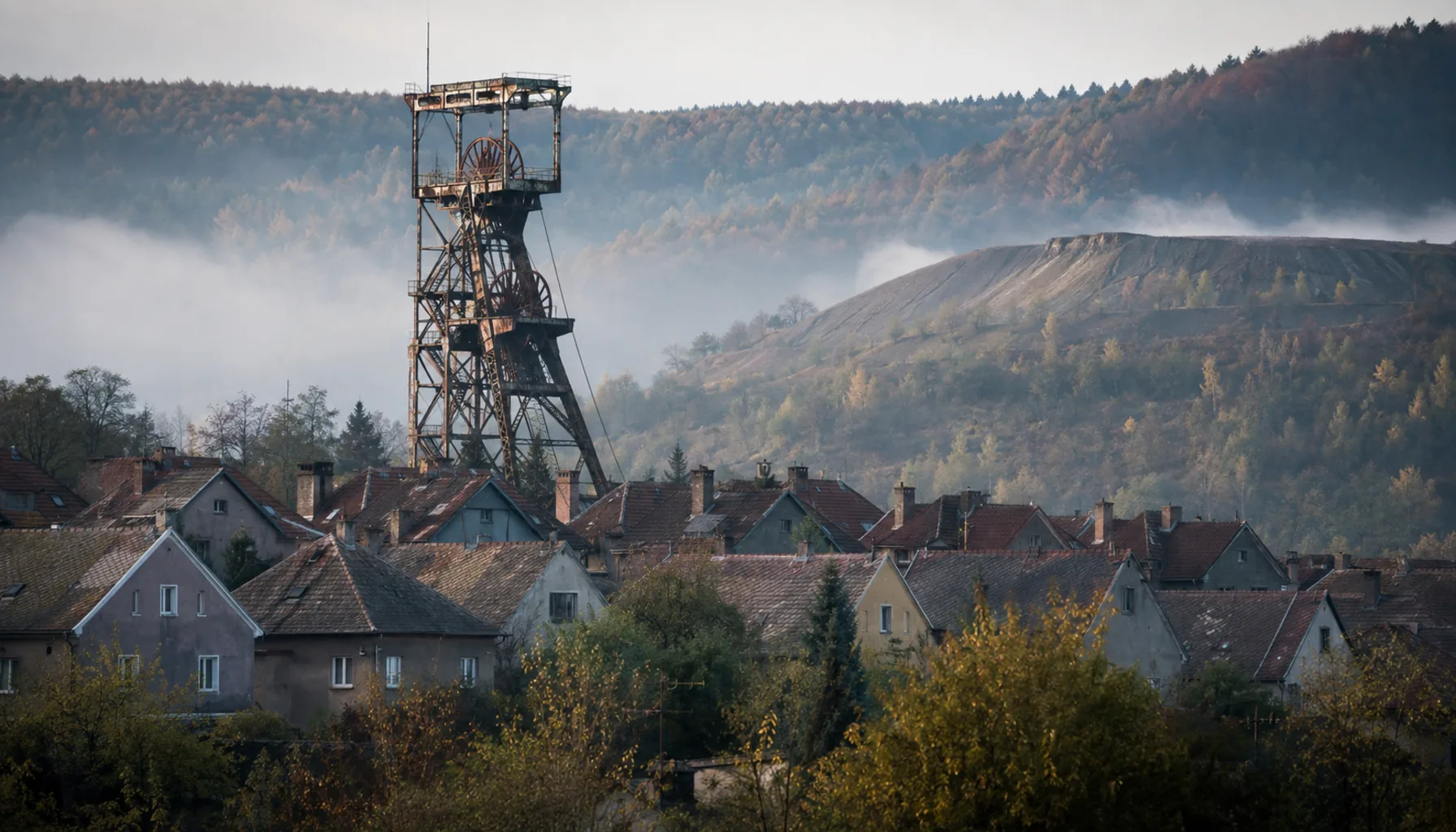
Handlová's real exhibit is outside: the mining landscape along the valley floor. The winding tower and pit buildings, the terraces of colony housing built for miners' families, the spoil heaps greening over, and the memorial to the twenty men killed underground in 2009 are what this town has instead of a gallery quarter. Reading it takes a walk and a little patience rather than a ticket.Skutočný exponát Handlovej je vonku: banská krajina na dne doliny. Ťažná veža a budovy bane, terasy kolónií postavené pre banícke rodiny, zarastajúce haldy a pamätník dvadsiatim mužom, ktorí v roku 2009 zahynuli pod zemou — to má toto mesto namiesto galerijnej štvrte. Prečítať sa to dá skôr prechádzkou a trpezlivosťou než vstupenkou.
There is not much old fabric here, and the honest reason is that Handlová was a farming village at the end of a road until coal made it a town. It was founded on 8 March 1376, when King Louis I allowed a settler named Kricker, from the mining town of Kremnica over the hills, to found a village on a wooded site the charter calls Krásny les, the beautiful forest. About two hundred German families came with him and cleared it. The place took his name — Krickerhau, Kricker's clearing — while Hungarian documents called it Nyitrabánya and Slovaks called it Handlová: three names at once, which was completely ordinary in this kingdom.Starej zástavby tu veľa nie je a dôvod je jednoduchý: Handlová bola poľnohospodárskou dedinou na konci cesty, kým z nej uhlie neurobilo mesto. Založili ju 8. marca 1376, keď kráľ Ľudovít I. dovolil osadníkovi menom Kricker z banskej Kremnice za horami založiť dedinu na zalesnenom mieste, ktoré listina nazýva Krásny les. Prišlo s ním asi dvesto nemeckých rodín a vyklčovali ho. Miesto dostalo jeho meno — Krickerhau, Krickerova klčovina — kým uhorské listiny ho volali Nyitrabánya a Slováci Handlová: tri mená naraz, čo bolo v tomto kráľovstve úplne bežné.
The community that carried the first of those names lasted here until the Second World War and then ended; the language went, the names stayed. What the settlement left behind is the line of the old village along the valley and the older houses on it. Better-preserved examples of the same building tradition survive a few valleys north around Nitrianske Pravno, and they are worth seeing if you want to understand what Handlová's street plan used to look like.Spoločenstvo, ktoré nieslo prvé z tých mien, tu vydržalo do druhej svetovej vojny a potom sa skončilo; jazyk odišiel, mená ostali. Po osade zostala línia starej dediny pozdĺž doliny a staršie domy na nej. Lepšie zachované príklady tej istej stavebnej tradície nájdete o pár dolín na sever okolo Nitrianskeho Pravna a oplatí sa ich vidieť, ak chcete pochopiť, ako pôdorys Handlovej kedysi vyzeral.
Everything else is industrial and twentieth-century: the pit buildings, the colony terraces of the interwar years, the blocks that followed them, and the railway driven east in 1931 through the Bralský tunnel, more than three kilometres of it, to get the coal out towards the Turiec. Railway engineering is not usually counted as heritage. In a valley with this little else standing, it should be.Všetko ostatné je priemyselné a z dvadsiateho storočia: banské budovy, medzivojnové kolónie, bytovky, ktoré po nich nasledovali, a železnica prerazená v roku 1931 na východ cez Bralský tunel, dlhý vyše troch kilometrov, aby uhlie mohlo odchádzať k Turcu. Železničné staviteľstvo sa za pamiatku zvyčajne nepovažuje. V doline, kde stojí tak málo iného, by sa malo.
Coal in the valley is first recorded in 1784, and for a long time it was worth almost nothing because nothing could carry it away. Industrial mining began in 1909, and the railway from Prievidza arrived on 15 February 1913 — the date from which the coal could actually leave. Everything the town looks like follows from those two facts. At the end of 2023 the state stopped paying for electricity made from Slovak lignite and the mining was wound down for good.Uhlie v doline je doložené od roku 1784 a dlho nemalo takmer nijakú cenu, lebo ho nemal kto odviezť. Priemyselná ťažba sa začala v roku 1909 a 15. februára 1913 prišla železnica z Prievidze — dátum, od ktorého uhlie mohlo skutočne odísť. Všetko, ako mesto vyzerá, vyplýva z týchto dvoch faktov. Koncom roka 2023 štát prestal platiť za elektrinu vyrobenú zo slovenského lignitu a ťažba sa definitívne skončila.
What that does to a culture is not obvious from outside. A pit sets the rhythm of a town — shifts, wages, a shared vocabulary, funerals — and when it closes the buildings stay and the rhythm does not. Handlová is working on the answer with retraining and an industrial park, and the scepticism about it is as real as the programme. A town that says this plainly is a more interesting place than one that pretends otherwise.Čo to urobí s kultúrou, zvonku vidieť nie je. Baňa určuje rytmus mesta — zmeny, výplaty, spoločnú slovnú zásobu, pohreby — a keď zavrie, budovy ostanú a rytmus nie. Handlová hľadá odpoveď rekvalifikáciami a priemyselným parkom a skepsa voči tomu je rovnako skutočná ako ten program. Mesto, ktoré to povie nahlas, je zaujímavejším miestom než mesto, ktoré predstiera opak.
Sixteen videos for Culture in Handlová.Šestnásť videí — Kultúra v Handlovej.