Šurany · Danubian LowlandŠurany · Podunajská nížina

Culture in ŠuranyKultúra v Šuranoch

For a hundred and forty-six years the year in Šurany was set by a sugar refinery. It closed in 2000, and the town's culture now sits in a museum, a parish church, and a field with more archaeology under it than there is to see on top.Stoštyridsaťšesť rokov určoval rok v Šuranoch cukrovar. V roku 2000 zavrel a kultúra mesta dnes stojí na múzeu, farskom kostole a poli, pod ktorým je viac archeológie, než na ňom vidno.

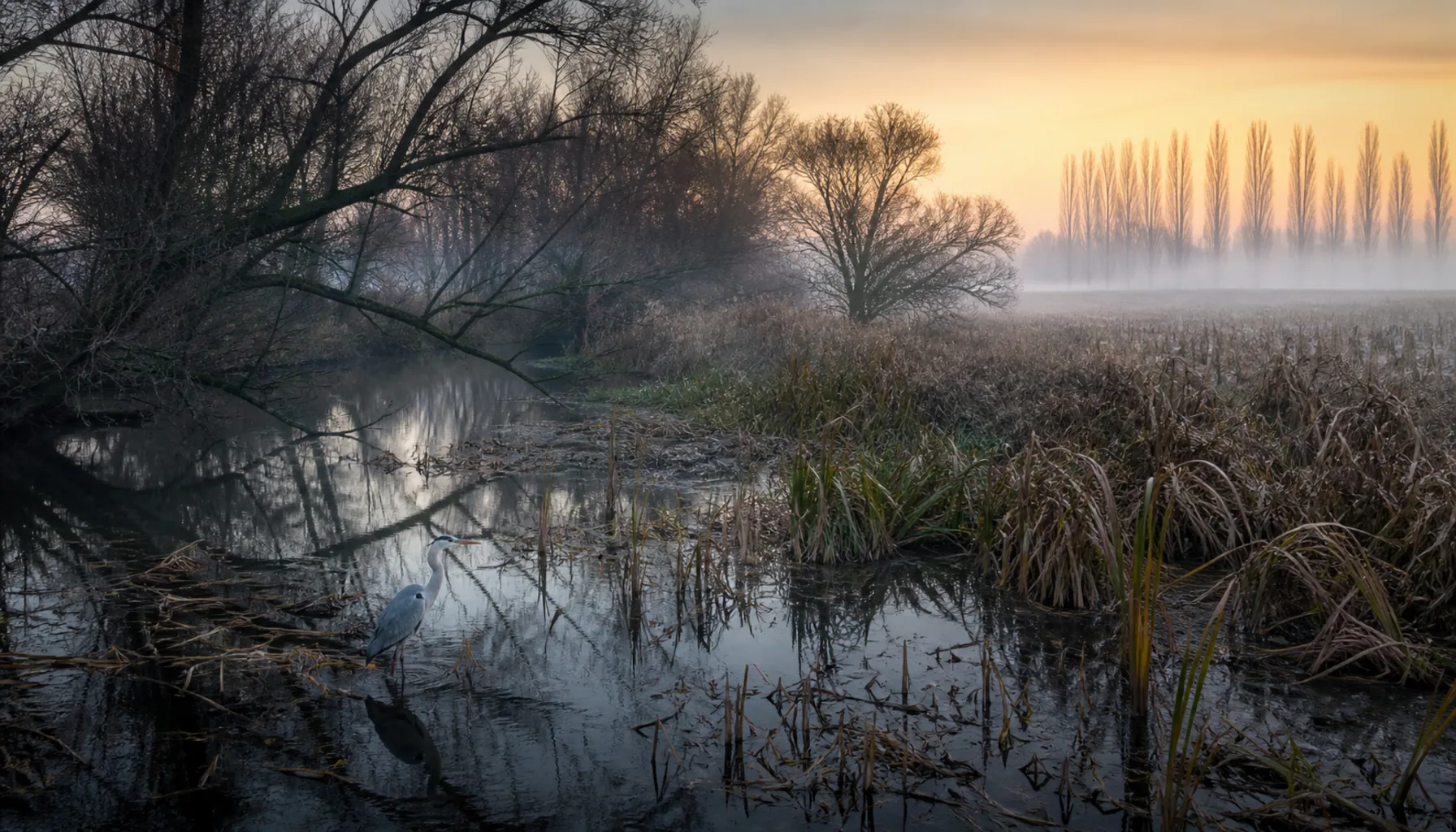
An old oxbow of the Nitra river in the wetlands outside Šurany, at sunrise in late autumn
An old oxbow of the Nitra river in the wetlands outside Šurany, at sunrise in late autumn.Mŕtve rameno Nitry v mokradiach za Šuranmi pri východe slnka v neskorú jeseň.

The year in ŠuranyRok v Šuranoch

The town's calendar begins with a grant. In 1832 Emperor Francis I gave Šurany the right to hold two annual fairs, which for a village on the plain was the difference between selling your grain to whoever happened to pass and having buyers come to you on a date everybody knew.Kalendár mesta sa začína výsadou. V roku 1832 udelil cisár František I. Šuranom právo na dva výročné jarmoky, čo pre dedinu na rovine znamenalo rozdiel medzi predajom obilia hocikomu, kto práve išiel okolo, a kupcami, ktorí prídu za vami v deň, ktorý pozná každý.

Twenty-two years later the real calendar arrived. A sugar refinery was built here in 1854, and because beet has to be processed within days of being lifted, the whole district rearranged its year around it: sow, hoe, lift — and then the campaign, the weeks each autumn when the factory ran day and night and everyone who could work, worked. The refinery closed in 2000.O dvadsaťdva rokov neskôr prišiel skutočný kalendár. V roku 1854 tu postavili cukrovar, a keďže repu treba spracovať do niekoľkých dní po vybratí zo zeme, celý okres si podľa neho preusporiadal rok: siať, okopávať, vyberať — a potom kampaň, tie týždne na jeseň, keď fabrika bežala dňom i nocou a pracoval každý, kto vládal. Cukrovar zavrel v roku 2000.

What is left is the ordinary municipal calendar of a town of about nine thousand people: town days in the summer, a market before Christmas, church feasts, and concerts and exhibitions announced a few weeks ahead. We name no individual event here, because printing a festival we could not stand behind would be worse than admitting we have none.Zostal obyčajný mestský kalendár mesta s asi deviatimi tisíckami obyvateľov: letné mestské dni, trh pred Vianocami, cirkevné sviatky, koncerty a výstavy ohlásené pár týždňov vopred. Jednotlivé podujatia tu nemenujeme: uviesť festival, za ktorý by sme si nevedeli stáť, by bolo horšie než priznať, že žiadny takýto nemáme.

Where culture livesKde žije kultúra

The town museum occupies a former manor building in the centre. Its subject runs from the prehistoric ground on the town's own edge, through a vanished fortress of the Ottoman wars, to a century and a half of sugar — rather more material than the modest building suggests.Mestské múzeum sídli v bývalej budove kaštieľa v centre. Jeho téma vedie od praveku na okraji mesta cez zmiznutú pevnosť z osmanských vojen až po poldruha storočia cukru — je to podstatne viac materiálu, než skromná budova naznačuje.

Beside it the town keeps what a district town keeps: a cultural centre with a hall and a programme, a library, a school of art for children, and amateur choirs and folk groups. We name none of them individually. Programmes and premises change faster than a page like this does, and being wrong about a name is worse than printing none.Vedľa neho si mesto drží to, čo si drží okresné mesto: kultúrne stredisko so sálou a programom, knižnicu, základnú umeleckú školu pre deti a amatérske spevácke a folklórne súbory. Nemenujeme ich jednotlivo. Programy aj priestory sa menia rýchlejšie než stránka, ako je táto, a pomýliť sa v názve je horšie než žiadny neuviesť.

Culture also lives outside the town: the villages around Šurany preserve traditional lowland architecture, and the oxbows of the Nitra and the wetlands along them draw birdwatchers rather than sightseers.Kultúra tu žije aj mimo mesta: dediny v okolí Šurian si zachovali tradičnú nížinnú architektúru a mŕtve ramená Nitry a mokrade pri nich priťahujú skôr pozorovateľov vtákov než turistov.

The buildings that carry itBudovy, ktoré ju nesú

Start with what is not there. A fortress stood in Šurany until the end of the seventeenth century: a rectangular fortified house of the 1380s and 1390s, rebuilt from 1556 as a modern fort, for which the villagers of the whole county were made to do the digging. It was one link in the chain strung along the Nitra and the Danube, and it fell to the Ottomans on 10 October 1663, two weeks after Nové Zámky. Ádám Czobor took it back with twelve hundred hussars in October 1684.Začnite tým, čo tu nie je. V Šuranoch stála až do konca sedemnásteho storočia pevnosť: obdĺžnikové opevnené sídlo z osemdesiatych a deväťdesiatych rokov štrnásteho storočia, od roku 1556 prestavané na modernú pevnosť, na ktorej museli kopať poddaní celej stolice. Bola jedným článkom reťaze natiahnutej pozdĺž Nitry a Dunaja a Osmanom padla 10. októbra 1663, dva týždne po Nových Zámkoch. V októbri 1684 ju Adam Czobor s tisíc dvesto husármi dobyl späť.

Then the Habsburgs demolished it, so that no future rebellion could use it, and nothing of it stands above ground. That correction is worth carrying around the town: if anyone tells you the Turks destroyed the castle of Šurany, the honest answer is that the Turks captured it and the emperor's men knocked it down.Potom ju Habsburgovci zbúrali, aby ju nemohlo použiť nijaké budúce povstanie, a nad zemou z nej nezostalo nič. Túto opravu sa oplatí nosiť po meste so sebou: ak vám niekto povie, že šuriansky hrad zničili Turci, čestná odpoveď znie, že Turci ho dobyli a cisárovi ľudia ho zrovnali so zemou.

What is standing is a parish church, the manor building that holds the museum, a memorial in the centre, and — the largest single mark on the town — everything the sugar industry left, including the three directions of railway it pulled here. Three lines meeting in a town of a few thousand people is not normal: it is what a factory needing beet from everywhere and shipping sugar everywhere built for itself.Stojí tu farský kostol, budova kaštieľa s múzeom, pamätník v centre — a najväčšia stopa v meste vôbec: to, čo tu zanechal cukrovarnícky priemysel, vrátane troch smerov železnice, ktoré si k sebe pritiahol. Tri trate schádzajúce sa v meste s niekoľkými tisíckami obyvateľov nie sú bežné: postavila si ich fabrika, ktorá potrebovala repu odvšadiaľ a cukor vozila všade.

Fifteen hectares at Nitriansky HrádokPätnásť hektárov v Nitrianskom Hrádku

Nitriansky Hrádok is a borough of Šurany, and at its edge is a site called Zámeček — 'the little castle' — dug by archaeologists for decades. It covers about fifteen hectares and was lived on more or less without a break from the Neolithic, through the Bronze Age and into the Middle Ages.Nitriansky Hrádok je mestskou časťou Šurian a na jeho okraji leží lokalita Zámeček, teda zámoček, ktorú archeológovia skúmajú desaťročia. Má asi pätnásť hektárov a bolo na nej takmer bez prerušenia osídlenie od neolitu cez dobu bronzovú až do stredoveku.

That continuity is the unusual part. Most prehistoric settlements were used, abandoned and forgotten; this one was chosen again and again by people who had nothing else in common. The reason is the ground itself — a dry rise just above the floodplain of the Nitra, with water, fish and good soil all within walking distance.Nezvyčajná je práve tá súvislosť. Väčšina pravekých sídlisk sa využila, opustila a zabudla; toto si ľudia, ktorí nemali inak nič spoločné, vyberali znova a znova. Dôvodom je samotná zem — suchá vyvýšenina tesne nad nivou Nitry, s vodou, rybami a dobrou pôdou na dosah chôdze.

Be clear about what a visit means, though. This is a place with far more archaeology than visible ruins: the finds are in collections and the field is a field. If you want to see what came out of it, go to a museum first and to the ground second — the other way round, the ground will tell you nothing.Buďme však presní v tom, čo návšteva znamená. Je to miesto s omnoho väčšou archeológiou než viditeľnými zvyškami: nálezy sú v zbierkach a pole je pole. Ak chcete vidieť, čo z neho vyšlo, choďte najprv do múzea a až potom na tú zem — v opačnom poradí vám nepovie nič.

← Šurany← Šurany

WatchPozrite si

Sixteen videos for Culture in Šurany.Šestnásť videí — Kultúra v Šuranoch.