Šahy · Hont, on the IpeľŠahy · Hont, na Ipli

Culture in ŠahyKultúra v Šahách

The old seat of Hont keeps its culture in two buildings that faced each other for a century — a Premonstratensian provostry and a county hall — and announces its programme in two languages.Staré sídlo Hontianskej stolice drží svoju kultúru v dvoch domoch, ktoré si celé storočie stáli zoči-voči — v premonštrátskej prepozitúre a v župnom dome — a svoj program ohlasuje v dvoch jazykoch.

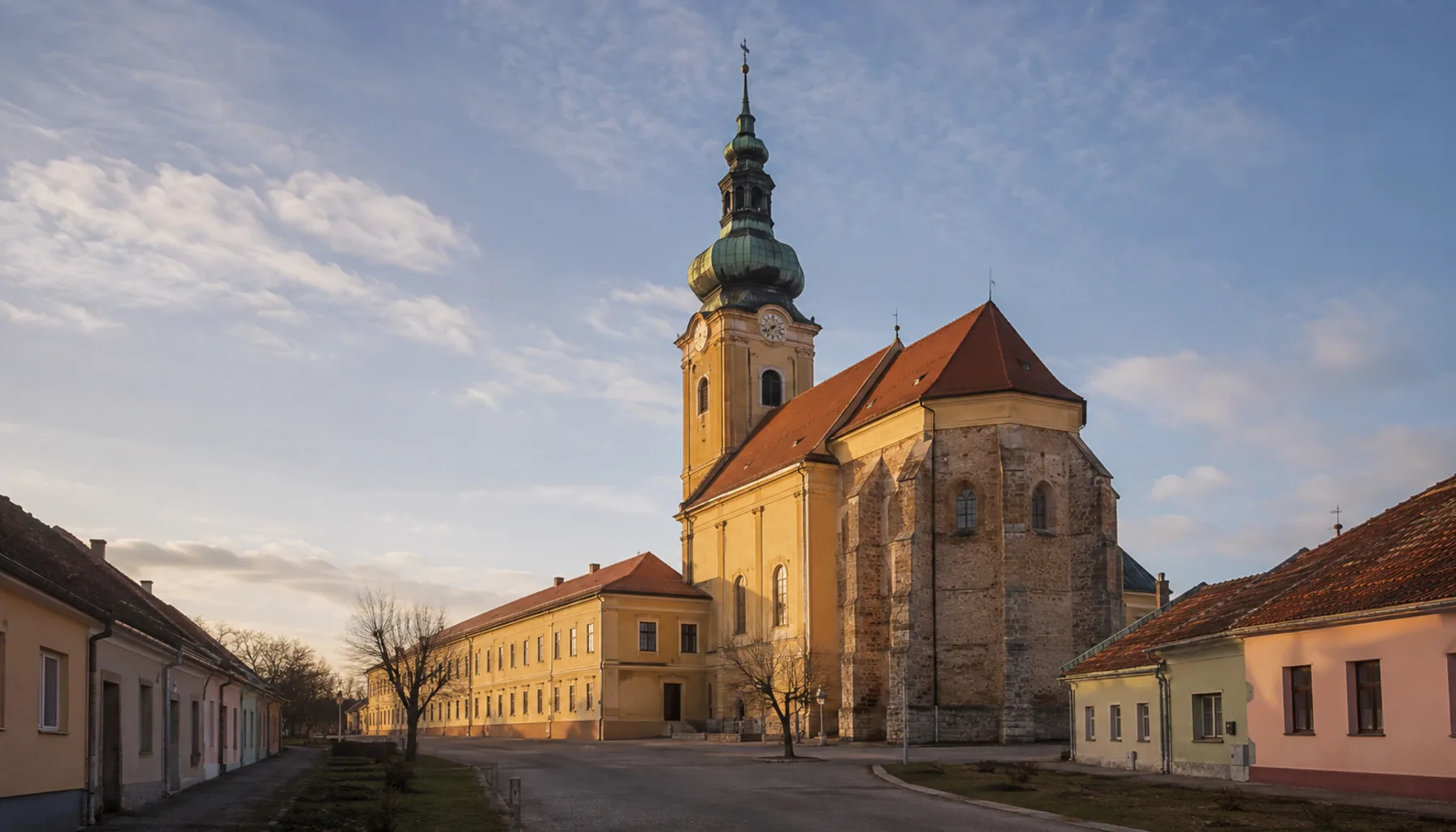
The Baroque former Premonstratensian provostry church and monastery range at the head of the market square in Šahy
The Baroque former Premonstratensian provostry church and monastery range at the head of the market square in Šahy.Barokový kostol bývalého premonštrátskeho prepošstva a kláštorné krídlo v čele trhového námestia v Šahách.

The year in ŠahyRok v Šahách

We can be plain about this: Šahy is a district town of a few thousand people and its year is the ordinary municipal year — town days in the summer, a market on the square before Christmas, the feasts of the provostry church, concerts and exhibitions announced a few weeks ahead. We name no individual event, because printing a festival we could not stand behind would be worse than admitting we have none.Povedzme to na rovinu: Šahy sú okresné mesto s niekoľkými tisíckami obyvateľov a ich rok je obyčajný mestský rok — letné mestské dni, trh na námestí pred Vianocami, sviatky prepozitúrneho kostola, koncerty a výstavy ohlásené pár týždňov vopred. Jednotlivé podujatia tu nemenujeme: uviesť festival, za ktorý by sme si nevedeli stáť, by bolo horšie než priznať, že žiadny takýto nemáme.

Two things do give the calendar here a shape you will not find further north. The first is language: most people in Šahy speak Hungarian at home, notices and street names come in both languages, and anything the town puts on is normally announced twice. Read only one of the two and you will see roughly half of what is happening.Dve veci však dávajú tunajšiemu kalendáru podobu, akú severnejšie nenájdete. Prvou je jazyk: väčšina ľudí v Šahách hovorí doma po maďarsky, oznamy aj názvy ulíc sú v oboch jazykoch a čokoľvek mesto pripraví, ohlási spravidla dvakrát. Ak čítate len jednu z tých dvoch verzií, uvidíte zhruba polovicu toho, čo sa deje.

The second is the river. Since December 2007 the crossing at the bottom of the town has been an ordinary bridge, and the villages on the far bank of the Ipeľ are a walk away rather than a formality away. Anything held here can draw an audience from two countries. For dates, use the town's own listings — nothing else keeps up.Druhou je rieka. Od decembra 2007 je priechod na dolnom konci mesta obyčajným mostom a dediny na druhom brehu Ipľa sú na dosah pešo, nie cez formality. Čokoľvek sa tu koná, môže mať publikum z dvoch krajín. Termíny hľadajte v oznamoch samotného mesta; nič iné nestíha.

Where culture livesKde žije kultúra

The town's Hont museum and gallery is the main address, and it is the one institution here whose subject is larger than the town itself. It holds the history of the whole county, the archaeology dug out of the Ipeľ basin, and a picture collection built around painters who worked in this region, which means the walls change.Hlavnou adresou je hontianske múzeum a galéria mesta — jediná tunajšia inštitúcia, ktorej téma je väčšia než samo mesto. Uchováva dejiny celej stolice, archeológiu vykopanú v Ipeľskej kotline a obrazovú zbierku vybudovanú okolo maliarov, ktorí v tomto kraji pracovali, takže sa jej steny menia.

Alongside it the town keeps what a district seat keeps: a cultural centre with a hall and a programme, a library, a school of art for children, and amateur choirs and folk groups that rehearse in both languages. We name none of them individually, because programmes and premises change faster than a page like this does.Popri nej si mesto drží to, čo si drží každé okresné sídlo: kultúrne stredisko so sálou a programom, knižnicu, základnú umeleckú školu pre deti a amatérske spevácke a folklórne súbory, ktoré skúšajú v oboch jazykoch. Nemenujeme ich jednotlivo, pretože programy aj priestory sa menia rýchlejšie než stránka, ako je táto.

The buildings that carry itBudovy, ktoré ju nesú

The former provostry church stands at the head of the square with the monastery range beside it. What you see is Baroque, rebuilt after the Ottoman century, with medieval walls still inside it — the house of Premonstratensian canons founded here in 1237 by a lord of the Hunt-Poznan kindred, which is where the town's name and the town itself come from. Joseph II dissolved the order throughout Hungary in 1786 and it was restored in 1802, but by then the centre of gravity in Šahy had already moved.Bývalý prepozitúrny kostol stojí v čele námestia a vedľa neho kláštorné krídlo. To, čo vidíte, je barok, prestavaný po osmanskom storočí, s dodnes zachovaným stredovekým murivom vo vnútri — dom premonštrátskych kanonikov, ktorý tu v roku 1237 založil veľmož z rodu Hunt-Poznanovcov a od ktorého má mesto meno aj svoj začiatok. Jozef II. rád v roku 1786 v celom Uhorsku zrušil, v roku 1802 bol obnovený, no ťažisko Šiah sa dovtedy už presunulo.

It moved a couple of hundred metres, to the county hall built between 1827 and 1841 for Hont county, which had chosen Šahy as its permanent seat in 1806. It is still one of the largest buildings in the town, and its cellar holds a prisoner worth knowing about: in the spring of 1848 the county locked up the poet Janko Kráľ and the teacher Ján Rotarides there for telling the peasants of Hont that serfdom was finished and the land was theirs.Presunulo sa o dvesto metrov ďalej, do župného domu postaveného v rokoch 1827 až 1841 pre Hontiansku stolicu, ktorá si Šahy v roku 1806 zvolila za trvalé sídlo. Dodnes je to jedna z najväčších budov v meste a jeho pivnica má väzňa, o ktorom sa oplatí vedieť: na jar 1848 tu stolica zavrela básnika Janka Kráľa a učiteľa Jána Rotaridesa za to, že hovorili hontianskym sedliakom, že poddanstvo sa skončilo a zem je ich.

Between them the two buildings say what kind of town this is. Šahy has almost no medieval fabric on show, because for a hundred and thirty years the Ottoman frontier ran through the middle of it and the monastery was a garrison post; and it has one very large administrative palace, because for a century it governed a county that the border of 1920 cut in half.Tieto dve budovy spolu povedia, aké je to mesto. V Šahách takmer nevidno stredoveké murivo, pretože stotridsať rokov tadiaľto viedla osmanská hranica a kláštor slúžil ako posádkové stanovisko; a stojí tu jeden veľmi veľký úradný palác, pretože mesto celé storočie spravovalo stolicu, ktorú hranica z roku 1920 rozpolila.

Where the county kept its wordsKde si stolica odkladala svoje listiny

One function of the provostry deserves a section of its own, because it is the reason there is a town here at all. Through the fourteenth century the house became a place of authentication — in Slovak a hodnoverné miesto, an office where charters were drawn up, sealed and stored. The kingdom had no notaries; a monastery with a seal and a strongroom was the nearest thing to one.Jedna funkcia prepozitúry si zaslúži vlastnú kapitolu, lebo je dôvodom, prečo tu mesto vôbec je. Cez štrnáste storočie sa z domu stalo hodnoverné miesto — úrad, kde sa listiny spisovali, pečatili a uschovávali. Kráľovstvo nemalo notárov; kláštor s pečaťou a bezpečnou komorou bol najbližšou náhradou.

So if you sold a field anywhere in Hont, divided an inheritance or swore an oath, the record of it was written on this bank of the Ipeľ. Market days followed the paperwork rather than the other way round, and a settlement with no business being this size on a thinly held stretch of river grew into a town on the strength of being the place where words were kept.Ak ste teda kdekoľvek v Honte predali pole, delili dedičstvo alebo skladali prísahu, záznam o tom vznikol na tomto brehu Ipľa. Trhové dni nasledovali papierovanie, nie naopak, a osada, ktorá na takto riedko osídlenom úseku rieky nemala prečo byť taká veľká, vyrástla na mesto vďaka tomu, že bola miestom, kde sa uchovávali slová.

It is not a museum you can visit — the archives went where archives go, and the medieval writing office is underneath a Baroque church.Nie je to múzeum, ktoré by sa dalo navštíviť — archívy skončili tam, kde archívy končia, a stredoveká pisáreň je pod barokovým kostolom.

← Šahy← Šahy

WatchPozrite si

Sixteen videos for Culture in Šahy.Šestnásť videí — Kultúra v Šahách.